

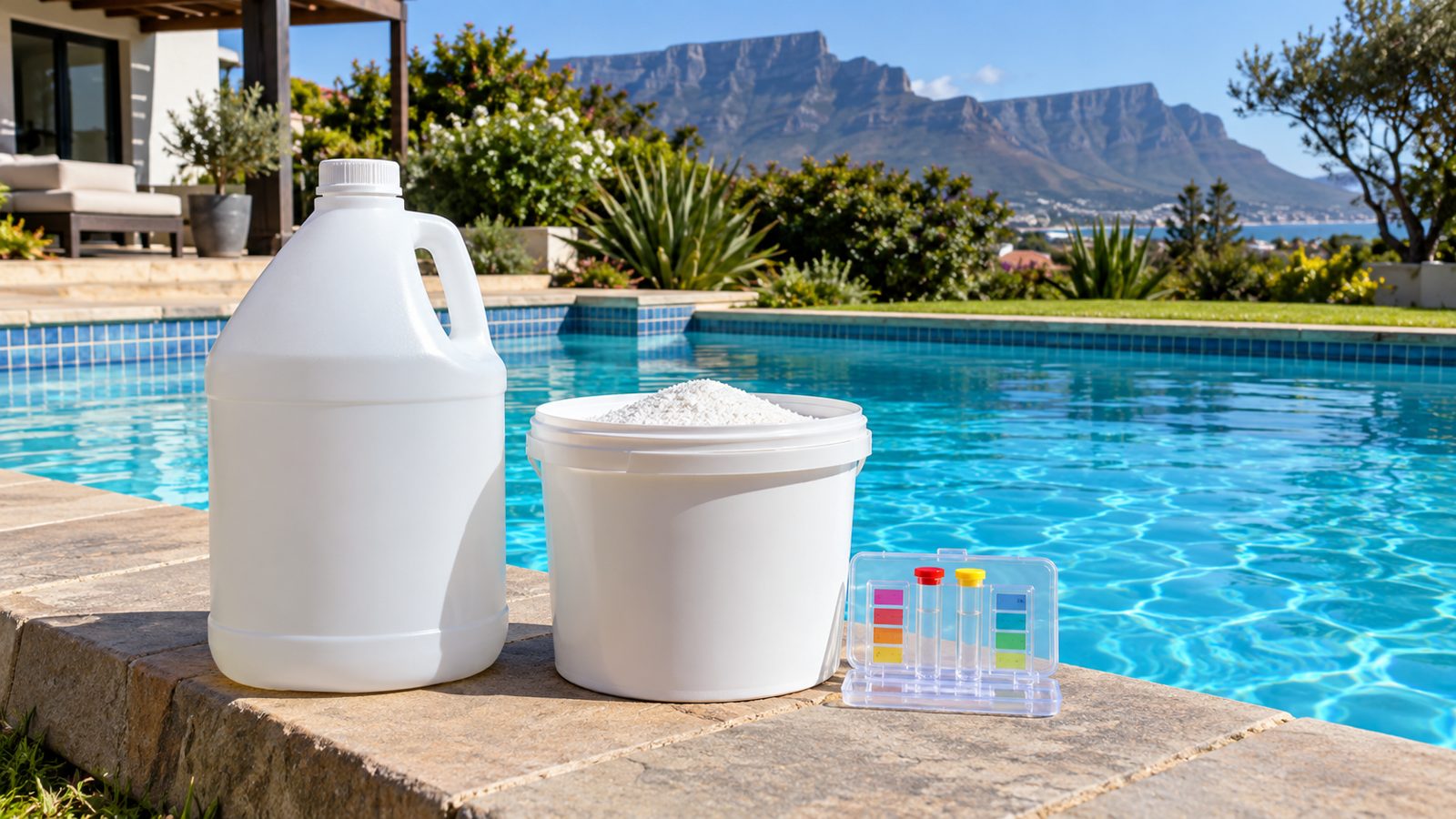
Chlorine vs bleach for a pool comes down to strength, not chemistry. Plain household bleach and liquid pool chlorine are both sodium hypochlorite, so unscented bleach will sanitise your pool, but it’s much weaker, so you need far more of it for the same dose.
The bigger choice is which form of chlorine you use: liquid, granular or tablets. Each one leaves something behind in the water, and over a season that matters more than the price on the tub. Below we compare them side by side, show the dosing maths and explain which suits marbelite, fibreglass and salt pools. If you’d rather not think about any of it, our pool maintenance service keeps the chemistry in range for you.
Is bleach the same as pool chlorine?
Yes, in the way that counts. The active ingredient in household bleach and in liquid pool chlorine is sodium hypochlorite. Once it’s in the water, both release the same free chlorine that kills germs and algae. Your test kit can’t tell the difference.
What differs is everything else in the bottle:
- Strength. Liquid pool chlorine is usually sold at about 10% to 15% available chlorine. Household bleach is much weaker, typically in single figures. The percentage is printed on the label, so read it before you work out a dose.
- Extras. Scented, thickened and “no-splash” bleaches contain perfumes and thickeners you don’t want in pool water. Only plain, unscented bleach with a stated sodium hypochlorite percentage belongs in a pool.
- Freshness. Sodium hypochlorite breaks down over time, faster in heat and sunlight. A bottle that sat in a hot garage all summer is weaker than the label says.
So using bleach in pool water is not dangerous in itself. It’s just an expensive, bulky way to buy a small amount of chlorine, and you’ll be carrying a lot of bottles.
Chlorine vs bleach for a pool compared
This table puts the four products most Cape Town pool owners actually buy next to each other. The “leaves behind” column is the part people forget.
| Product | Typical strength | Leaves behind | Effect on pH |
|---|---|---|---|
| Plain household bleach | Single figures, see label | A little salt | Raises it slightly |
| Liquid pool chlorine | About 10% to 15% | A little salt | Raises it slightly |
| Granular calcium hypochlorite | About 65% to 70% | Calcium | Raises it |
| Trichlor tablets or floaters | About 90% | Stabiliser (cyanuric acid) | Lowers it |
None of these is “best” in every pool. Granular builds calcium, tablets build stabiliser and liquid adds neither, which is why the right answer depends on what your water already has in it. A full test from our water testing and balancing team shows where you stand before you switch products.
Household bleach: pool dosing in litres
The same maths works for any chlorine product. Grams of available chlorine needed = pool litres x ppm rise / 1,000. Then divide by the product strength. For a 50,000 litre pool that needs a 2.5 ppm lift, you need 125g of available chlorine.
| Product | Strength | Amount needed |
|---|---|---|
| Granular chlorine | 65% | About 192g |
| Liquid pool chlorine | 15% | About 833ml |
| Liquid pool chlorine | 10% | About 1.25 litres |
| Plain bleach | 5% | About 2.5 litres |
That’s the catch with household bleach. Pool owners see the low price on a 750ml bottle (from around R19.99 at the time of writing, October 2026) and forget that a single top-up in an average pool can take three or four of them. A shock dose after a braai weekend or a hot spell can need ten times that.
Our pool chlorine calculator runs this sum for any strength. Type in the percentage from your bleach label and it gives you the millilitres.
Before you pour: check the label says unscented and lists sodium hypochlorite with a percentage. If it doesn’t, leave it in the laundry.
Granular HTH chlorine and what it adds
Most South African pool owners grew up calling all pool chlorine “HTH”. The classic HTH chlorine bucket is granular calcium hypochlorite at roughly 65% to 70% strength. It’s concentrated, easy to store and quick to dose, which is why it’s the default on so many pool shelves.
The trade-off is calcium. Every dose adds a little to your calcium hardness, and calcium doesn’t get used up or evaporate. Cape Town’s municipal water is soft, so many pools start low and can take it for a while. After a few years of granular only, though, hardness creeps up and you start seeing white scale on the waterline tiles and cloudiness after big doses. Our calcium hardness guide explains the target range.
At the time of writing (October 2026), an 8kg bucket of HTH granular chlorine sells from around R479, and budget 10kg tubs from around R499.99. Ask our team for a current quote if you’d like us to handle the dosing.
Not sure which chlorine your pool needs?
We test your pH, chlorine, stabiliser and calcium, then recommend one product to stick with. No guesswork and no cupboard full of half-used tubs.
Liquid chlorine vs granular: which costs less per dose?
To compare liquid chlorine vs granular fairly, compare cost per gram of available chlorine, not cost per tub. Here’s how:
- Note the price and the size (kg or litres) of each product.
- Multiply the size by the strength. An 8kg tub at 65% holds about 5.2kg of available chlorine.
- Divide the price by that figure to get the cost per kg of actual chlorine.
- Add what you’ll spend fixing side effects: extra acid for pH, or partial drain-and-refill if calcium or stabiliser climbs too high.
Granular usually wins on step 3. Liquid often catches up on step 4, because it leaves no calcium and no stabiliser behind. Liquid also needs no pre-dissolving, so there are no granules left to settle on the pool floor.
Liquid’s weak spot is shelf life. Buy it in amounts you’ll use within a few weeks and store it in a cool, shaded place. Old liquid chlorine is simply weaker, which is why some owners think it “doesn’t work”.
Where tablets and stabiliser fit in
Trichlor tablets in a floater are convenient, but each one adds stabiliser. A bit of stabiliser shields chlorine from our strong summer sun. Too much slows chlorine down, and the only real fix is diluting with fresh water. If you use tablets, test stabiliser every month or two and read our pool stabiliser calculator post to see where the level should sit.
Chlorine vs bleach for a pool on marbelite, fibreglass and salt systems
The surface and the system you have should steer your choice of chlorine more than price does:
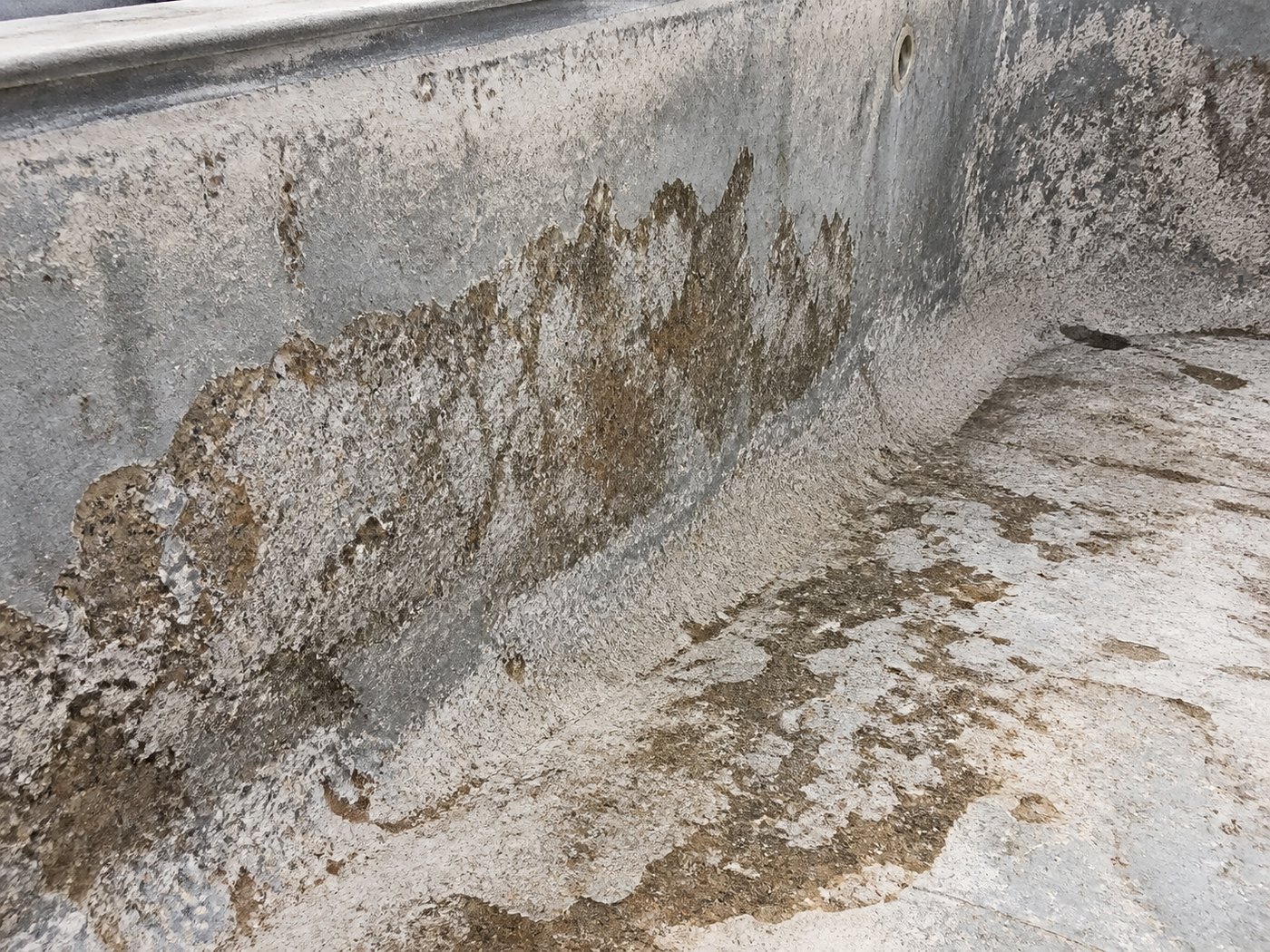
- Marbelite and plaster pools. These cement-based finishes are happy with some calcium, so granular is fine if your hardness is low. Older marbelite pools in Cape Town often have soft fill water, which makes granular a reasonable default. Never let undissolved granules sit on the floor, as they can mark the surface.
- Fibreglass pools and linings. Liquid chlorine is the gentler choice. It adds no calcium, so there’s less risk of scale on the gelcoat, which matters for a new fibreglass lining, and there’s no undissolved product to sit on the surface.
- Salt chlorinator pools. The salt cell makes sodium hypochlorite from the salt, so the pool is already on “liquid chlorine”. For a boost or a shock, liquid matches what the pool makes and adds nothing extra. Granular adds calcium that can scale the cell plates.
- Pools with high stabiliser. Stop tablets and switch to liquid or granular until the level drops.
Rainy months add another twist. Winter downpours dilute chlorine and stabiliser, so a pool that held chlorine nicely in February can struggle in July. Test after heavy rain rather than dosing on a fixed calendar.
Dosing chlorine or bleach in pool water safely
Whatever you choose, the safety rules are the same:
- Never mix chlorine products with each other or with acid, and never pour them into the same bucket. That includes bleach and granular.
- Add chemicals to water, never water onto chemicals, and one product at a time with the pump running.
- Follow the label, wear gloves and eye protection, and keep children and pets away while you dose.
- Store chlorine away from acid, out of the sun and out of reach.
Liquid chlorine and bleach go in slowly near a return jet. Granular is best pre-dissolved in a bucket of pool water, product added to water, as the label directs. If you’re clearing algae rather than topping up, our guide on how much shock to add to a pool covers the higher doses, and lowering pH covers the acid step.
Chlorine vs bleach for a pool: common questions
Is chlorine vs bleach for a pool a real difference?
Chemically, no. Plain unscented bleach and liquid pool chlorine are both sodium hypochlorite. The real difference is strength, so bleach needs a much bigger volume for the same dose.
Is outdoor bleach the same as pool chlorine?
Only if the label lists sodium hypochlorite with a percentage and no added perfume, thickener or detergent. Many outdoor and “multi-surface” bleaches contain extras that cause foam or cloudiness. If the label isn’t clear, don’t use it.
How much liquid chlorine should I add to my pool?
Use grams of available chlorine = litres x ppm rise / 1,000, then divide by the strength. A 50,000 litre pool needs about 833ml of 15% liquid chlorine for a 2.5 ppm lift. Test first, because after heavy Cape Town rain you may need more.
Is liquid chlorine or granular better for a salt pool?
Liquid. A salt cell already makes sodium hypochlorite, so liquid matches it and adds nothing extra. Granular adds calcium, which can scale the cell plates over time.
Can I swim after adding bleach to the pool?
Wait until the free chlorine reading is back in the normal range and the water has circulated for at least a few hours. After a heavy dose, test before anyone swims rather than going by the clock.
If juggling products and test strips isn’t how you want to spend summer weekends, our pool maintenance team can take it over, with water balancing on every visit.
Still weighing up chlorine vs bleach for a pool?
Tell us your pool size, surface and whether you run a salt chlorinator. We’ll test the water and suggest a simple, consistent routine.


