

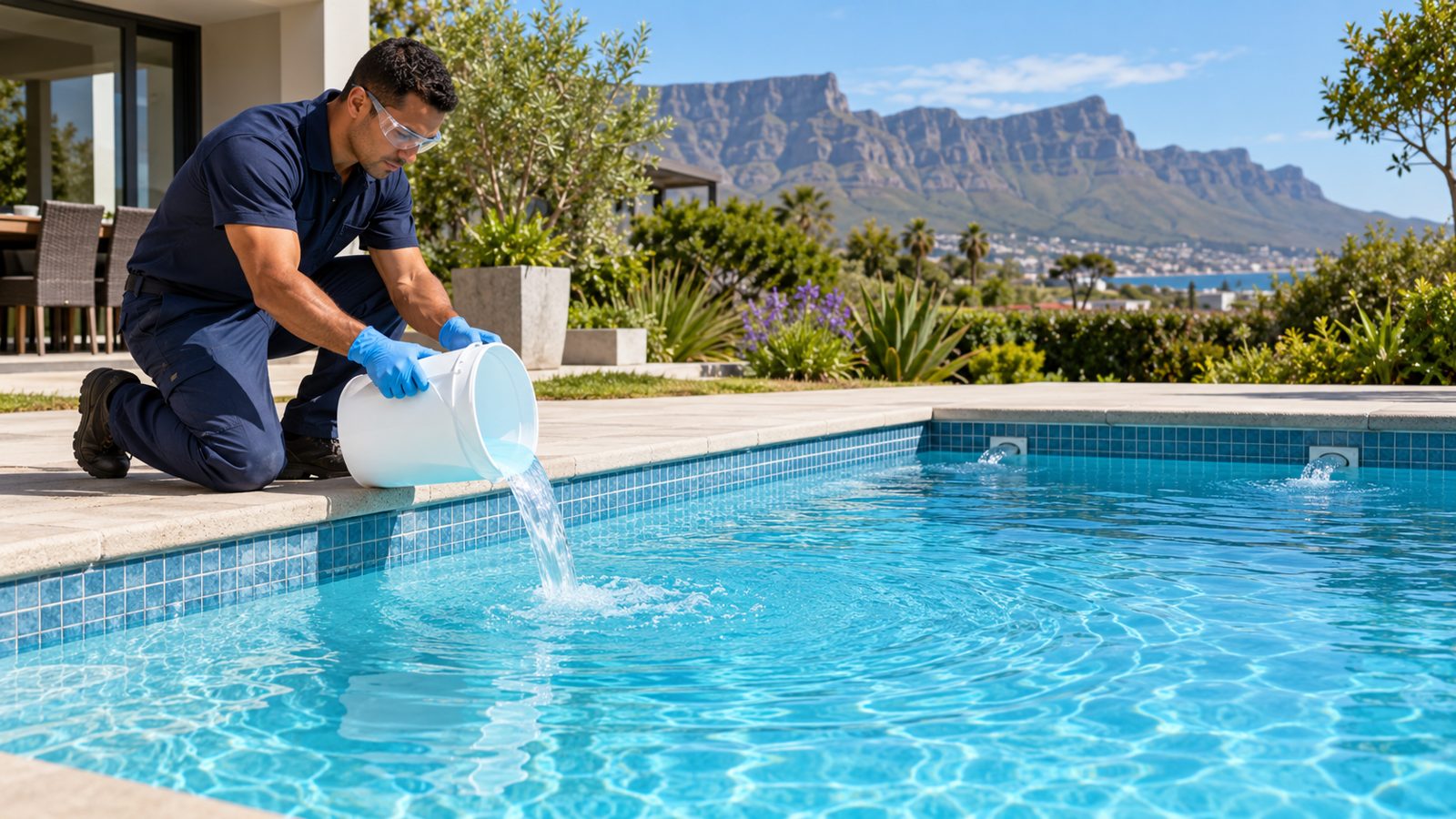
How to lower pH in a pool: add a pool acid, either dry acid (sodium bisulphate, sold as pH minus) or liquid hydrochloric acid, in small measured doses with the pump running, then retest after a few hours. The target is a pH of 7.2 to 7.6. Go slowly, because acid also drops your total alkalinity, and overshooting is easy.
Low pH is the opposite problem, and soda ash fixes it. This guide covers both, plus why salt pools and new marbelite keep drifting up. If the numbers won’t settle, our pool water testing and balancing service can find out why.
Ideal pool pH and why it matters
The ideal pool pH is 7.2 to 7.6, with 7.4 to 7.5 the sweet spot most guides aim for. It’s a narrow band, and it matters because pH controls how well your chlorine works. As the pH climbs, more of the chlorine shifts into a weak, slow form, so the same dose kills far less.
| pH reading | What happens | What to do |
|---|---|---|
| Below 7.0 | Acidic water stings eyes, etches marbelite and grout, corrodes metal fittings | Raise with soda ash, check alkalinity |
| 7.0 to 7.2 | Slightly low, chlorine works well but surfaces suffer over time | Small soda ash dose |
| 7.2 to 7.6 | Ideal pool pH: comfortable water, chlorine working properly | Nothing, keep testing weekly |
| 7.6 to 7.8 | Chlorine weakening, water may start to dull | Small acid dose |
| Above 7.8 | Cloudy water, scale on tiles, algae gets a foothold | Acid in stages, retest between doses |
Test at least once a week, and more in summer. It’s one of the first jobs on our weekly pool maintenance checklist. Take the sample from elbow depth, away from the return jets, and read strips or drops in good light. If two kits disagree, a pool shop or a professional test settles it.
Pool pH too high: the usual causes
Pool pH drifts upwards on its own. Water gives off carbon dioxide into the air, and every time it does, the pH rises. Anything that churns the surface speeds that up. The main culprits:
- Salt chlorinators: the cell releases fine hydrogen bubbles that drive carbon dioxide out, so salt pools need acid more often. If you’re thinking of converting to a salt water pool, budget for regular acid.
- New marbelite or plaster: fresh cement surfaces push the pH up for weeks while they cure. Our new marbelite pool aftercare guide covers that start-up period.
- Waterfalls, jets and spa spillovers: splashing water loses carbon dioxide faster.
- Granular calcium hypochlorite and liquid chlorine: both are alkaline, so heavy chlorine use nudges the pH up.
- High alkalinity: when total alkalinity is well above 120 ppm, pH keeps creeping back up after every acid dose.
Cape Town adds a seasonal twist. Municipal water is generally soft, and winter rain is even softer, so pools often swing low after a wet spell and then climb again in the dry summer months.
How to lower pH in a pool with pool acid or pH minus
There are two common ways to bring pH down at home. Both work; they just handle differently.
- Dry acid (sodium bisulphate, “pH minus”): a granular product. It’s easier to measure and store and doesn’t give off fumes, but it adds sulphates to the water over time.
- Liquid pool acid (hydrochloric or muriatic acid): cheaper per dose and faster acting, but strong-smelling, corrosive and more dangerous to handle. It gives off fumes, so open it outdoors and stand upwind.
Whichever you choose, use one made for pools and follow the label’s dosing table. Don’t swap between products mid-treatment without letting the first one mix in and retesting. Store acid sealed, upright and well away from the pump and electrics, since fumes speed up the corrosion we already see on coastal pool equipment.
Acid safety: wear chemical-resistant gloves and eye protection. Always add acid to water, never water to acid. Never mix acid with chlorine, in the pool or in a bucket, because it releases toxic chlorine gas. Add one product at a time, with the pump running, and keep children and pets well away until it has mixed in.
Rather not handle acid?
Our team tests the water, corrects the pH and alkalinity safely and explains what keeps pushing your numbers out. Tell us your pool size and the last readings you got.
How to lower pH in a pool, step by step
Here’s the safe routine for a home pool. Do it in calm weather, ideally late afternoon, and set aside a few hours so you can retest before bed or the next morning.
- Test pH and total alkalinity. If alkalinity is low, fix that before adding acid.
- Switch the pump on and leave it running.
- Put on gloves and eye protection.
- Half fill a plastic bucket with pool water. Measure your acid or pH minus and slowly add it to the water in the bucket. Never pour water onto the acid.
- Pour the diluted mix slowly into the deep end, low down near the surface, away from the skimmer and from anyone in the area.
- Rinse the bucket with pool water and pour that in too.
- Leave the pump running for at least four to six hours, then retest. Repeat only if the pH is still above 7.6.
Don’t swim while you’re adjusting. Wait until the acid has mixed through and the pH reads in range. Wash any splashes off skin and paving with plenty of water straight away, and rinse the gloves before you take them off. Keep a record of each dose and reading in a notebook or on your phone. After a month you’ll know roughly how much acid your pool needs each week, which takes most of the guesswork out of it.
How much pool acid to lower pH?
There isn’t a single safe number. The same acid dose drops the pH by different amounts in different pools, because total alkalinity acts as a buffer. A pool with high alkalinity soaks up acid and barely moves, while a pool with low alkalinity can crash from 7.8 to 6.8 in one go.
So start with a third to half of the label dose for your volume, retest after a few hours and top up if you need to. You’ll soon learn how your own pool responds. Know your litres first: the pool volume calculator gives you the figure every label asks for. If the pH bounces back up within days, the alkalinity is probably high.
Bringing high alkalinity down takes repeated acid doses with plenty of aeration between them, which is fiddly work. Correct alkalinity sits around 80 to 120 ppm, and our guide to pool alkalinity and baking soda explains how it holds pH in place.
Raise pH in pool water when it drops
To raise pH in pool water that has fallen below 7.2, use soda ash (sodium carbonate), sold as pH increaser or pH plus. It’s strongly alkaline and works fast. Dissolve it in a bucket of pool water, pour it slowly around the pool with the pump running, and don’t add too much at once or the water can turn milky for a while.
If the pH and alkalinity are both low, bicarbonate (baking soda) lifts the alkalinity first with only a small pH change. Borax is another option when you want to raise pH without raising alkalinity much. Retest after six hours or so before adding more.
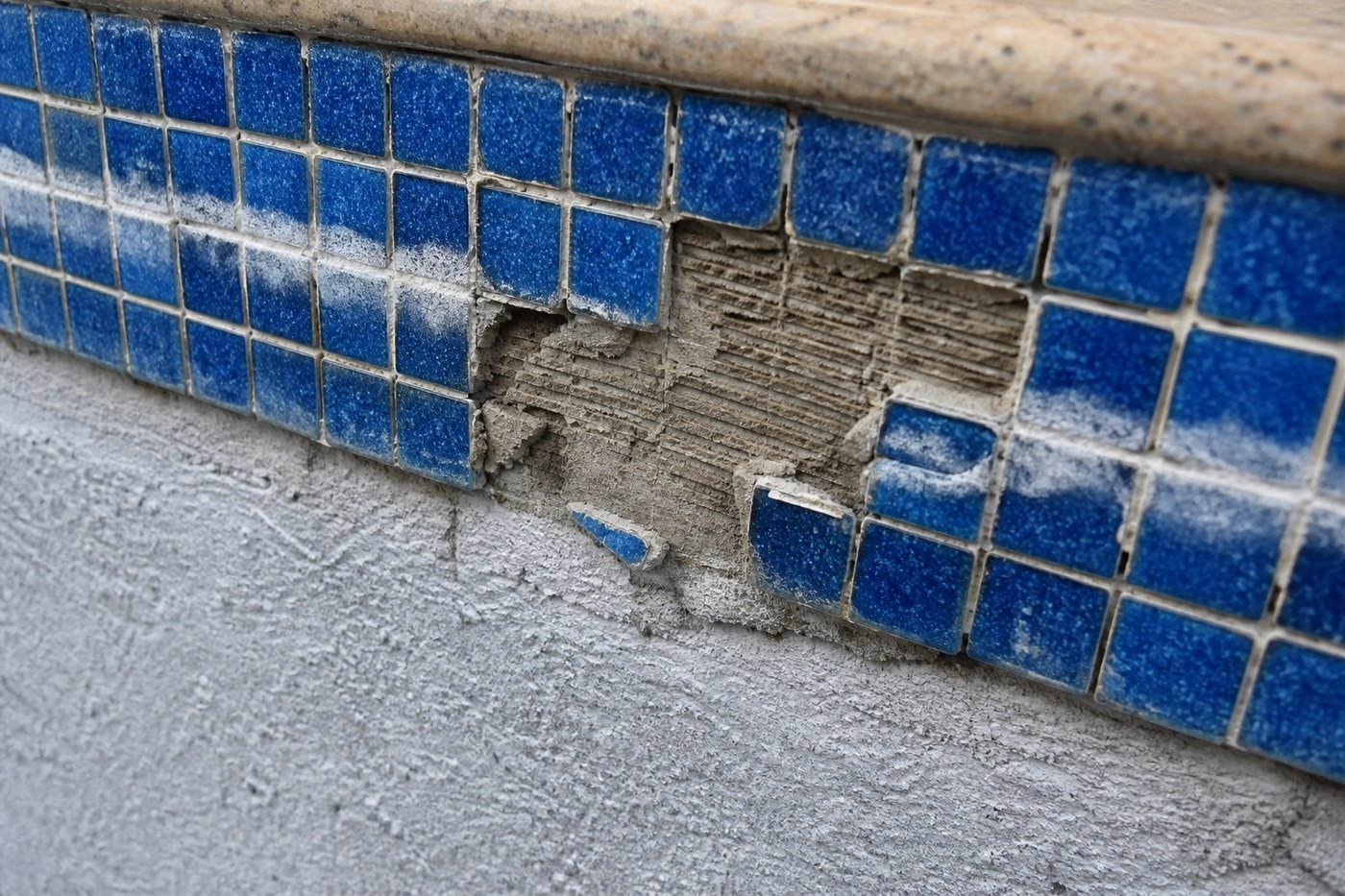
Low pH is common after heavy winter rain and in pools that have just had too much acid. Rainwater is naturally slightly acidic and very soft, so a few days of cold fronts can pull both the pH and the alkalinity down at the same time. Left alone, it etches marbelite, dissolves grout and leaves the surface rough. Regular pool maintenance visits catch it early.
How to lower pH in a pool: quick answers
How to lower pH in a pool quickly?
Use liquid pool acid or dry acid (pH minus), diluted in a bucket of pool water and poured slowly into the deep end with the pump running. Retest after four to six hours. Fast is fine, but small doses are safer than one big one.
What is the ideal pool pH?
Between 7.2 and 7.6, with about 7.4 to 7.5 being ideal. In that range chlorine works well and the water is comfortable on eyes and skin.
Why does my salt pool pH keep going up?
The salt cell releases hydrogen bubbles that drive carbon dioxide out of the water, which raises pH. Salt pools usually need a small acid dose every week or two. High alkalinity makes it worse.
Can I swim after adding acid to the pool?
Wait until the acid has fully mixed through, usually a few hours with the pump running, and the pH reads 7.2 to 7.6. Never swim while you’re still dosing.
How do I raise pH in a pool?
Add soda ash (pH plus) dissolved in a bucket of pool water, with the pump running. If alkalinity is also low, start with bicarbonate. Retest before adding more.
If your pH won’t stay put, book a water balancing visit and we’ll check pH, alkalinity, calcium and stabiliser together.
Balance your pool water properly
We test the full set of readings, correct them safely and leave you with a simple routine to follow. Ask our team for a visit.


