


How much stabiliser to add to a pool depends on your litres and the gap between your reading and the target. Each 1,000 litres needs 1g of stabiliser for every 1 ppm, so a 50,000 litre pool going from 10 to 40 ppm needs about 1.5kg. The target for most chlorine pools is 30 to 50 ppm.
Stabiliser is the one pool chemical that’s easy to add and hard to remove. That’s why testing first matters more here than anywhere else. If you’d rather leave it to us, stabiliser checks are part of our regular pool maintenance visits.
How much stabiliser to add to a pool: stabiliser calculator
Enter your pool size, your current stabiliser reading and the target. The calculator gives the grams of stabiliser (cyanuric acid) to add. If you’ve never tested it, do that first. Many pools already have plenty.
Not sure how many litres your pool holds? Use our pool volume calculator. Stabiliser overdoses usually come from a pool that’s smaller than its owner thinks.
How much stabiliser to add to a pool: worked examples
The formula is grams = litres x ppm rise / 1,000. Products sold as pool stabiliser or conditioner in SA are normally close to pure cyanuric acid, so the dose is the same. If yours is a blend, follow its label.
| Pool size | +10 ppm | +20 ppm | +30 ppm | 0 to 40 ppm |
|---|---|---|---|---|
| 20,000 L | 200g | 400g | 600g | 800g |
| 30,000 L | 300g | 600g | 900g | 1.2kg |
| 40,000 L | 400g | 800g | 1.2kg | 1.6kg |
| 50,000 L | 500g | 1kg | 1.5kg | 2kg |
| 70,000 L | 700g | 1.4kg | 2.1kg | 2.8kg |
Example: a 30,000 litre pool reads 15 ppm and you’d like 40 ppm. That’s a 25 ppm rise, so 30,000 x 25 / 1,000 = 750g. At the time of writing (October 2026), SA shops list 2kg tubs of pool stabiliser from around R210.26, so one tub covers that with some left over.
Aim low on the first dose. Stabiliser takes days to dissolve and show on a test. Dose for the lower end of the range, wait a week, then top up if needed.
What cyanuric acid does for your chlorine
Cyanuric acid is a sunscreen for chlorine. Unprotected chlorine breaks down in direct sun within a few hours, and one pool brand estimates that up to 90% can be lost on a single sunny day. Cyanuric acid holds the chlorine loosely, shielding it from UV and releasing it as it’s needed.
In a Cape Town summer, with long days and strong sun, an outdoor pool without stabiliser burns through chlorine fast. You’d see good readings at night and almost nothing by mid-afternoon. If that’s your pattern, check stabiliser before reaching for more chlorine. Our pool chlorine calculator covers the chlorine dose itself.
Indoor pools and pools under a permanent cover get far less UV and need little or no stabiliser.
Pool stabiliser targets: how much stabiliser to add to a pool by type
Most pool guides agree on these ranges. Your chlorinator manual, if you have one, takes priority.
- Standard chlorine pool: 30 to 50 ppm.
- Salt chlorinator pool: about 60 to 80 ppm, because the cell makes chlorine slowly and steadily.
- Above 100 ppm: chlorine works too slowly to be reliable. Plan to lower it.
Test cyanuric acid monthly in swimming season and after any big water change. Strips are rough at this test, so a liquid kit or a pool shop test is worth it. Our water testing and balancing visits include it. If you run a salt system, see our guide on how much salt to add to a pool as well.
Not sure what your stabiliser reading is?
We test stabiliser alongside chlorine, pH, alkalinity and salt, then tell you whether to add, wait or drain. Send us your pool size and suburb.
How to add pool stabiliser
Granular stabiliser dissolves very slowly. Pour it straight into the pool and it sits on the floor for days, where it can mark some surfaces. The usual way around that is a sock in the skimmer.
- Test and work out the dose. Switch the pump on.
- Wear gloves. Keep children and pets away while you work.
- Pour the stabiliser into a clean old sock or a fine mesh bag and tie it off.
- Hang it in the skimmer basket so pool water flows through it.
- Squeeze the sock gently every day or so to help it along.
- Don’t backwash for at least two to three days, or until the sock is empty, so the stabiliser stays in the pool and not in the filter.
- Retest after about a week before adding more.
Add stabiliser on its own, never mixed with another chemical, and follow the label on your tub. Liquid stabiliser also exists and shows on a test faster, but it costs more per gram. For most home pools the granular sock method is fine if you’re patient.
Stabiliser too high: why it creeps up
Many pool owners never add stabiliser on purpose and still end up too high. That’s because stabilised chlorine (dichlor granules and trichlor tablets) adds cyanuric acid with every dose. Use them every week for a year or two and the level keeps climbing.
Cyanuric acid doesn’t evaporate and the sun doesn’t break it down, so it only leaves with the water. The only reliable way to bring a stabiliser too high reading down is a partial drain and refill. Stabiliser “reducer” products exist, but results vary and some suppliers no longer recommend them.
- Work out how much to replace: to go from 100 to 50 ppm, swap about half the water.
- Drain in stages and never fully empty a pool without advice, because some shells can lift.
- Switch to unstabilised granular or liquid chlorine afterwards so the level doesn’t climb again.
Before you drain, check the surface and the water table. Fibreglass shells and some older pools can move if they’re emptied too far, especially after heavy winter rain when the ground is wet. If you’re unsure, our pool inspections cover the shell, the equipment and the water before any big change.
Water is the real cost here. During the 2018 drought, Cape Town’s level 6 restrictions banned topping up pools with municipal water, and that history is a good reason not to overdose in the first place. On current City tariffs, 12.5 kilolitres (a quarter of a 50,000 litre pool) at the step 3 rate of R52.20 per kilolitre works out to roughly R650.
Chlorine lock: what it really means
“Chlorine lock” is the name pool owners use when chlorine readings look normal but the water still goes cloudy or keeps turning green. The usual cause is very high cyanuric acid. The chlorine is present, but so much of it is held by the stabiliser that it kills algae too slowly.
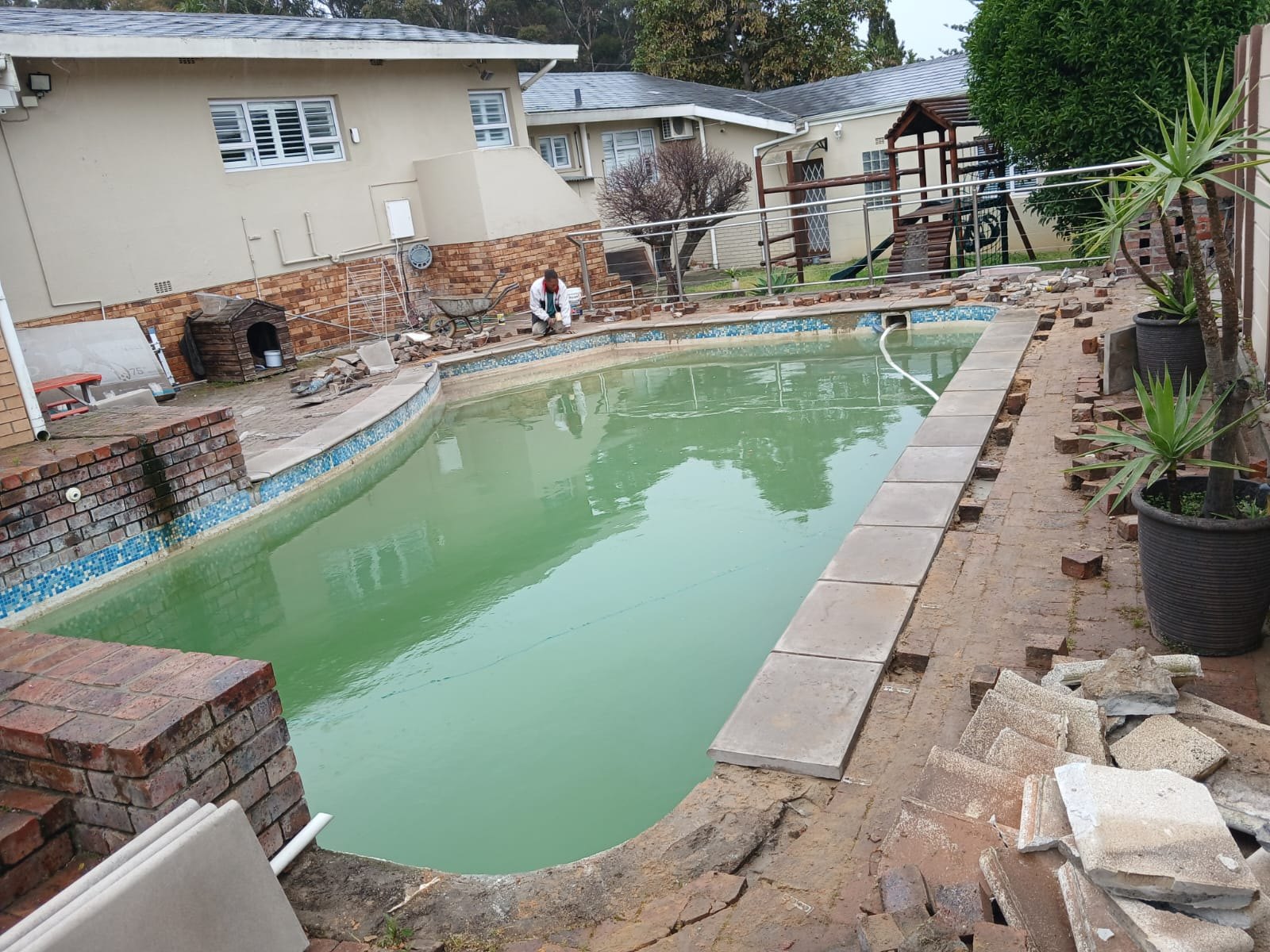
Signs to watch for:
- Free chlorine reads 2 to 3 ppm but algae keeps returning.
- Shock doses clear the pool for a few days only.
- You’ve used tablets or stabilised granules for a long time.
Read our guide to why a green pool keeps coming back for the other causes, such as a weak filter or short pump hours. If the pool is already green, our green pool recovery service clears it and resets the chemistry.
Stabiliser questions
How much stabiliser to add to a pool of 50,000 litres?
From zero, a 50,000 litre pool needs about 2kg of stabiliser to reach 40 ppm, or 1.5kg to reach 30 ppm. Each 10 ppm takes 500g in that size of pool, so test first and only add the difference.
What level should pool stabiliser be?
For a normal chlorine pool, keep cyanuric acid between about 30 and 50 ppm. Salt chlorinator pools usually run a little higher, around 60 to 80 ppm, but check your chlorinator manual for its own figure.
What happens if stabiliser is too high in a pool?
Chlorine is still there, but it works much more slowly, so algae can grow even with a normal chlorine reading. Above about 100 ppm, most guides treat the water as needing a partial drain and refill.
Does stabiliser go away on its own?
Not really. Cyanuric acid doesn’t evaporate or get burnt off by the sun, so it only drops when water leaves the pool through backwashing, splash-out or overflow. In a wet Cape Town winter, rain overflow can bring it down a little.
Do salt pools need stabiliser?
Yes. A salt chlorinator makes chlorine, but the sun destroys it just as quickly as chlorine from a bucket. Stabiliser protects it, and most salt systems ask for a slightly higher level than standard pools.
Prefer not to manage stabiliser yourself? Our pool maintenance service keeps it in range and switches you to the right chlorine for your pool.
Book a pool maintenance visit
We’ll test, balance and keep an eye on stabiliser so it doesn’t creep up. Ask for a quote for weekly or monthly visits.


