

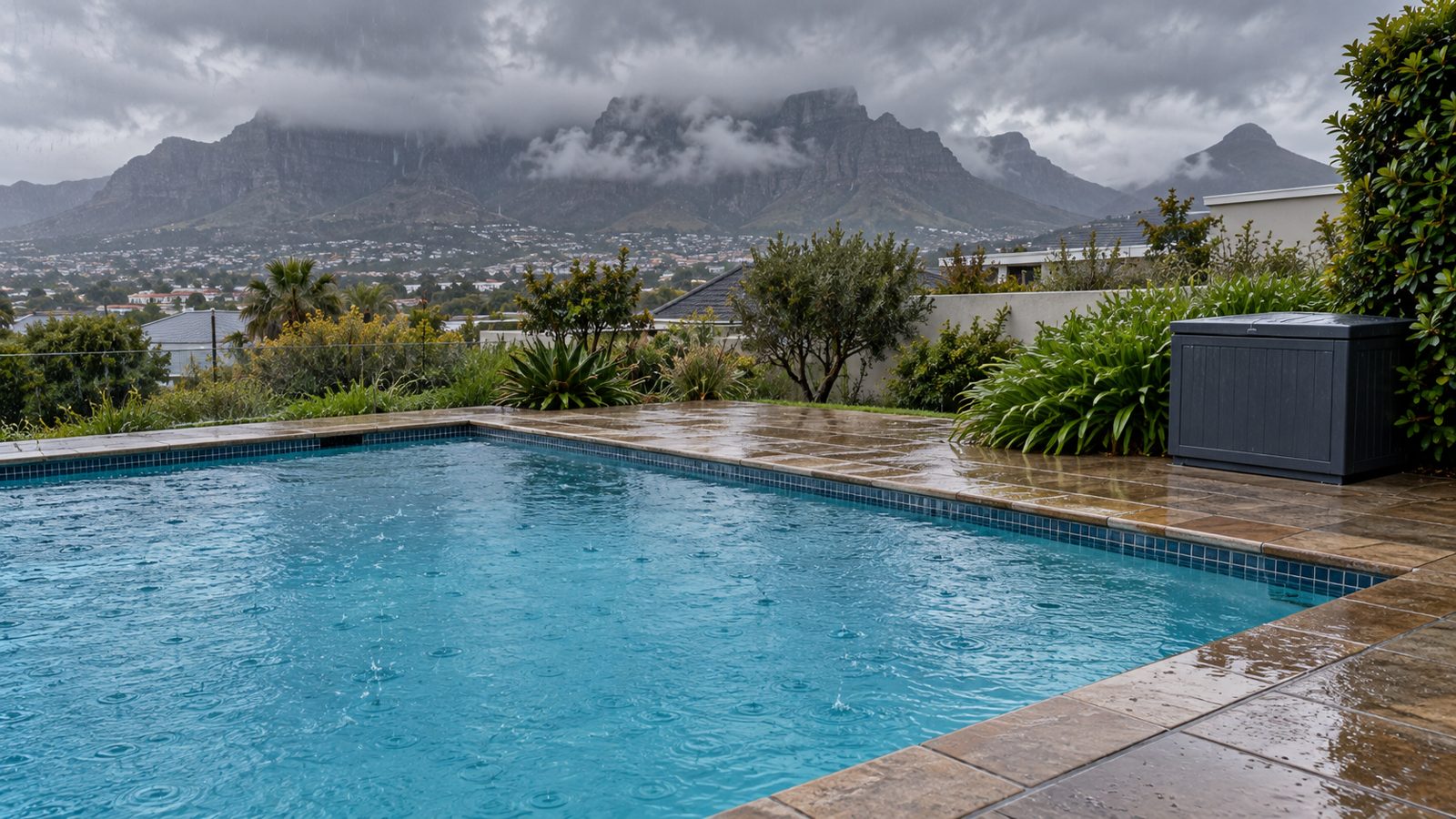
Should you run your pool pump when it rains? Yes. In ordinary rain, keep the pool pump running on its normal timer, because circulation keeps the chlorine spread through the water and sends rain-borne dirt to the filter. The exceptions are lightning, a pump box that’s filling with water, and a pool that’s overflowing.
That’s the short answer for a pool pump when it rains. The longer one depends on how heavy the rain is, where your pump sits and what the water does next. Cape Town winters bring long spells of rain, so it’s worth knowing what to watch for.
Running the pool pump when it rains: why it helps
Rain doesn’t clean a pool. It brings dust, pollen and leaves down with it, and runoff from paving and beds washes soil in. Pool equipment makers note that all of this uses up free chlorine and can knock the pH out of balance. Still water with low chlorine is how a green pool starts, and our green pool recovery team sees plenty of them after a wet week.
Running the pump during rain helps in three ways:
- It keeps the chlorine moving, so no corner of the pool sits untreated.
- It drags fine dirt into the filter before it settles on the floor.
- It keeps the cleaner working, so leaves don’t stain the surface.
What happens to a covered pool pump when it rains
Pool pumps are built to sit outdoors, and normal rain on a covered pump box isn’t a problem. What matters is that the motor stays dry underneath and the box drains properly.
When to switch off the pool pump when it rains heavily
There are a few times when turning the pump off is the safer choice:
- Lightning nearby. Weather services advise getting out of the water and away from it at the first thunder. A strike nearby can also damage motors, timers and chlorinators. Switch off at the DB, not at the pump.
- Water rising in the pump box. If the box floods, the motor can be damaged and the earth leakage will trip. Switch off from a dry spot and don’t wade in.
- Earth leakage keeps tripping. Leave it off. Repeated resets with wet electrics are dangerous. A qualified electrician needs to find the fault.
- The pool is flooded with muddy runoff. Switch off briefly so the filter doesn’t clog, clear the worst debris and then restart.
Wet electrics are not DIY. Never touch the pump, timer or DB with wet hands or while standing in water. Don’t open the motor or the electrical box. If the pump hums but won’t start after rain, read our guide to a pool pump humming but not starting and call for help.
Once the storm has passed and the box is dry, turn the pump back on and run it longer than usual for a day to catch up on circulation.
Pool overflow: rain, the skimmer and the waste setting
Heavy, steady rain can lift the water level until it covers the skimmer mouth. When that happens, the skimmer stops pulling floating leaves off the surface. In bad cases, the pool spills over the coping and onto the paving, and runoff can carry soil back in.
Pool overflow in rain isn’t usually harmful to the shell on its own, but it does dilute the water and makes the skimmer useless. The fix is to bring the level back down to roughly the middle of the skimmer opening.
On most sand filters you do that with the waste setting on the multiport valve:
- Switch the pump off before you move the valve handle.
- Turn the handle to waste and make sure the waste line is open.
- Switch on and watch the level. Stop at mid-skimmer.
- Switch off, set the valve back to filter, and switch on again.
Point the waste water to the sewer drain, not the street. The City of Cape Town advises that pool backwash go to the sewer system rather than the stormwater system, because it carries chlorine and other chemicals. For more on what to do when a pool spills over, read our guide to a pool overflow after heavy rain.
Pool overfull or dirty after the rain?
Our team can clear the debris, bring the level back down, test the water and balance it. Tell us your suburb and what the pool looks like.
Your pool after heavy rain: what to do first
Debris before chemicals is the rule. Adding chlorine to a pool full of wet leaves wastes most of the dose, because the leaves soak it up. Here’s the order we use for a pool after heavy rain:
- Skim the surface and empty the skimmer and pump baskets.
- Bring the water level back to mid-skimmer if it’s high.
- Brush the walls and floor and let the cleaner run.
- Backwash and rinse if the filter pressure has climbed.
- Test the water, then dose one product at a time with the pump running.
- Run the pump for a full cycle after dosing, then test again the next day.
Our backwash guide covers step 4 in detail. When you dose, always add chemicals to water, never water onto chemicals. Follow the label, wear gloves and eye protection for acid, and keep children and pets away until the water has mixed.
Pool chemistry after rain
A short shower barely changes the numbers. Pool chemistry guides work out that a couple of centimetres of rain adds only a small share of new water, so stabiliser and salt hardly move. What drops fast is chlorine, because of everything the rain washes in.
A long Cape Town winter front is different. Days of heavy rain, plus waste-to-lower, can replace a real share of the water. Then alkalinity, stabiliser and salt all fall, and pH starts to wander.
| After | Test | Common fix |
|---|---|---|
| A short shower | Free chlorine and pH | Top up chlorine if it’s low |
| A day or two of rain with debris | Chlorine, pH and alkalinity | Clear debris, then chlorinate and correct alkalinity |
| A week of winter rain or an overflow | Chlorine, pH, alkalinity, stabiliser, salt | Rebalance each one in turn, starting with alkalinity |
| Muddy runoff into the pool | All of the above | Treat as a clean-up: debris, shock, filter, retest |
The usual targets are pH 7.2 to 7.6, free chlorine of 1 to 3 ppm and total alkalinity of 80 to 120 ppm. Our pool chlorine calculator works out a dose for your litres, and the baking soda guide covers raising alkalinity.
Salt pools and stabiliser after rain
Salt chlorinators often flag low salt after a long wet spell, and a diluted pool also makes less chlorine for the same setting. Test before you add anything, since sensors can read low when the water is cold. If salt really is low, use our pool salt calculator to work out the bags. Stabiliser is only lost through dilution, so recheck it after an overflow, not after every shower.
Pool pump in winter
Running a pool pump in winter is still needed in Cape Town, just for fewer hours. Cold water slows algae and chlorine lasts longer, so many pools manage on a shorter daily cycle than in summer. Keep it running every day though. A pool left still for weeks comes out of winter green.
A few winter habits help:
- Check that the pump box drains and the lid sheds water away from the motor.
- Empty the baskets more often when the wind and rain bring leaves, or add basket checks to your regular pool maintenance.
- Test the water weekly, and after every big front.
- Keep a cover on if you have one, to cut debris and dilution.
Our winter pool care guide covers this in more detail, and our article on wind-blown debris in the pool helps with the leaves and dust that follow a storm.
Rain and pool pump questions
Should I run my pool pump when it rains?
Yes, in normal rain keep the pool pump running on its usual timer. Circulation spreads the chlorine and pulls rain-borne dirt into the filter. Switch it off during lightning, or if water is rising in the pump box.
Should I turn off the pool pump when it rains heavily?
Only if there’s lightning nearby, the pump box is flooding or the equipment is under water. Steady Cape Town winter rain on its own is not a reason to stop the pump. Turn it off at the switch or DB from a dry spot, never while standing in water.
What should I do with my pool after heavy rain?
Skim and empty the baskets first, then lower the level to the middle of the skimmer mouth if it’s overfull. Test chlorine and pH, then alkalinity, stabiliser and salt if the rain lasted days. Run the pump for a full cycle after dosing.
How much salt do I add to my pool after rain?
Only add salt after a test shows it’s low, because a few days of rain rarely shifts it much. If the pool overflowed for a long time, test and dose to your chlorinator’s target. Our salt calculator works out the kilograms from your litres and reading.
Why is my pool pump not working after rain?
Water in the pump box, a tripped earth leakage or a wet motor are the usual causes. Don’t reset the breaker repeatedly or touch wet electrics. Let it dry and have a qualified electrician or our team check it before switching it back on.
If you’d rather not deal with the after-storm clean-up yourself, our team offers regular pool maintenance through the wet months, from weekly visits to a once-off reset. See our weekly pool service plans for what’s included.
Get your pool back to normal after the rain
We’ll clear the debris, check the pump and filter, test the water and rebalance it, so the pool doesn’t turn green after the next front.

