

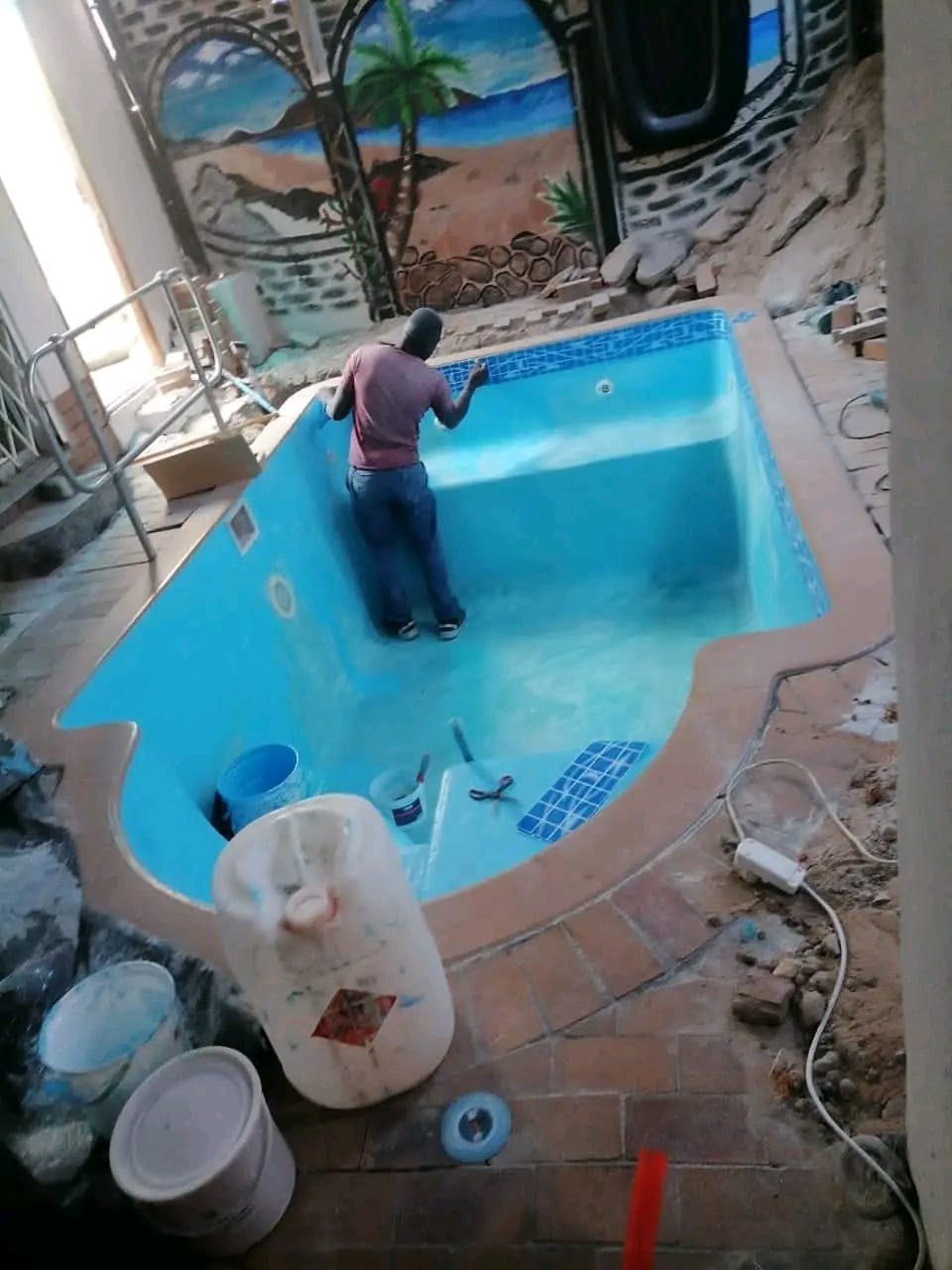
New fibreglass pool lining aftercare should follow the resin and topcoat system actually installed in your pool. Get written confirmation of cure release, filling permission, suitable cleaning tools and initial water-care responsibilities. Do not apply a plaster start-up routine to a new resin lining or assume a glossy appearance means it is ready for swimming.
A lining applied inside an existing concrete shell is not the same product as a factory-made fibreglass pool. Both may have a smooth coloured surface, but that does not make their installation instructions interchangeable. This is a homeowner question checklist, not a resin commissioning specification. It does not establish cure, immersion readiness, chemical targets or equipment release dates for any installed lining.
New fibreglass pool lining aftercare begins before the final visit
Ask the installer to identify the complete system, including the laminate resin and exposed finish. Record the manufacturer and product names, not just a colour description. Request the technical documents relevant to the application and a care sheet that explains the responsibilities after the team leaves.
When discussing fibreglass pool relining, clarify whether the work includes the refill, initial water tests and a later check. These are different tasks. A quotation for applying the lining does not by itself tell you who monitors the water or responds if a change appears afterwards.
The person taking over maintenance should be included in the handover. If the regular pool service did not install the finish, give them the actual product instructions before they restart familiar treatments. A routine that worked on the old interior may be inappropriate for the newly installed surface.
Pool lining cure confirmation is the first release gate
Pool lining cure confirmation should come from the installer using the requirements of the installed system. Ask what conditions must be satisfied before filling and how a weather interruption changes the plan. Do not test an unfinished coating by walking into the shell, scraping it or pressing an object against it.
Ask which documented checks the installer uses to authorise immersion for the named resin and topcoat. Request the product document and a dated answer for your pool. This article offers no visual, touch or hardness test and does not set a cure period. If the paperwork is missing, leave the filling decision with the installer rather than choosing a waiting time from another pool guide.
Ask the installer to record permission for filling, routine cleaning, automatic equipment and swimming, and to explain whether any separate restrictions apply. Ask whether heating, salt equipment or a cover has any restrictions during commissioning. If the answer depends on a manufacturer’s approval, keep that approval with the handover documents.
- Obtain the product identity and current technical instructions.
- Ask the installer to document readiness for the first fill.
- Confirm initial testing, circulation and cleaning responsibilities.
- List equipment that must remain out of use until authorised.
- Agree a follow-up contact and retain all changes to the plan.
Keep children, pets, visitors and other trades away from the work area until it is released. An apparently finished surface can attract people who do not know the restrictions. Tell gardeners and cleaners not to wash debris into the shell or store tools on its edge while the job is being completed.
Scott Bader’s Crystic 506PA technical sheet specifically covers the water-contact surface of in-situ GRP-lined swimming pools. It describes product-specific curing conditions and warns that incorrect formulation can compromise the protective coating. This is an example of the technical evidence to request, not confirmation that your pool uses 506PA. The sheet does not give a universal first-fill date; obtain current written immersion permission for your installed system.
Gelcoat commissioning is not a plaster dust routine
First confirm whether the exposed finish is a gelcoat or another topcoat, then ask for its commissioning instructions. Have the contractor explain what was applied and what the manufacturer calls its early-care stage rather than guessing from an invoice abbreviation.
Do not assume a cloudy film means normal plaster dust. A resin-lined pool is not being commissioned as a fresh cementitious plaster surface. Document any residue and ask the installer what it is before attempting a plaster-style correction. The source of cloudiness could require water assessment, surface inspection or both.
Scott Bader’s swimming-pool systems overview lists gelcoats, skincoats, laminating resins and topcoats. That supports asking for the component names, not treating “fibreglass” as a complete specification. The overview does not provide an on-site first-fill release procedure. Obtain the applicable technical instructions from your installer; this article cannot supply them for an unidentified system.
Ask who controls the first fill and what protection is needed while it takes place. Confirm the source water, target level and procedure if supply is interrupted. Do not empty a newly filled pool because its colour looks different from a brochure. Water, lighting and viewing angle can change the appearance, and draining requires a separate professional decision.
Choose fibreglass pool cleaning tools deliberately
Fibreglass pool cleaning tools should be compatible with the exposed finish and in good condition. Ask the installer to approve the brush, manual vacuum head and any automatic cleaner individually. A label that says suitable for pools is not necessarily a statement about your new lining or its commissioning stage.
Need help with the next step?
Share the lining system, completion date and any concerns before changing the agreed care routine.
Inspect existing tools before putting them back into service. Look for grit trapped in brushes, damaged wheels, sharp edges and worn components. Do not experiment with metal scrapers, abrasive pads or household stain removers. A small test patch on a newly installed finish is still an alteration to that finish.
- Keep an approved brush and vacuum head separate from rough-surface cleaning tools.
- Store equipment so grit does not collect on surfaces that touch the lining.
- Ask for a demonstration of cleaning steps and curved seating without dragging hard parts.
- Obtain written permission before returning a robotic or suction cleaner to use.
If a mark does not lift with the agreed method, stop and photograph it. Record its location and whether it appeared before or after the first fill. That information is more useful than trying several products until one changes the colour. Ask the installer whether a surface review or water test should happen first.
Explain any practical limitation at handover. A deep corner, awkward step or inaccessible equipment area may make the proposed routine difficult. Ask for an alternative tool or service arrangement rather than leaning over the edge, entering restricted water or reaching into a hazardous space to complete the task.
Fibreglass finish water balance: record the starting point
Ask for a water-care plan that names your exposed finish. Have the required parameters, testing frequency and response limits written down for the installed product. Include the sanitiser system, source-water information and any treatment already used so the next person does not duplicate an addition.
Arrange pool water testing and balancing if readings are unclear or different advice conflicts. Tell the assessor that the pool has a newly applied lining rather than merely describing it as fibreglass. Supply its product name, completion date and commissioning instructions with the test record.
| Handover item | Useful evidence | Do not assume |
|---|---|---|
| Installed system | Product names and relevant care documents | All blue finishes are equivalent |
| Cure release | Installer’s dated confirmation | A shiny surface is ready |
| Water-care plan | Tests, approved limits and responsible person | The old plaster routine still applies |
| Equipment release | Tool and cleaner approval | An existing cleaner is automatically compatible |
Never combine chemical products or improvise a treatment recipe from several online guides. Follow the product labels and the agreed commissioning instructions. If they conflict, get clarification before acting. This article does not recommend an acid dose, shock treatment or salt addition for an unidentified lining.
Clear-looking water is not proof that either the sanitiser or the finish is ready for swimmers. Confirm swimming permission separately. If the water is cloudy, the bottom cannot be seen clearly or a surface concern is unresolved, keep the pool out of use while the responsible professional assesses the next step.
Lining warranty care and defect reporting
Lining warranty care should be explained in the written terms, including what maintenance records must be retained. Ask which company handles a claim, how quickly concerns should be reported and whether a proposed third-party treatment needs approval. Do not assume a verbal lifespan estimate is part of the warranty.
Create a baseline photograph set at handover. Include broad views and close views of any area specifically discussed with the installer. Photograph from safe, accessible positions and avoid claiming that an uneven reflection proves a defect. The aim is to preserve the starting condition for comparison, not diagnose the laminate remotely.
Report new blisters, lifting edges, cracks, persistent residue or unusual texture promptly. Also report unexplained water loss, without assuming it must come from the new lining. Water can be lost through other parts of a pool system. Do not puncture a blister, sand a patch or drain the pool to investigate.
Separate an observation from a conclusion in your message. For example, describe a raised patch near a step and attach a dated photograph rather than asserting that the whole lining has failed. Add the water readings and cleaning history so the installer can decide whether an inspection is necessary.
Arrange a handover review that answers your questions
For pool services in Brackenfell, send the lining documents before an assessment and explain whether the original installer is still managing commissioning. That helps distinguish a request for routine care from a concern that should first return to the responsible contractor.
When requesting pool services in Kuils River, provide access details, equipment photographs and the person available to discuss maintenance. Mention any locked gates or restricted work areas so the visit can be planned around safe access rather than assumptions about the property.
Keep unresolved product questions together: the exact exposed topcoat, its immersion release and which cleaners may contact it. Return unanswered items to the installer before changing the care routine. A generic maintenance sheet cannot fill gaps in the documents for the resin system actually applied.
Frequently asked questions
Can I use a plaster start-up guide on a new lining?
No. Ask for the procedure for the resin and exposed finish actually installed. A cementitious plaster routine is not a substitute for resin-system commissioning instructions.
Does a dry-looking surface prove the lining has cured?
Do not use this guide to judge cure from appearance. Ask the installer which checks and product instructions support filling permission for the exact system and application conditions.
Can my existing robotic cleaner go straight back in?
Only after its suitability and release date have been confirmed. Check its contact surfaces for damage or trapped grit, and obtain approval for the new lining rather than relying on past use.
Should I drain the pool to inspect a suspicious patch?
No. Document the patch from a safe position and contact the installer. Draining and invasive surface checks require professional assessment and are not routine homeowner aftercare.
Talk through your pool requirements
Contact Kwik Pools with your observations, photographs and questions. Ask what an assessment should cover and which records will help.


Comments are closed