


If your pool needs a facelift but a full resurface isn’t in the budget, pool paint is the cheapest way to get a clean, even colour back. There are two main types: two pack epoxy, which is tougher and lasts longer, and single pack chlorinated rubber, which is easier to apply and recoat. At the time of writing (October 2026), a professional repaint starts from around R85 per m2 for chlorinated rubber and from around R140 per m2 for epoxy.
The catch is that the two don’t mix. Paint the wrong one over the other and it can lift within months. Below we explain how to tell what is on your pool, how much paint you need, what a repaint costs and when paint is the wrong answer. Our pool coating and resurfacing service covers both systems.
The two main types of swimming pool paint
Almost every swimming pool paint sold in South Africa falls into one of two families. They behave differently, cost differently and are not interchangeable once a pool has been painted.
Epoxy pool paint
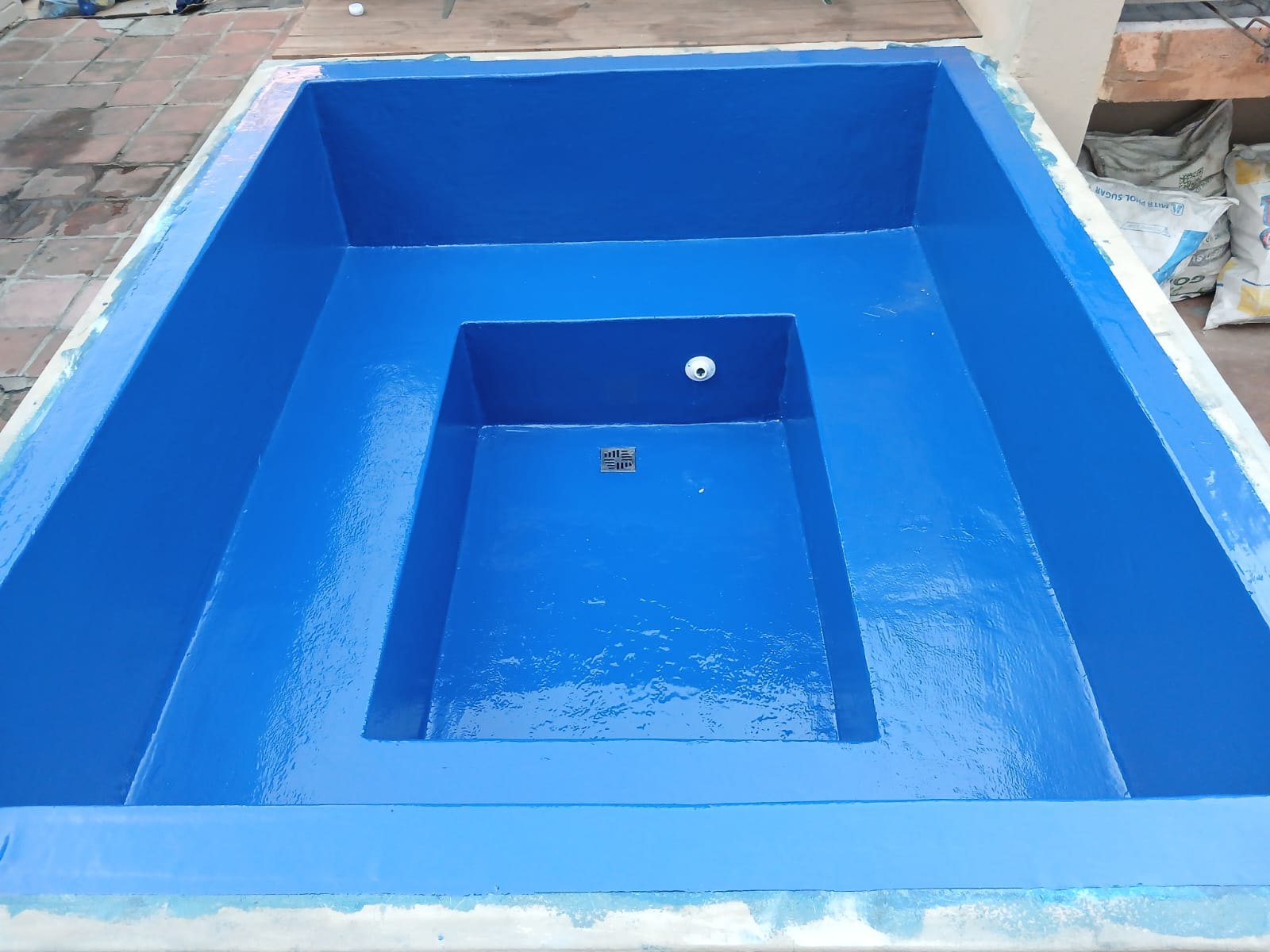
Epoxy pool paint comes as two parts, a base and a hardener, that are mixed just before use. It cures by chemical reaction into a hard, smooth, chemical resistant film. It suits bare concrete, marbelite that has been properly prepared, and pools stripped back to the substrate. Mixed epoxy has a limited pot life, so it needs a practised crew working to a plan.
Chlorinated rubber pool paint
Chlorinated rubber pool paint is a single pack, solvent based coating. Each new coat softens slightly and bonds into the one below, which makes recoating an already rubber painted pool fairly straightforward. It is less hard wearing than epoxy, so it usually needs redoing sooner.
| Epoxy | Chlorinated rubber | |
|---|---|---|
| Pack | Two pack, mixed on site | Single pack |
| Finish | Hard, smooth, satin to gloss | Smooth, semi gloss |
| Durability | Longer, up to about 8 years | Shorter, recoat sooner |
| Goes over | Bare or fully stripped surfaces, or old epoxy | Bare concrete or old chlorinated rubber |
| Applied price (October 2026) | From around R140 per m2 | From around R85 per m2 |
Compatibility: why you can’t mix pool paint systems
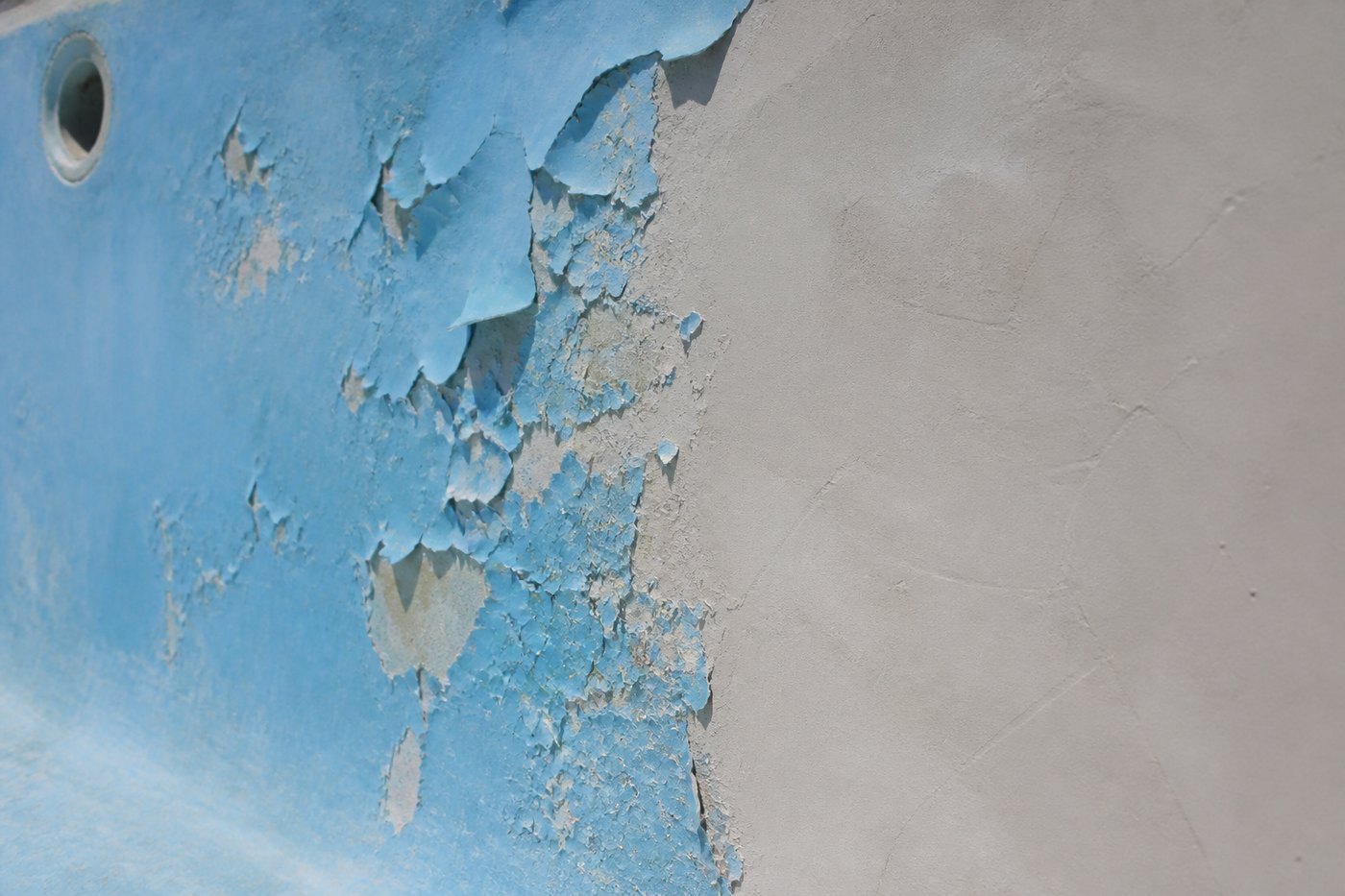
This is the mistake we see most. Epoxy should not be applied over chlorinated rubber, and chlorinated rubber manufacturers warn against applying their paint over epoxy or water based pool paint. The solvents in the new coat attack the old one, or the new coat simply can’t grip, and the result is wrinkling, bubbling and peeling.
If you don’t know what is on your pool, there are simple tests. A paint chip can be soaked in different solvents to see which one softens it, or you can send a sample to the paint manufacturer. Our team does this on site before we quote. If a previous repaint failed, our guide to pool paint peeling explains the usual causes.
Rule of thumb: match what is already there. Only switch systems if the old paint is stripped right back to sound concrete or plaster.
How much pool paint do you need?
Coverage depends on the product and how rough or porous the surface is. As a guide, manufacturer data sheets list roughly 4 to 8 m2 per litre per coat, with rough bare concrete at the low end and smooth recoats at the high end. Two coats is standard, and a third is sometimes added on porous surfaces.
- Work out the floor area: length times width.
- Add the walls: perimeter times average depth.
- Add steps, benches and ledges.
- Multiply by the number of coats, usually two.
- Divide by the coverage on the tin, and add a little extra for waste.
An 8m x 4m pool with an average depth of 1.4m has roughly 66 m2 of surface. At 6 m2 per litre that is about 11 litres per coat, or about 22 litres for two coats. Our pool volume calculator uses the same measurements if you want to check your sizes.
Not sure what paint is on your pool?
Send us a few close-up photos of the surface. We’ll tell you whether a repaint, recoat or full resurface makes more sense.
Pool painting cost in Cape Town
Pool painting cost is mostly labour and preparation, not paint. These market figures come from South African painting price guides at the time of writing (October 2026). They are not Kwik Pools prices, so ask our team for a current quote.
| Job | Market price |
|---|---|
| Chlorinated rubber, applied | From around R85 per m2 |
| Chlorinated rubber repaint, typical pool | R4,182 to R6,018 |
| Epoxy, applied | From around R140 per m2 (some painters quote R80 to R120 per m2) |
| Epoxy repaint, typical pool | R6,888 to R9,912 |
| Re-marbelite, for comparison | From around R450 per m2 |
We could not find reliable current tin prices for pool paint in litres, so we haven’t listed them. What pushes a quote up is usually:
- Stripping old, incompatible or flaking paint.
- Crack repairs and patching hollow plaster first.
- Acid washing or degreasing a stained surface.
- Waterline tiles that need regrouting or replacing.
- Draining, cleaning out and refilling the pool.
For a fuller comparison with marbelite and fibreglass, see our breakdown of pool resurfacing cost.
Preparing a pool for painting
Good prep is what makes swimming pool paint last. The steps we follow are roughly:
- Drain the pool and remove debris and sludge.
- Scrape or strip loose and flaking paint.
- Clean and etch the surface so the paint can grip, then rinse thoroughly.
- Repair cracks and hollow patches.
- Let the surface dry fully. Epoxy in particular hates moisture in the wall.
- Apply thin, even coats with a short nap roller, respecting the recoat window.
Weather matters in Cape Town. Most products shouldn’t be applied below about 10°C or in direct midday sun, and rain on a fresh coat can ruin it. Winter rain and damp mornings make July a poor month for painting, while strong summer wind blows sand onto wet paint, so we plan around forecasts.
Once the last coat is on, it needs to cure before the pool is filled. Our guide to pool coating cure time covers waiting times and what to do with chlorine on the first fill. Pool chemicals are added to the water, never the other way round, and always according to the label.
Pool paint colours
Pool paint colours are usually limited to a handful of blues, white, grey and black, although some ranges offer more. The colour of the paint changes the colour of the water.
- Light blue or white: bright, tropical looking water that shows dirt easily.
- Mid to dark blue: the classic look, hides minor marks and staining.
- Grey or black: a deep, natural look that absorbs a little more sun heat.
Darker colours can fade or chalk faster in strong sun and with heavy chlorine. Keeping the water balanced with regular pool water testing and balancing protects the colour and the coating.
When pool paint is the wrong choice
Paint is a cosmetic, budget option. It is not a fix for a leaking shell, deep cracks or plaster that is lifting off in sheets. If your pool has never been painted and the marbelite is just tired, a proper marbelite resurfacing will usually last much longer for the money. If you would rather avoid recoating every few years, ask us about our pool coating options, including fibreglass.
Pool paint questions
Which pool paint is best, epoxy or chlorinated rubber?
Epoxy is harder and usually lasts longer, so it is the better choice for bare concrete or a pool that is fully stripped back. Chlorinated rubber is easier to apply and is the natural choice if your pool already has a rubber based coat. The best pool paint is the one that is compatible with what is on the wall now.
Can you paint epoxy over chlorinated rubber pool paint?
No. Epoxy should not go over chlorinated rubber, and many chlorinated rubber products also say not to apply them over epoxy or water based paint. Either match the existing system or strip the old coating completely before switching.
How much does it cost to paint a pool?
At the time of writing (October 2026), chlorinated rubber pool painting starts from around R85 per m2 applied, or roughly R4,182 to R6,018 for a typical pool. Epoxy starts from around R140 per m2, or about R6,888 to R9,912 for a typical pool. Ask our team for a current quote, because prep and repairs change the price.
How long before you can fill a pool after painting?
Most pool paint manufacturers ask for at least 5 to 7 days of curing outdoors before filling, and longer in cool or damp weather. Filling too early can leave the coating soft or cause blisters. Always follow the cure time on the product you used.
How long does pool paint last?
A good two coat epoxy system can give up to about 8 years of service when the surface is well prepared and the water stays balanced. Chlorinated rubber generally needs recoating sooner. Poor prep, low pH and heavy chlorine dosing all shorten the life of any pool paint.
Ready to repaint your pool?
Tell us the size of your pool, what is on the surface now and how it looks. We’ll arrange an inspection and a written quote.


