

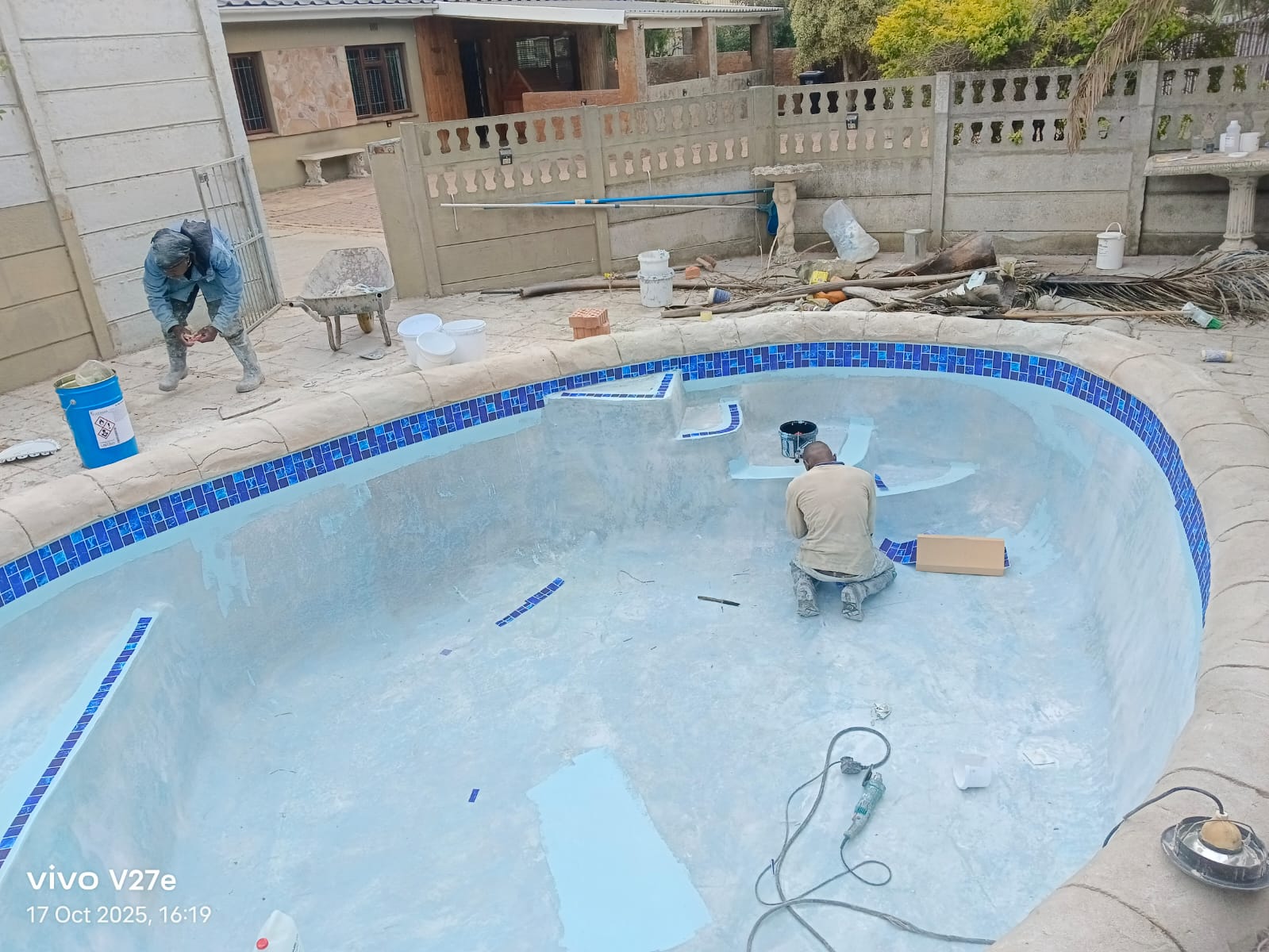
Pool resurfacing cost in Cape Town starts from around R15,000 for re-marbeliting a small pool at the time of writing (October 2026), with most marbelite jobs landing somewhere between R15,000 and R45,000. Fibreglass relining sits a step higher, from around R25,000 for a typical pool, while a repaint is the cheapest option but the shortest lived. Which one is right depends on the shell, how long you plan to stay, and what has gone wrong with the old surface.
This guide focuses on marbelite, the original finish on most older Cape Town pools, and compares it with fibreglass and paint so you can see what you get for your money. When you are ready for a site visit, see how our marbelite pool resurfacing service works.
Pool resurfacing cost at a glance
These are market prices from Cape Town contractors and South African price guides, not Kwik Pools prices. We start from the cheap end, so your quote may be higher if the shell needs repairs.
| Finish | Per m2 (October 2026) | Typical pool |
|---|---|---|
| Re-marbelite | From around R450 (R450 to R700 in Cape Town) | R15,000 to R45,000 |
| Fibreglass relining | R600 to R850 | R25,000 to R50,000 |
| Epoxy paint | From around R140 applied | R6,888 to R9,912 |
| Chlorinated rubber paint | From around R85 applied | R4,182 to R6,018 |
One Gauteng price list gives a useful size comparison: re-marbelite of a 4m x 4m pool from R19,000 and an 8m x 4m pool from R26,700, against R27,950 and R35,250 for fibreglass on the same sizes. Cape Town prices follow a similar pattern. Some contractors quote R650 to R950 per m2 of wetted surface for marbelite once prep is included.
Marbelite pool resurfacing: what you are paying for
Marbelite is a cement based pool plaster mixed with marble aggregate, trowelled onto the concrete shell. Re-marbeliting is far more than a new skin. Most of the cost is preparation, and that is where cheap quotes often cut corners.
- Drain and clean: the pool is emptied and the old surface washed down.
- Remove loose plaster: drummy or delaminated patches are chipped back to sound material.
- Repair the shell: cracks are cut out and filled, and damaged fittings are sorted.
- Prepare the waterline: loose mosaic tiles are replaced or a new band is fitted.
- Apply the marbelite: the new plaster goes on in one continuous working session where possible.
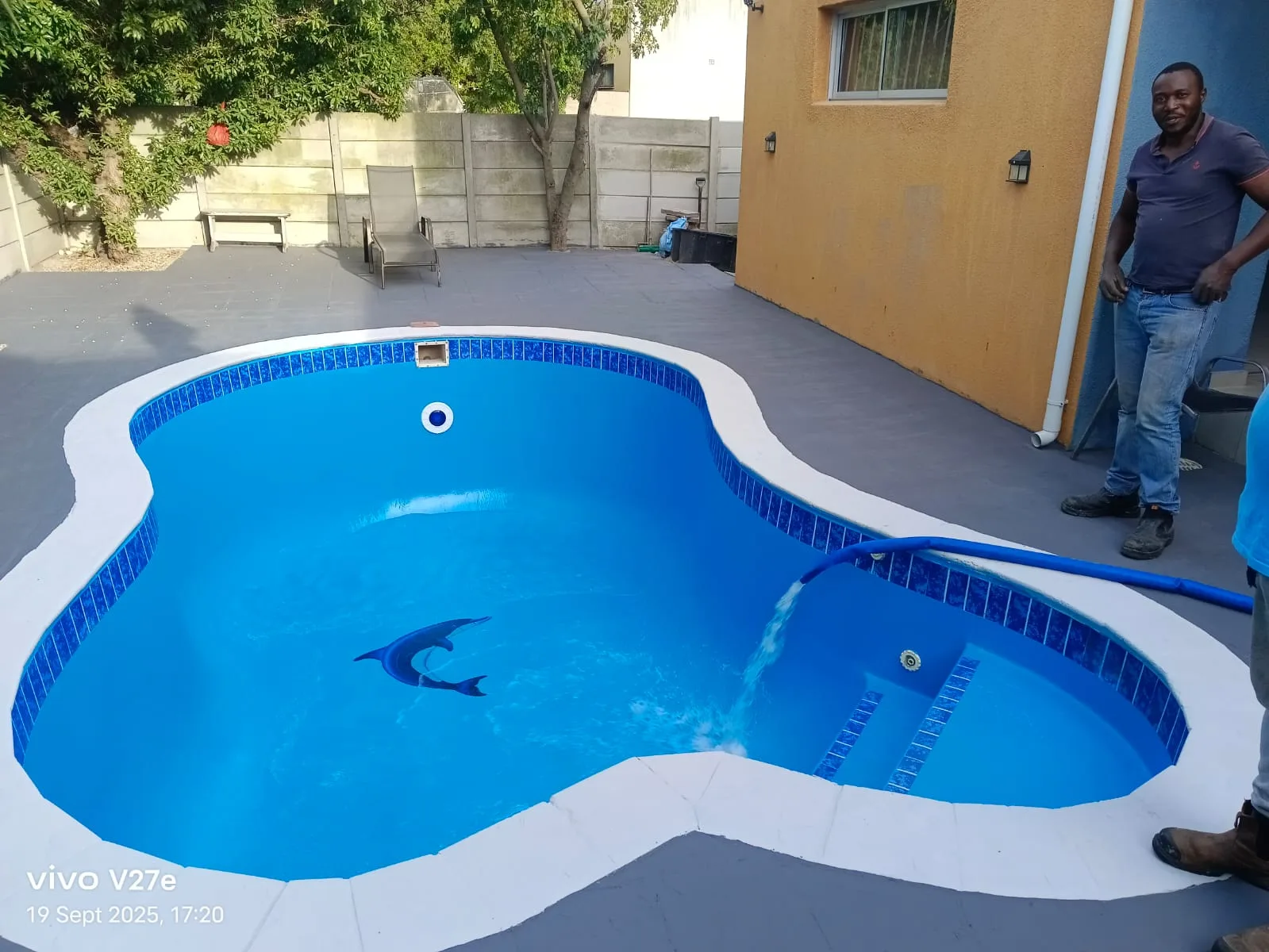
- Cure and fill: the pool is filled and the water is carefully balanced while the new surface cures.
After filling, the first few weeks matter. Our new marbelite pool aftercare guide explains brushing and water balance during the curing period, which affects how smooth and even the finish stays.
What drives marbelite cost up or down
Two pools of the same size can have very different marbelite cost. The main reasons are:
- Surface area: floor plus walls, steps and benches. Freeform pools have more wall area than you might think.
- Condition of the old pool plaster: heavy delamination means more chipping and patching.
- Cracks: structural cracks must be repaired first, not just plastered over.
- Waterline tiles: a new mosaic band can add R3,000 to R12,000 per pool on its own.
- Colour: some coloured marbelite mixes cost more than standard white.
- Access: narrow side paths mean more carrying by hand.
To estimate surface area, multiply length by width for the floor, then add the perimeter multiplied by the average depth for the walls. An 8m x 4m pool with an average depth of 1.4m works out to roughly 66 m2. Our pool volume calculator uses the same measurements and helps when you plan the refill.
Want a resurfacing quote?
Send us your pool size and a few photos of the surface. We’ll tell you whether you need marbelite, fibreglass or just repairs before we visit.
When to resurface a pool
Knowing when to resurface a pool saves money, because waiting too long turns a surface job into a structural one. These are the signs we look for on inspections:
- A sandpaper feel that scrapes feet and snags costumes (see rough pool surface).
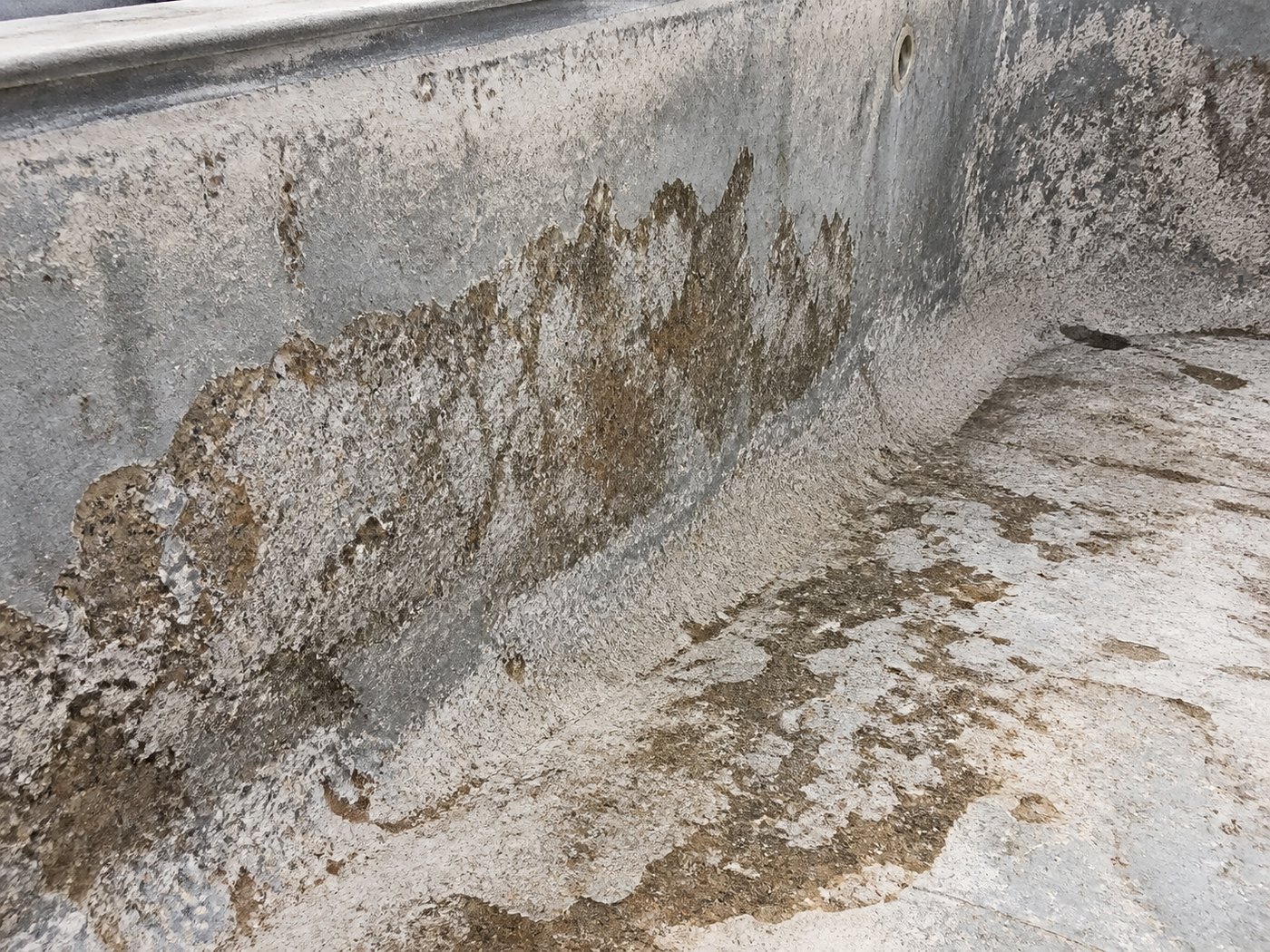
- Plaster sounding hollow or lifting away in sheets, known as pool plaster delamination.
- Pitting and etching where algae keeps coming back.
- Stains that don’t shift with brushing or water balancing.
- Fine cracks spreading across the floor or walls.
- Exposed aggregate or bare concrete showing through.
A few rough spots don’t always mean a full resurface. Sometimes patch repairs and better water chemistry buy you a few more years. We will tell you honestly if that is the case.
Why old pool plaster wears out
Marbelite is slightly porous and reacts with the water. Low pH and soft, aggressive water slowly dissolve the surface, while high calcium leaves scale. Years of shock dosing, acid washes and automatic cleaners wear it down further. Many Cape Town pools were built decades ago and still carry their original finish, so a lot of them are due at the same time.
Pool resurfacing cost vs lifespan: marbelite, fibreglass and paint
The cheapest finish today isn’t always the cheapest over the life of the pool. Here is how the three compare once you factor in how long each one lasts.
| Finish | Rough lifespan | Feel | Best for |
|---|---|---|---|
| Marbelite | Up to about 25 years with good chemistry | Slightly textured | Concrete pools of any shape |
| Fibreglass lining | Long, depends on prep and care | Smooth, non-porous | Rough or algae-prone shells |
| Epoxy paint | Up to about 8 years | Hard, smooth | A budget refresh with good prep |
| Chlorinated rubber paint | Shorter than epoxy | Smooth when new | Pools already painted in rubber |
Fibreglass costs more up front but is smooth, non-porous and less friendly to algae. Our post on fibreglass pool relining cost goes through pricing per square metre, and our fibreglass pool relining page explains the process.
Paint is the quick, affordable option. It suits a pool you plan to sell or replace, or one that already has a painted surface. For the full range of coatings, see our pool coating and resurfacing service.
Our rule of thumb: if the shell is sound and you love the look of a traditional pool, marbelite is hard to beat. If the surface keeps going rough and green, fibreglass is usually the better long term spend.
Planning pool resurfacing: Cape Town weather and water
Pool resurfacing in Cape Town is weather dependent. Marbelite and fibreglass both need dry conditions while they are applied, so winter rain can push jobs back. Strong summer wind brings dust and sand that can stick to a fresh surface, so we protect the pool and plan around forecasts.
Draining and refilling uses a lot of water. A family pool holds tens of thousands of litres, so check the current municipal water tariffs and any restrictions before the pool is drained. The City of Cape Town charges residential water in steps, from R25.42 per kilolitre for the first step up to R100.71 at the top step, so the refill can push your bill into a higher bracket for that month.
- Book resurfacing for late spring to early autumn where possible.
- Ask whether the quote includes crack repairs and waterline tiles.
- Plan around the curing period before the pool is used.
- Do coping or paving work in the same project to avoid redoing edges.
Getting an accurate pool resurfacing cost
A good quote is itemised. It should list surface area, prep, crack repairs, waterline tiles, the finish itself and the refill. If a quote is far below the ranges above, ask what has been left out. Often it is the chipping back and repairs that make a new surface last.
If you are not sure which finish suits your pool, a site visit is the easiest way to decide. Our marbelite resurfacing team can check the shell, tap for hollow patches and give you prices for more than one option.
Pool resurfacing questions
How much does pool resurfacing cost in Cape Town?
At the time of writing (October 2026), marbelite resurfacing starts from around R15,000 for a small pool, with R15,000 to R45,000 a common range. Fibreglass relining of a typical pool starts from around R25,000, and a chlorinated rubber repaint from around R4,182 to R6,018. Ask our team for a current quote based on your pool’s size and condition.
How long does marbelite last?
A well applied marbelite finish can last up to about 25 years with good water balance. In practice many Cape Town pools need attention sooner because of low pH, poor chemical habits or cracks in the shell. Keeping the water balanced is the cheapest way to make it last.
Is it cheaper to paint or marbelite a pool?
Paint is much cheaper up front, from around R85 per m2 applied for chlorinated rubber versus from around R450 per m2 for re-marbelite. Paint needs redoing far more often, so over ten or fifteen years marbelite or fibreglass usually works out better value. Paint makes sense for a quick refresh or a pool you plan to replace.
When should you resurface a pool?
Resurface when the surface is rough enough to snag swimsuits or scrape feet, when the plaster is flaking, delaminating or badly stained, or when you keep losing the fight against algae in pitted areas. Cracks and hollow sounding patches are another sign. A pool inspection tells you whether it is a surface problem or a structural one.
Do you have to drain the pool to resurface it?
Yes. Marbelite, fibreglass and paint all need an empty, clean and dry or properly prepared shell. That is why we plan resurfacing for drier weather and why it is worth checking water restrictions and municipal water costs before draining and refilling.
Book a resurfacing inspection
Tell us about your pool’s age, size and what the surface feels like. We’ll arrange a visit and a written quote with clear options.


