


Pool paint peeling means the coating is no longer staying attached as it should, but another coat is not automatically the solution. Identify the old paint, establish which layer is separating and check the condition of the background before choosing a replacement system. New paint cannot make loose paint or weak plaster underneath it sound.
The most useful first step is to preserve evidence and request an assessment. Do not drain, strip or apply a test patch just to prepare for the quotation. Those actions can change the evidence, create surface damage and introduce safety problems before the cause of the failure has been considered.
Pool paint peeling: describe the actual failure
Peeling can appear as flakes, curling edges or larger sheets coming away. Note whether it is concentrated on steps, near the waterline, around fittings or across the whole interior. Photograph the location from safe ground and say whether the problem is in a recent coat or a much older finish.
Also describe what is visible beneath the loose film. Is there another colour, a pale cement-like surface or material attached to the back of a naturally detached piece? You do not need to identify the product yourself. The observation helps the assessor ask the right questions about the layer that has failed.
- Record when peeling was first noticed and how its spread has changed.
- Keep the most recent coating invoice and any product photographs.
- Note old patches, repairs and areas that were coated at different times.
- Describe accompanying powder, bubbles, cracks or water loss separately.
If sharp flakes or exposed damaged areas could injure swimmers, restrict use pending advice. Do not let children collect flakes underwater. If a piece has already been safely recovered, keep it with its location recorded instead of scraping off a larger sample.
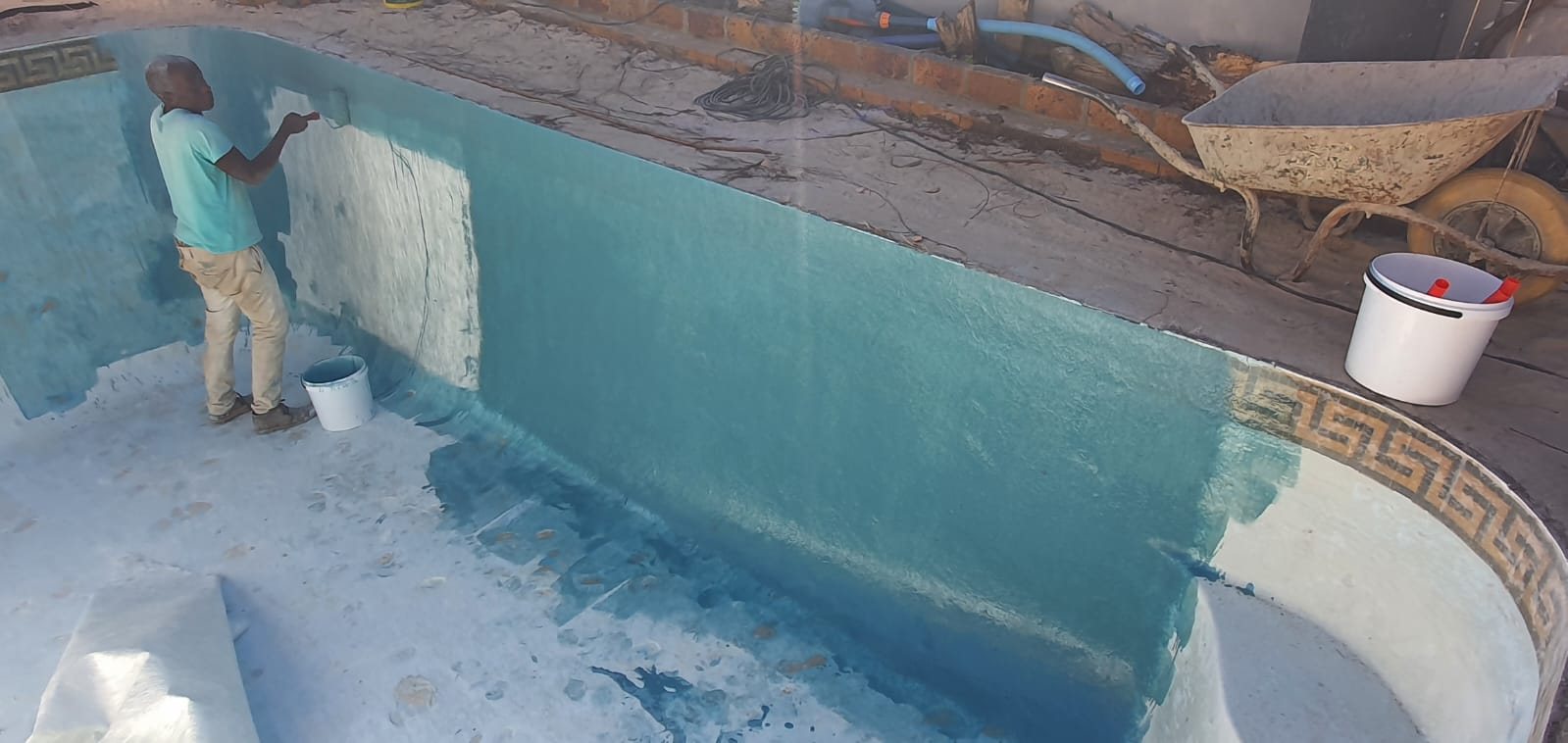
Old pool paint identification comes before product choice
A blue coating is not a product identification. Epoxy, acrylic and chlorinated rubber systems can look similar, especially after weathering. Previous owners may also use “fibreglass” or “epoxy” loosely when describing work. Try to find invoices, container labels or a written specification rather than relying on colour and memory.
RAMUC’s 2007 Type A application guide explicitly requires the existing paint to be determined for compatibility before recoating. It describes laboratory analysis through its distribution network where the paint is unknown. That is an example of a manufacturer-led identification route, not a promise that every local supplier offers the same service. Confirm current product instructions with the manufacturer before specifying work.
Ask the proposed coating supplier how unknown layers should be identified or managed. A professional may need a suitable sample or may specify removal to a known sound background. Do not carry out solvent tests, flame tests or improvised scraping to identify the paint yourself.
Even a known topcoat does not identify every older layer beneath it. Tell the contractor if several generations of paint are present. The proposed system must account for what will remain, rather than assuming the newest visible layer is the only surface involved.
Incompatible pool coatings and weak backgrounds
Compatibility is a property of the actual coating system and substrate, not a universal promise attached to the word epoxy. The manufacturer must support the proposed combination. Do not assume that any product marketed for swimming pools can cover any previous pool paint.
Product instructions demonstrate why that matters. Paintcor’s PoolCure page distinguishes porous and non-porous backgrounds and gives system-specific preparation. RAMUC’s Type DS acrylic guide permits certain damp-surface applications but explicitly excludes fibreglass surfaces, hot tubs and spas. Those instructions cannot be swapped between products.
A coating also depends on a suitable background. RAMUC instructs users to assess plaster, concrete or gunite for integrity and soundness before painting. If the paint comes away carrying weak plaster, the investigation is not only about the paint film. A stronger topcoat cannot repair loose material beneath it.
| Observed pattern | Assessment question | What another coat cannot establish |
|---|---|---|
| New film lifts from an older colour | Was the retained coating suitable and properly prepared? | Compatibility between the layers. |
| Paint lifts with material underneath | Is the background sound? | The strength of the existing plaster. |
| Bubbles appeared after painting | Were moisture, application and cure requirements met? | The cause of the trapped or separated area. |
| Powder without obvious lifting | Is this a deposit, blush or coating deterioration? | That all paint has lost adhesion. |
Pool paint chalking is a separate observation
A powdery or pale appearance can occur alongside peeling, but the two should not be treated as identical. RAMUC’s troubleshooting material distinguishes blushing, fading and chalking from blistering. It describes deposits and chemical effects that can resemble paint breakdown.
This does not mean every powdery pool merely needs cleaning. It means the assessor should identify the condition before deciding what to remove. Tell them whether powder transfers during normal cleaning, whether there are loose edges and whether the colour change appeared shortly after filling.
Do not use a stronger chemical treatment to prove the difference. Follow the existing finish and chemical manufacturers’ instructions while seeking advice. If the coating is unidentified, ask for a safe interim care plan rather than guessing which cleaner will be compatible.
Discuss the peeling before buying more paint
Share the coating history and photographs of loose film. Ask what needs identifying and preparing before a replacement coating can be specified.
Pool epoxy coating problems: review application and cure
For a two-component epoxy, correct preparation and product handling matter. Paintcor warns that failure to follow the specified component handling and mixing instructions can prevent PoolCure from curing properly. This is a reason to check the application record, not an invitation to experiment with extra hardener or a different ratio.
Ask whether the coating was applied within its permitted conditions, whether moisture was checked as required and whether each layer received the specified preparation. Weather, substrate condition and timing should be reviewed together. “It was sunny” does not establish that every application requirement was satisfied.
Distinguish the time until a surface is touch dry from the time until it may be immersed. Manufacturer guides list these separately. Filling too soon is one of the concerns in RAMUC’s troubleshooting instructions, but early filling should not be blamed without checking the actual product and work record.
If the job is recent, contact the installer before anyone alters the surface. Preserve photographs, invoices and the date of filling. Ask whether the manufacturer should review the issue before remedial work. An independent contractor can assess the condition without automatically deciding warranty responsibility.
Pool coating adhesion: questions for a repair scope
The repair proposal should explain which layers will be removed and which will be retained. It should identify the new system and its compatibility with the prepared surface. A brief promise to “sand and repaint” leaves too much uncertainty when the existing bond has failed.
- Establish the existing coating history and any unknown layers.
- Identify whether separation is within paint, between coats or in the background.
- Agree the preparation and removal needed to reach a suitable surface.
- Confirm the replacement system with its manufacturer’s instructions.
- Record weather limits, immersion requirements and the commissioning handover.
Use the pool coating and resurfacing service to discuss the failing film and preparation scope. Send photographs of the actual peeling, not just an overall view of the pool colour. Ask what must be confirmed before a firm recoating recommendation is possible.
If several faults are present or the pool history is unknown, consider a broader pool inspection. Specify the peeling as the main concern and mention water loss, loose plaster or cracks separately. A coating quotation should not conceal the need for a different investigation.
A test area needs a purpose. If a contractor proposes a compatibility or adhesion trial, ask what it will establish and how it follows the chosen manufacturer’s guidance. A small patch looking good briefly is not a guarantee that unidentified layers across the pool are suitable.
Compare preparation, not just the paint price
The cost of correcting peeling depends on the condition of retained material, removal requirements, repairs, access and the chosen coating system. A low paint-only allowance can hide most of the necessary work. Ask for the preparation to be described clearly enough that competing quotations address the same problem.
For a Rondebosch property, use the Rondebosch pool services enquiry route and attach the coating history. Explain any gate or side-access limitations and whether a recent installer needs to attend. Keep the pool in its existing condition unless an assessor gives a specific safe plan.
For a Pinelands property, the Pinelands pool services page provides the local enquiry route. Tell the assessor who can approve access and where product records are available. There is no need to assume a neighbourhood-specific cause for peeling to arrange a useful visit.
Before authorising work, clarify responsibility for water handling, waste removal, protecting nearby surfaces and the final refill decision. Confirm how newly exposed defects will be photographed and priced. Hidden weak areas should trigger a discussion, not an undocumented change to the agreed scope.
At handover, retain the exact product name, care instructions and approved filling information. Establish which changes need reporting, such as fresh flakes or recurring bubbles. The aim is not simply a new colour, but a suitable coating over a background whose condition has been addressed.
Frequently asked questions
Can I paint over peeling pool paint?
Not as a shortcut. Loose material and the cause of separation need assessment first. The chosen system must be compatible with the prepared background, and retained layers must be suitable to support it.
How can I identify old pool paint?
Start with invoices, container photographs and the previous installer’s records. Ask the proposed manufacturer or qualified applicator how unknown layers should be assessed. Do not use improvised solvent, flame or scraping tests beside the pool.
Does chalking mean the coating is peeling?
No. Powder, pale deposits and blushing can resemble deterioration without proving that the coating has detached. Describe powder and loose film separately so the assessor can decide whether cleaning, coating correction or background repair is needed.
Why did a new epoxy coat start failing?
Possible investigation topics include the existing layers, background soundness, preparation, product handling, application conditions and immersion timing. The actual cause needs evidence from the surface and job record rather than an assumption based on the product category.
Plan the next step with Kwik Pools
Describe the pool condition and the outcome you need. Ask for an assessment and a written scope that separates essential repairs from optional improvements.


Comments are closed