


A gunite pool is a concrete pool built by spraying a dry cement and sand mix through a hose over a cage of steel reinforcing, with water added at the nozzle. The result is one solid shell in any shape you like, which is then finished with marbelite, a fibreglass lining, paint or tiles.
Most older pools in Cape Town gardens are concrete of some kind, and many owners only find out what they have when something needs fixing. This guide explains how gunite is built, how long the shell and the finish last, what repairs to expect, what drives the cost and how it compares with a fibreglass shell. If you’re planning a new pool, our new pool construction team can walk the site with you.
What is a gunite pool?
Gunite is a method, not a different material. It’s concrete, sprayed rather than poured. In the gunite process the cement and sand travel dry through the hose and meet water at the nozzle. Its close cousin, shotcrete, is mixed wet before it’s pumped. Both produce a dense sprayed concrete shell, and in everyday talk most people call either one a gunite or concrete pool.
Why spray it? Because spraying lets the builder follow any shape cut into the ground: curves, benches, deep ends, raised walls and built-in steps. Poured concrete needs formwork for every wall. Sprayed concrete only needs the excavation and the steel.
How a gunite pool is built
Every builder has their own sequence, but the main stages are much the same:
- Design and approvals. Size, shape, depth, equipment position and any council or safety requirements for the property.
- Excavation. The hole is dug slightly bigger than the finished pool to allow for the shell thickness.
- Steel and plumbing. A cage of reinforcing steel is tied in, and the pipes for the skimmer, returns, main drain and lights are set in place.
- Spraying. The gunite is sprayed over and around the steel, then shaped and trimmed by hand.
- Curing. The shell is kept damp while it gains strength. Rushing this stage is a common cause of later cracking.
- Waterline tiles, coping and finish. Mosaic tiles, coping stones, paving and the interior finish go on last.
- Fill and start-up. The pool is filled, the equipment commissioned and the water balanced carefully while the new finish settles.
Cape Town sites vary a lot, from sandy ground to clay to rock just below the surface. Each one changes the dig, the steel and sometimes the drainage needed around the shell. Sloping stands add retaining walls and raised edges. That’s why two pools of the same size can come in at very different prices.
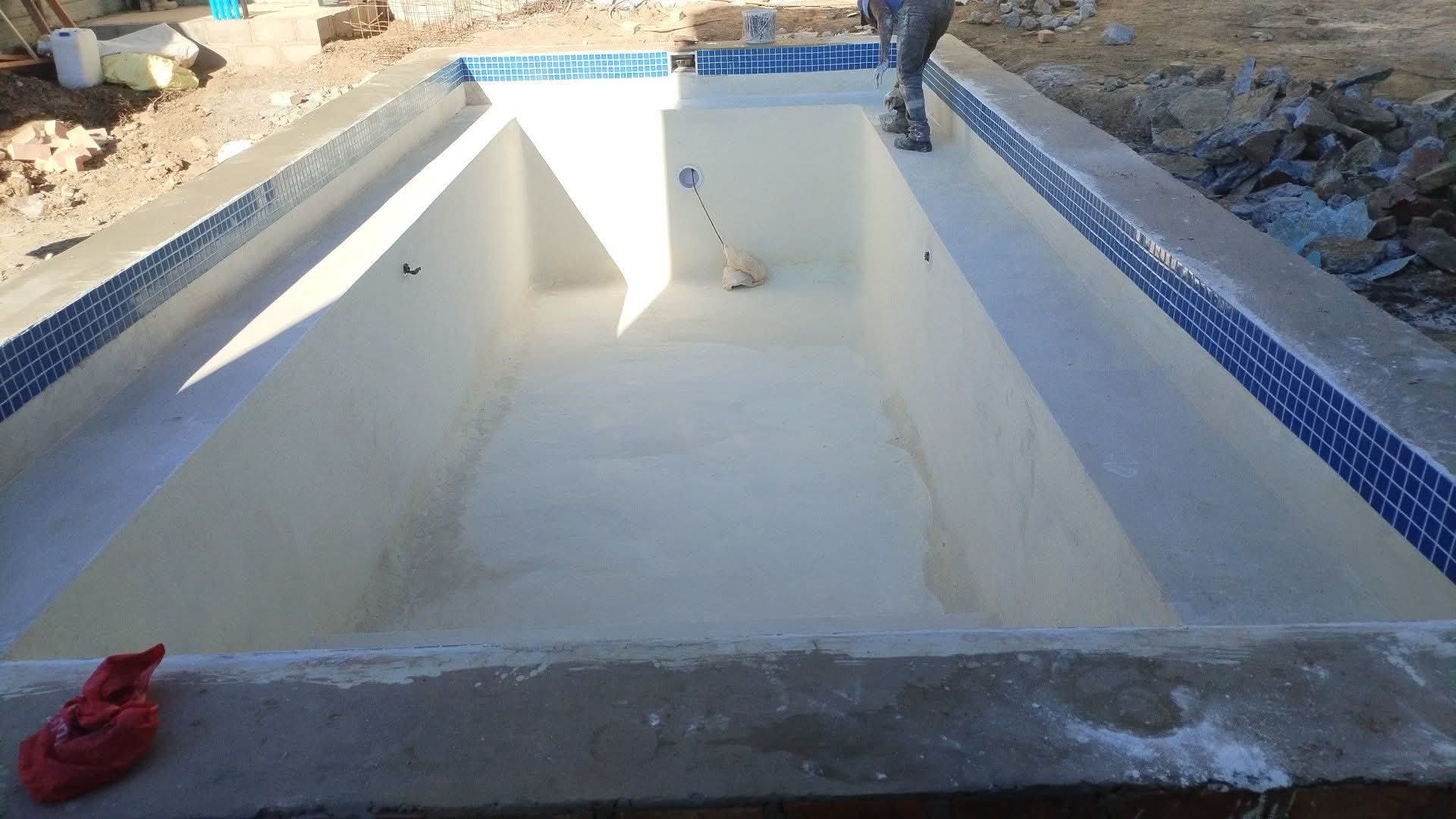
Gunite pool finishes: marbelite finish and the alternatives
The bare concrete shell isn’t watertight or pleasant to touch, so it always gets a finish. The finish is what you see, feel and eventually replace.
| Finish | What it is | Good to know |
|---|---|---|
| Marbelite finish | Marble-based cement plaster, trowelled on | The classic local finish; slightly porous, so chemistry matters |
| Fibreglass lining | Resin and glass layers with a topcoat | Smooth and less porous; a common upgrade over old marbelite |
| Pool paint or coating | Epoxy or chlorinated rubber paint | Cheapest refresh; shortest life |
| Full tiles or mosaics | Tiles bedded on the shell | Very durable, but labour-heavy and costly |
A marbelite finish is the default on most Cape Town concrete pools because it’s cost effective and easy to repair. Over the years it roughens, stains and can lift in patches. When that happens you can re-plaster with marbelite resurfacing or move to a lining. Our marbelite vs fibreglass lining comparison explains how to choose.
How long does a gunite pool last?
Think of two lifespans. A well-built shell with good steel cover can last for decades, and it’s rare for a properly built concrete shell to need replacing. The finish is a different story. Industry guides put a marbelite finish at roughly 10 to 15 years before it needs serious attention. Good water balance stretches that; aggressive water shortens it.
What wears a finish out fastest:
- Low pH or low calcium, which slowly dissolves the cement in the plaster.
- Long periods with low water levels, such as during past water restrictions, which leave the upper walls exposed to sun.
- Draining a pool without checking groundwater, which can damage the shell.
- Salt air and winter wet on coping and waterline tiles in coastal suburbs.
Planning a new concrete pool?
We look at access, levels and soil before we quote, and talk you through finish options and running costs. Tell us roughly what size and shape you have in mind.
Gunite pool repairs: the usual concrete pool repairs
Most concrete pool repairs fall into a handful of groups. The trick is working out whether a problem is in the finish, the tiles or the shell itself.
- Hairline cracks in the plaster. Often surface crazing in the finish rather than the shell. Our pool crack repair team can tell the difference.
- Structural cracks. Wider cracks that run through the shell, sometimes with water loss. These need proper investigation before any cosmetic work.
- Delamination. Hollow-sounding or lifting patches where the finish has let go of the shell. See our guide to pool plaster delamination.
- Loose waterline tiles and coping. Common on older pools and around steps.
- Leaks at fittings. Skimmers, returns and light niches set into the concrete are classic leak points.
At the time of writing (October 2026), market guides put minor crack repairs from around R1,500, while structural crack work can reach R12,000. Marbelite resurfacing of a whole pool runs from around R15,000 to R45,000. Ask our team for a current quote for your pool.
Losing water? Find the leak before you refinish. A new surface over an unrepaired leak hides the problem without solving it. Our leak detection visit comes first.
Gunite pool cost
There’s no single price for a gunite pool cost because every one is custom. At the time of writing (October 2026), national price guides list small concrete pools from around R80,000 to R150,000 and larger ones from around R120,000 to R250,000. Our own swimming pool price guide covers what sits behind those ranges.
The main cost drivers are:
- Size and depth, which set the volume of concrete and steel.
- Shape and features like benches, raised walls, spillways and steps.
- Site access for the spraying rig and for removing soil.
- Ground conditions: rock, clay or a slope that needs retaining.
- Finish choice, coping, paving and equipment.
Budget for the long run too. Every 10 to 15 years or so you’ll be refinishing, and a porous marbelite finish tends to use a little more chemical than a smooth lining.
Gunite vs fibreglass pool
This is the comparison most new-pool buyers make. A fibreglass pool is a factory-made shell lowered into a hole. A gunite pool is built in place.
| Factor | Gunite (concrete) | Fibreglass shell |
|---|---|---|
| Shape and size | Any shape, depth or feature | Limited to the moulds available |
| Build time | Weeks to months | Much quicker |
| Upfront cost | Usually higher | Usually lower for standard sizes |
| Surface upkeep | Refinish every 10 to 15 years | Smooth gelcoat, less porous |
| Difficult sites | Handles slopes and odd plots well | Needs crane or truck access for the shell |
On a tight or sloping Cape Town property, concrete is often the only realistic option. On a flat stand with good access and a standard shape in mind, a fibreglass shell can be faster and cheaper. Existing concrete pools can also get the best of both through fibreglass relining, which puts a smooth lining over the old shell.
Gunite pool questions
Is a gunite pool the same as a concrete pool?
Yes. Gunite is sprayed concrete over a steel cage, so a gunite pool is a type of concrete pool. Shotcrete is the wet-mix version of the same idea.
How often does a gunite pool need resurfacing?
Marbelite finishes typically need attention roughly every 10 to 15 years, depending on water balance and use. The concrete shell underneath lasts much longer. A fibreglass lining is one way to extend the time between refinishes.
Can gunite pool cracks be repaired?
Most can. Fine cracks in the plaster are a surface repair, while wider cracks through the shell need a structural repair and sometimes leak testing first. An inspection tells you which you have before any money is spent.
Is gunite better than fibreglass?
Neither is better for everyone. Gunite suits custom shapes and difficult sites, while fibreglass shells are quicker to install and have a smoother, less porous surface. Site access, budget and the shape you want usually decide it.
How long does it take to build a gunite pool?
A standard concrete pool usually takes six to twelve weeks, depending on finishes, access and weather. Cape Town’s wet winters can slow curing and finishing work.
If you’re building from scratch or reviving an old shell, our concrete pool construction service and renovation team can help you weigh up the options.
Talk to us about your gunite pool
New build, resurfacing or a crack that’s worrying you: send us a few photos and your suburb, and we’ll tell you what we’d look at first.


