

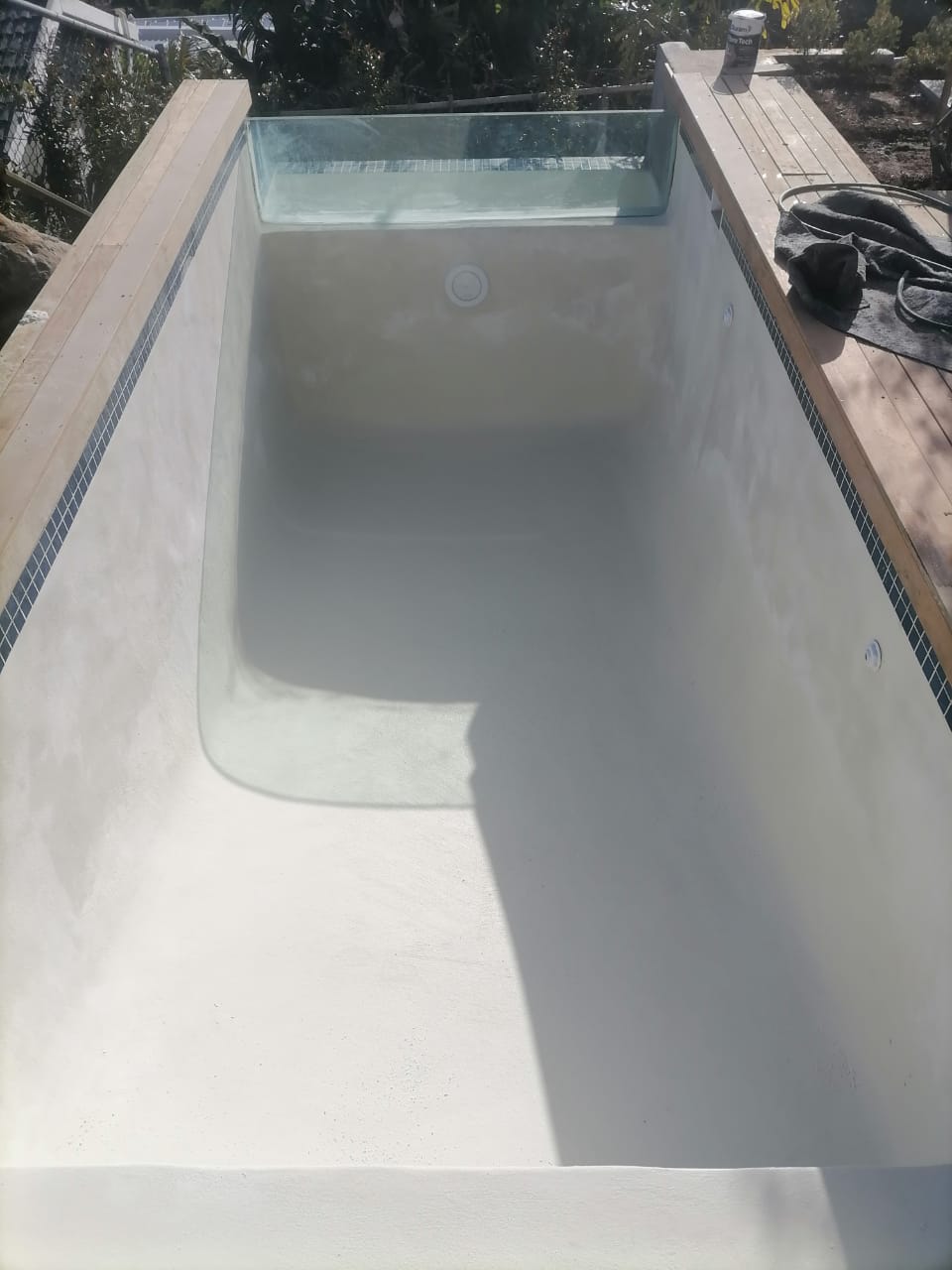
New marbelite pool aftercare starts with a written handover, not a standard chemical recipe. Confirm the exact cementitious finish, who manages filling, which early water tests are required and when cleaning equipment may return. Keep the installer responsible for interpreting the product instructions when the surface or water behaves differently from the agreed plan.
A fresh interior can look finished before its early-care responsibilities are complete. That gap causes avoidable confusion: the contractor expects the owner to brush, while the owner expects the contractor to return. Resolve it before the final site visit, including weekends, absences and any interruption to the water supply.
New marbelite pool aftercare: start with the product identity
Marbelite describes a type of cementitious pool finish, but it is not a complete specification. Ask for the manufacturer, product name, colour and current technical and start-up documents. Keep these alongside the quotation. Instructions for one plaster product should not automatically be applied to another simply because both have a similar appearance.
For example, Cemcrete’s PoolCrete start-up guide treats source-water testing, filling, brushing and later routine care as distinct stages. It also places restrictions on introducing an automatic cleaner. Those are useful subjects to discuss, not permission to adopt its timings or chemistry for an unidentified finish.
If you are arranging marbelite pool resurfacing, include the handover and early-care scope in the agreement. Ask whether the quoted work ends at application, completion of filling, an initial test or a later inspection. A clear boundary is more useful than a general instruction to keep the water balanced.

Put the marbelite startup procedure into a working schedule
Your written schedule should name each task, the person responsible and when to call the installer. A schedule that names only dates can be misleading if weather, application or filling changes. Ask the installer to distinguish calendar dates from conditions that must be met before proceeding.
- Identify the finish and obtain its current written instructions.
- Agree the filling release, source-water assessment and person supervising the refill.
- Record the first testing and brushing responsibilities.
- Confirm restrictions on cleaners, salt equipment, heating and swimming.
- Arrange the follow-up review and the contact route for abnormal changes.
Ask the person who will actually maintain the pool to attend. If that is a household member, caretaker or separate maintenance company, they need the same version of the instructions. Forwarding a photograph of an unlabelled chemical container is not a substitute for the complete product directions and the installer’s plan.
Discuss what happens if you cannot perform the agreed routine. It is better to arrange help before application than discover afterwards that nobody can attend. Do not improvise a larger chemical addition to cover several missed visits. Cemcrete specifically warns against overdosing in the hope of making treatment last longer.
Confirm filling before opening the tap
Ask who authorises the first fill and who remains available while it takes place. The installer should specify the approved water source, protection of the new surface and the required water level. Keep people, animals, gardening work and loose materials away from the pool while access is restricted.
Cemcrete calls for testing source water before plastering and filling PoolCrete continuously to avoid a water ring. That makes supply planning important. Ask what to do if the supply stops unexpectedly rather than deciding independently to empty the pool or begin again. Draining a pool is not an ordinary aftercare correction.
If a measured fill is already part of the approved work, record the meter readings and account for other water use. The volume will help later treatment decisions. Do not arrange an unnecessary drain and refill solely to obtain that number. Existing drawings and a professional dimensional estimate may provide useful alternatives.
Water quality cannot be inferred from a suburb name or the clarity of the water. Tell the installer whether the proposed supply includes stored, delivered or borehole water. Check current water-use requirements with the relevant authority before the planned refill; this guide does not establish permission to use a particular source.
New pool plaster brushing and pool plaster dust
New pool plaster brushing should use the tool and technique approved for the finish. Ask for a demonstration from a safe position and have the schedule written down. Confirm which areas need attention, how debris will be removed and whether the owner or contractor handles the associated filtration tasks.
Need help with the next step?
Send your finish name and handover instructions so the early-care responsibilities can be clarified.
Pool plaster dust is a reason to follow the start-up plan, not a diagnosis that every white deposit is harmless. Cemcrete’s guide includes brushing to remove dust, chemical precipitation and debris. Similar-looking material can have different causes, so record whether it is settling, returning after cleaning or associated with a change in texture.
- Photograph the same area in comparable light when possible.
- Record the date, water readings and the cleaning action already taken.
- Note whether the material is widespread or confined to a step, wall or return.
- Report roughness, staining, unusual water loss or worsening deposits promptly.
Do not attack a patch with a wire brush, abrasive pad or extra acid to see whether it disappears. A household experiment can alter the evidence and the surface. Likewise, do not introduce a robotic or suction cleaner because the pool looks ready. Obtain the release applicable to the installed finish.
Ask who deals with filter loading during start-up. The presence of dust does not justify opening a pressurised filter or changing valve positions without the correct safe procedure. If filtration is not working normally, report it and let the responsible technician determine how to maintain the required care safely.
Marbelite water balance needs a record, not a guess
Marbelite water balance involves more than a single pH reading. Ask which parameters the manufacturer requires during start-up, which test method will be used and what results require action. Source water, the new finish and treatment already added all matter when a professional interprets the readings.
Use pool water testing and balancing when you need help interpreting the record. Supply the finish name and application date as well as the sample. Advice intended for a mature pool may not address the stage your new surface has reached.
Do not copy numerical targets from a different manufacturer’s webpage into your own handover. Even within one published guide, different stages can have different instructions. If a table, label and contractor’s advice appear to disagree, request clarification from the installer or manufacturer before proceeding with a corrective treatment.
| Record | Why it helps | Question to settle |
|---|---|---|
| Sample date and source | Separates incoming water from filled-pool results | Was the sample taken before treatment? |
| Measured results and method | Allows trends to be reviewed | Which result needs a professional check? |
| Product and action taken | Avoids duplicated treatment | Who authorised the next step? |
| Surface photograph | Preserves a visual reference | Is the change new or already documented? |
Keep chemical products separate and follow their labels. This guide deliberately provides no mixing or dosing recipe. If a result is outside the agreed limits, avoid treating repeatedly without retesting and professional interpretation. More chemical is not a reliable answer to an unexplained cloudy appearance.
Build a useful resurfacing handover record
A resurfacing handover record should make it possible for someone else to understand the pool without relying on memory. Include the product documents, application dates, approved filling plan, test sheets, equipment restrictions and photographs. Save the installer’s written responses to changes as well as the original schedule.
Separate workmanship questions from maintenance duties. Ask what is covered, what is excluded, how to report a concern and which records must be retained. Do not assume a warranty promises a particular lifespan or protects against every chemical or equipment-related problem. The actual written terms are the starting point.
List outstanding items explicitly. These might include a follow-up test, confirmation that a cleaner can be used or a surface concern awaiting inspection. An item marked for review is not the same as acceptance that it is normal. Agree who will close it and how that decision will be recorded.
For pool services in Kenridge, send the handover pack when requesting a visit and explain whether access is through the house or a side gate. This helps the assessor prepare without inventing assumptions about the finish or property.
When arranging pool services in Eversdal, identify the person available to discuss daily care and show the equipment. Share any access restrictions and photographs beforehand.
Know when to pause and request a callback
Contact the installer when instructions cannot be followed, deposits worsen, the surface changes unexpectedly or the water level behaves abnormally. Describe what you can safely observe rather than diagnosing a failed finish from a photograph. Keep swimmers out until both the finish release and water-quality requirements have been confirmed.
Do not drain, sand, acid-wash or coat over a concern yourself. Those are remedial decisions, not routine handover tasks. A good callback begins with the documented starting condition, subsequent readings and a clear account of what changed. That gives the responsible professional a better basis for deciding whether care needs adjustment or inspection is required.
Frequently asked questions
Can I use my old automatic cleaner immediately?
Only after the installer confirms the release for the exact finish. Cemcrete’s PoolCrete guide restricts early automatic-cleaner use, illustrating why appearance alone is not a reliable permission to restart it.
Is every white deposit normal plaster dust?
No. Dust, chemical precipitation and debris can look similar. Follow the agreed brushing plan, record changes and ask for review when material persists, increases or accompanies roughness or staining.
Should I copy another pool’s water targets?
No. Obtain the targets and sequence for your installed product and its current start-up stage. Supply the finish name and water-test history when seeking advice.
What if filling is interrupted?
Contact the installer promptly and record when the interruption occurred. Do not independently drain and restart. Ask for a product-specific recovery plan and retain the written response.
Talk through your pool requirements
Contact Kwik Pools with your observations, photographs and questions. Ask what an assessment should cover and which records will help.


Comments are closed