

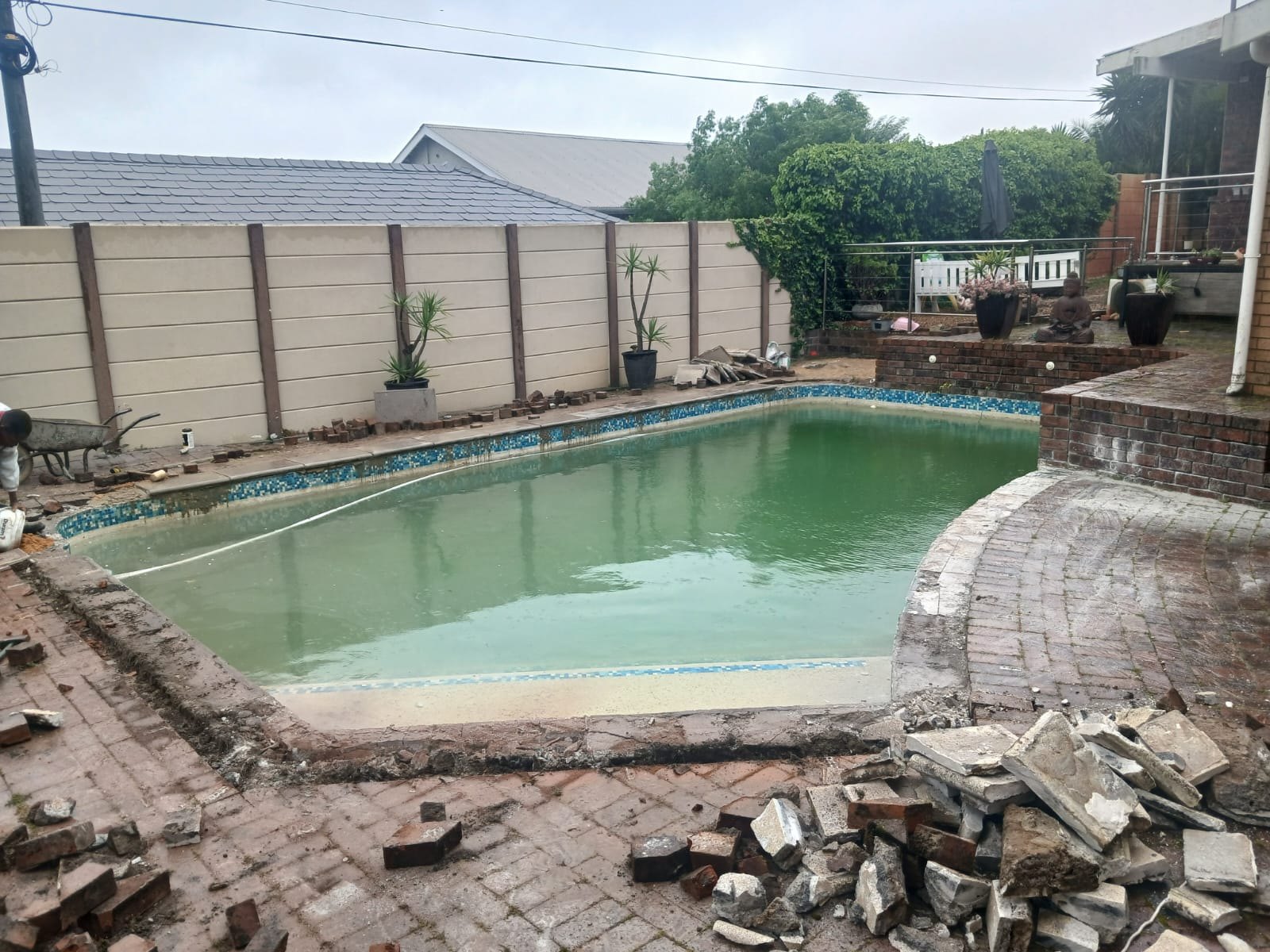
If a green pool keeps coming back, investigate what happens between treatments instead of repeating the same chemical purchase. Confirm the cause of the colour, review reliable water-test results, and check circulation, filtration and missed debris. A short-lived improvement is useful evidence, but it is not proof that the underlying problem has been resolved.
Recurring green water is a pattern to investigate. The key questions are when it returns, where it starts and which conditions changed before it did. Keep swimmers out while water quality or visibility is uncertain, and avoid adding several products together in the hope that one will solve it.
Green pool keeps coming back: build a timeline
Start with the most recent recovery attempt. Write down the product name, active ingredient, amount used, test results, cleaning work and actual pump operation. Include what happened afterwards: did the water become fully clear, merely change colour or improve only around the returns?
A timeline helps distinguish a pool that never completed recovery from one that recovered and later developed another problem. Those are different situations. A photograph on its own cannot tell you whether sanitiser remained effective between treatments or whether the filter was actually removing material.
- Record the first sign of green colour or slippery patches.
- List tests and products in date order.
- Note power interruptions, missed cleaning and heavy use.
- Describe exactly what improved and what did not.
- Use the pattern to decide what needs checking next.
Share this record when requesting green-pool recovery help. Ask for a cause-based assessment and follow-up plan, not just a repeat of the last treatment. Make clear that the problem is recurring.
Recurring pool algae or another colour problem?
Recurring pool algae may involve cloudy green water, slippery surfaces or growth that returns to the same areas. HTH lists poor circulation, poor filtration, chemical maintenance and environmental housekeeping among the factors associated with algae problems. More than one can be involved in the same pool.
Do not diagnose from a photograph alone. Tell the tester whether the water is transparent or opaque, whether there are visible deposits and whether the colour appeared immediately after a product was added. Ask whether additional investigation, including metals testing where appropriate, is needed before classifying every green tint as algae.
Check the actual surface condition from a safe position. Do not enter murky water to feel the walls. If brushing is part of the agreed care plan, use a brush compatible with the pool finish. Aggressive tools can damage some surfaces without solving the cause of recurrence.
Different colour does not equal completed recovery. A pool that changes from green to pale cloudiness still needs assessment of water quality, visibility and particle removal. Do not reopen it simply because it looks less green.
Chlorine demand in pool water: follow the readings
Chlorine demand in pool water describes chlorine being used up by material it reacts with. The CDC identifies sunlight, sweat, dirt and other swimmer inputs as factors that reduce chlorine concentration. A reading taken shortly after treatment does not show what was available throughout the following days.
Record free chlorine and pH with the time of each sample. Add the recent bathing load, leaf accumulation and any interruption to circulation. This helps a professional distinguish an isolated result from a repeated loss of control.
Check that the kit is suitable, within its stated use period and stored as instructed. Follow its sampling and reading method. The CDC warns that high chlorine can bleach some tests and produce a falsely low result. A surprising zero after strong treatment deserves confirmation rather than an automatic extra dose.
Arrange pool water testing and balancing if your readings conflict or the same problem keeps returning. Ask for the stabiliser result as well as the usual chlorine and pH readings when relevant to your sanitising system. Do not copy a treatment recipe from a pool with different products or conditions.
Get the next step checked
Send Kwik Pools your observations and the relevant equipment details. Ask what can be assessed at a visit and what requires separate investigation before agreeing to repairs.
Find pool circulation dead spots without guessing settings
Pool circulation dead spots are places where debris repeatedly collects or cleaning coverage is poor. Steps, benches and corners deserve attention, but their shape alone does not prove a circulation defect. Mark the actual locations on a simple sketch and describe what you see over several observations.
Check whether the system operated as scheduled after a power interruption or controller change. A timer showing a programme does not necessarily prove the pump ran. Record the display and normal operating behaviour without opening any electrical enclosure.
Observe return flow from the deck. Persistent air, unusual noise or an obvious change in water movement deserves attention. Do not reach into suction fittings, change unfamiliar valves or keep a pump running when it appears to have lost water flow.
A cleaner reaching most of the floor does not establish that every wall, step and recess receives adequate cleaning. Identify the missed places so a service visit can address them deliberately. Ask the technician to assess the operating schedule and hydraulic arrangement for your equipment, rather than applying a universal number of pump hours.
Record any adjustment and its purpose. If several settings are changed at once without notes, you lose the ability to identify which change helped.
Pool filter hygiene and the material left behind
Pool filter hygiene matters because treatment and removal are not the same job. HTH’s algae guidance includes brushing, vacuuming and filter cleaning alongside chemical treatment. Material must be removed through an appropriate cleaning process; changing the water’s appearance alone does not perform that work.
Ask what type of filter you have and which manufacturer procedure applies. A sand filter, cartridge filter and other systems do not share one universal cleaning routine. Do not open a pressurised vessel or move the valve while the pump is running. Internal filter work belongs with someone competent to isolate and service it safely.
- Report recurring debris on the floor after cleaning.
- Note whether filter servicing was completed during the previous recovery.
- Include basket blockages and visible leaf accumulation in the log.
- Ask whether the cleaning method suits the installed filter.
Do not replace filter media simply because a calendar interval from an online article has elapsed. Request an assessment of condition and performance. Equally, repeated cleaning without improvement should prompt investigation, not an endless cycle of the same task.
Check surrounding sources of debris as well. Material blown or washed back into the pool can undo cleaning work and make an otherwise sensible routine inadequate for current conditions.
A green pool after treatment needs a measured recovery plan
A green pool after treatment is a reason to review the treatment, not immediately declare the product ineffective. The starting water condition, actual pool volume, product formulation and test reliability all matter. Give the professional the packaging details rather than describing every chemical as “shock”.
| Pattern | Useful check | Avoid assuming |
|---|---|---|
| Brief improvement, then green again | Readings and cleaning between treatments | A stronger dose is the only answer |
| Same corner develops growth | Cleaning coverage and local debris | The whole pump must be replaced |
| Unexpected low test after treatment | Kit range and independent confirmation | The last chemical vanished instantly |
| Persistent haze after colour changes | Filtration, chemistry and particle removal | Every remaining particle is dead algae |
Agree the treatment sequence, monitoring schedule and reassessment point before work starts. Follow each product’s label and never mix chemicals or combine leftover contents. Keep products in their original labelled containers and away from children.
Ask what would change the plan. Persistent colour, unexplained chlorine results or poor circulation should lead to a defined review, not unlimited chemical additions. A written plan also helps prevent two household members from treating the same issue independently.
Keep the improvement and arrange local follow-up
Recovery should end with a sustainable routine. Decide who tests, who cleans, who checks actual equipment operation and who responds to an abnormal result. A weekly service does not mean water conditions stay unchanged between visits, especially after heavy use or a disruption.
For pool services in Brackenfell, include your treatment timeline when requesting a visit. Send readable product labels and the locations where the green colour reappears, along with safe-access information for the equipment area.
For pool services in Kraaifontein, explain whether the water ever became fully clear and whether the filter was serviced. These details help define the visit. Neither suburb name establishes a special algae type or a particular water chemistry.
Keep the first stable set of results as a comparison point, with the relevant operating settings and cleaning notes. If the colour returns, report the change early and bring the same record forward. The goal is not a notebook full of numbers; it is a clear account of which conditions were maintained and where the routine broke down.
Common questions
Why does the pool turn green again after it looks better?
Possible contributors include incomplete cleaning, ineffective ongoing sanitising, poor circulation or filtration problems. A temporary colour change does not show that recovery was complete. Compare the test and cleaning record before choosing another treatment.
Can a saltwater pool develop recurring algae?
Yes. A saltwater system still requires effective sanitising, balanced water and maintenance. Check the actual water results and the chlorinator’s operation according to its manual rather than assuming salt means the water cannot turn green.
Should I add more chlorine when the test reads zero after treatment?
First confirm the result and the kit’s measurement range. The CDC warns that high chlorine can bleach some tests and create falsely low readings. Obtain a suitable retest before making an unmeasured addition.
Will replacing the filter guarantee that algae stops returning?
No. A filter problem may contribute, but chemistry, cleaning coverage and interruptions to normal operation also matter. Have performance assessed and replace parts only when the findings support that decision.
Arrange a practical pool assessment
Tell us what has changed, what you have already tried and how the pool area can be accessed. We can discuss the appropriate service and a property-specific scope.


Comments are closed