


A pool pump capacitor is the small cylinder on the motor that gives it the electrical kick it needs to start spinning. When it fails, the classic symptom is a pump that hums but won’t turn, and the fix is usually a like-for-like replacement fitted by a technician. It’s one of the cheapest parts on your pump, but it’s also one you should never handle yourself.
Below we explain what the part does, the signs it has failed, the safe checks you can do as a homeowner, and what replacement involves. If your pump is already dead in the water, our pool pump repairs team can diagnose it on site.
What a pool pump capacitor does
Most home pool pumps in South Africa run on a single-phase 230V motor. A single-phase motor can’t start turning on its own from standstill. It needs a second, shifted current in a separate start winding to create a rotating magnetic field, and the capacitor is what creates that shift.
Think of it as a push-start. The capacitor stores a charge and releases it into the start winding the instant the pump switches on. That burst of torque gets the shaft and impeller moving, and from there the motor keeps itself going.
Start capacitor vs run capacitor
There are two types, and your pump may have one or both:
- Run capacitor: stays in the circuit the whole time the motor runs. Most smaller pool pumps, around 0.55 to 0.75kW, use a single run capacitor that does both the starting and running work. These are usually a white or grey plastic cylinder.
- Start capacitor: only in the circuit for a second or two at start-up, then cut out by a switch inside the motor. Some larger or older pumps add a start capacitor for extra starting torque.
- The rating: printed on the side in microfarads (µF) and volts, for example 16µF 450V. A replacement must match the µF value exactly.
The wrong rating won’t fix the problem and can overheat the windings, which is one reason we always read the label off the old part rather than guessing from the pump model.
Signs your pool pump capacitor has failed
A weak or dead pool pump capacitor shows up in a handful of predictable ways. The table below matches what you’ll notice with what’s usually behind it.
| What you notice | Capacitor likely? | Other possible causes |
|---|---|---|
| Pump hums but the shaft doesn’t turn | Very likely | Jammed impeller, seized bearings |
| Slow, laboured start, then runs | Likely (capacitor weakening) | Low supply voltage, worn bearings |
| Trips the breaker or earth leakage after a few seconds | Possible | Water in the motor, damaged wiring |
| Motor case very hot, burnt smell | Possible | Stalled motor, failing windings |
| Bulging, split or oily capacitor casing | Almost certain | None. The part has failed. |
| Pump runs but screeches or grinds | Unlikely | Bearings. See our noisy pool pump guide. |
Pool pump humming but not turning
Pool pump humming is the sign people search for most, and with good reason. The motor is getting power, which is why it hums, but it has no starting push, so it just sits there drawing a high current and heating up. After a short while the motor’s thermal overload or your breaker cuts it out.
The hum alone doesn’t prove it’s the capacitor. A pump that hasn’t run for weeks can have an impeller stuck with dried debris, or bearings that have rusted solid, and both sound much the same. Our article on a pool pump humming but not starting walks through those other causes in more detail.
Switch it off. If your pump hums and won’t start, turn it off at the isolator and leave it off. Every attempt to start a stalled motor cooks the windings a little more, and a cheap capacitor job can turn into a motor rewind.
Why you shouldn’t test a pool pump capacitor yourself
Online guides often show people opening the motor cover and testing the capacitor with a multimeter. We don’t recommend it for homeowners. A capacitor’s whole job is to store electrical charge, and it can keep that charge after the pump is switched off and even unplugged.
Touching the terminals of a charged capacitor can give you a painful and dangerous shock. Safe testing means isolating the supply at the DB, discharging the capacitor with the right tool, and working on live-rated equipment around water. That’s work for a qualified electrician or pump technician, not a weekend job. The same goes for anything inside the motor housing or the electrical box.
Searched “pool pump wont start”? Start with these safe checks
If you typed “pool pump wont start” into your phone this morning, there are a few things you can check safely before calling anyone. None of them involve opening the motor or touching wiring.
- Check the power. Look at the DB for a tripped breaker or earth leakage. If it trips again as soon as you reset it, stop and call us. Don’t keep resetting it.
- Check the timer. Mechanical timers lose their pins and digital ones lose their settings after a power cut or load-shedding. Our guide to a pool timer not switching the pump covers this.
- Isolate the pump before touching anything. Switch it off at its isolator switch so it can’t start while your hands are near it.
- Check the basket. Close the valves, open the strainer lid and empty the basket. Leaves, pebbles or a pool toy can block the impeller inlet.
- Check the valves. Make sure the suction and return valves are open and the multiport is on Filter, not Closed.
- Try once, then stop. Refit the lid, open the valves and switch on once. If it still hums, switch it off and book a technician.
If the pump starts after clearing the basket, keep an eye on it for a few days. A capacitor that’s on its way out often causes slow, hesitant starts before it fails completely.
Pump humming and not starting?
Leave it switched off and send us a short video of the sound, the pump label and your suburb. We test the capacitor, motor and wiring safely and quote before any work starts.
What a technician does when replacing a pool pump capacitor
Here’s what the job looks like when it’s done properly. It usually takes well under an hour once the fault is confirmed.
- Isolates the supply at the DB and proves the circuit is dead.
- Opens the capacitor cover and safely discharges the old capacitor.
- Tests it with a capacitance meter and compares the reading with the printed rating.
- Checks that the shaft turns freely, which rules out a seized impeller or bearings.
- Fits a new capacitor with the same µF rating and an equal or higher voltage rating.
- Seals the cover, restores power and checks the motor’s start, current draw and temperature.
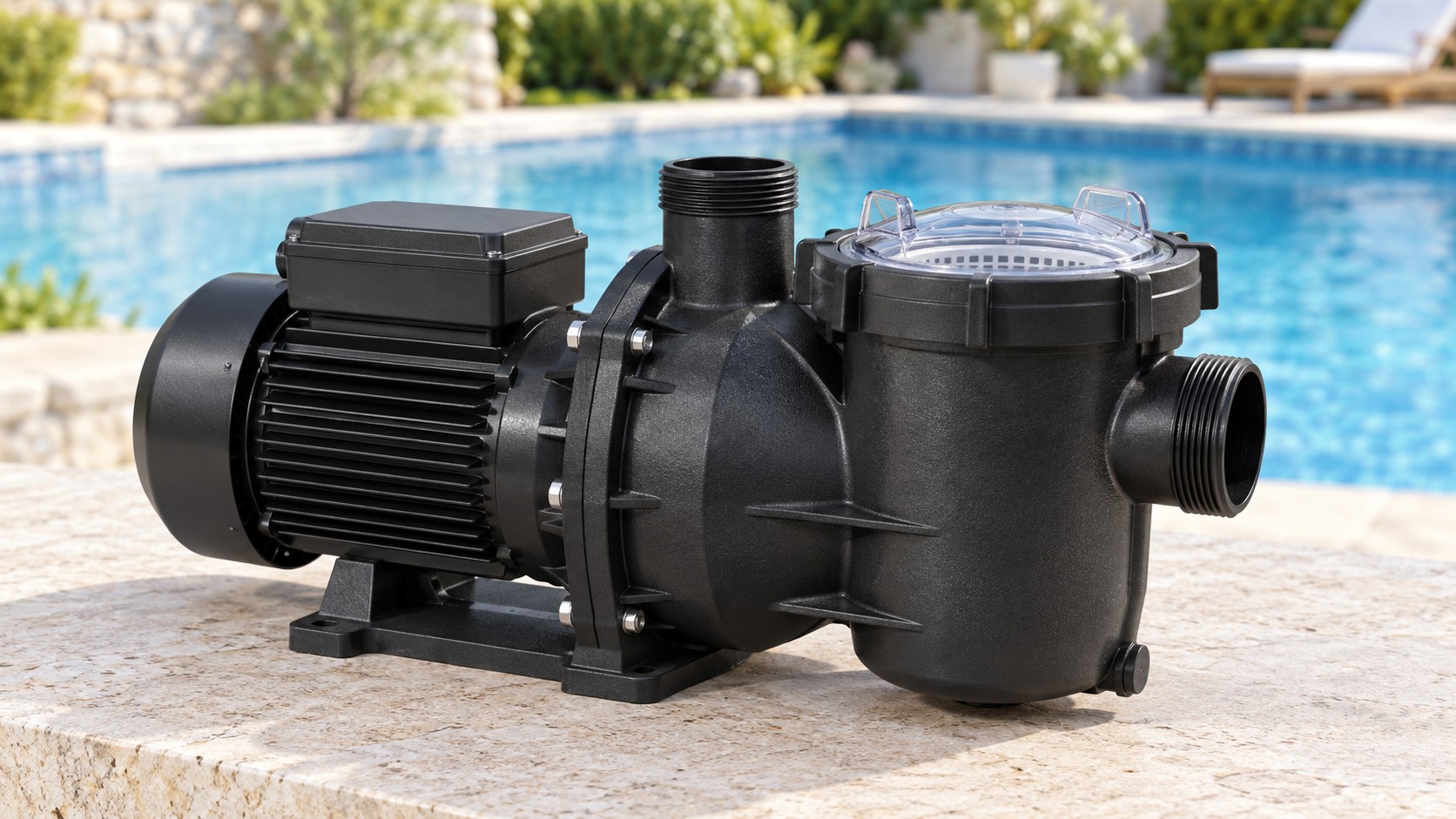
A good technician also asks why the capacitor failed. Heat, age and corrosion are the usual reasons. A pump that’s undersized for the pool and runs flat out for twelve hours a day wears its parts faster, so it’s worth checking you have the right size pool pump while we’re there.
Pool pump capacitor or new pool pump motor: what it costs
The capacitor itself is cheap. At the time of writing (October 2026), SA pool shops list genuine replacement capacitors from around R189, and cabled universal units at about R305. Labour and the call-out are the bigger part of the bill. Cape Town call-outs start from around R450, and general pump repairs run from around R800 to R4,000 depending on what’s wrong.
The real question is whether the pool pump motor survived. If it was left humming for a long time, the windings may be damaged. Bearing replacement or a motor rewind costs from around R1,200 to R3,500, while a new 0.75kW single-speed pump starts from around R2,390. Compare those figures in our pool pump repair cost guide and our pool pump prices page.
As a rule, replace the capacitor if the motor tests healthy. Consider a rewind or new motor if it’s old, has failed a new capacitor already, or the bearings are noisy. Ask our team for a current quote either way.
Coastal salt air, heat and your pool pump motor
Capacitors and motors don’t love Cape Town’s coast. Salt air from the Atlantic and False Bay works its way into pump boxes, corroding terminals, capacitor brackets and motor end covers. Pumps in a closed, unventilated box also bake in summer, and heat is one of the main reasons capacitors age early.
A few habits help the part last longer:
- Give the pump box some airflow and keep it out of direct afternoon sun if you can.
- Keep the motor dry. Fix leaking pump seals early, because water dripping onto the motor is a fast way to kill it.
- Have the electrics checked once a year if you live close to the sea. Our coastal pool equipment corrosion guide covers what to look for.
- Use a proper timer so the pump runs sensible hours, not flat out. See our pool automation and timers service.
Load-shedding and voltage dips add strain too. A motor that keeps trying to start on low voltage stresses the capacitor every time.
Pool pump capacitor questions
How do I know if my pool pump capacitor is bad?
The classic sign is a motor that hums but won’t spin, or one that starts slowly and trips the breaker after a few seconds. A bulging, cracked or oily capacitor casing is another giveaway. Only a technician should confirm it, because the capacitor can hold a charge even with the power off.
Can I test a pool pump capacitor with a multimeter myself?
We don’t recommend it. Testing means opening the motor’s electrical cover and discharging the capacitor first, and a charged capacitor can give a nasty shock even when the pump is switched off. Leave the meter work to a qualified electrician or pump technician.
How much does a pool pump capacitor cost in South Africa?
At the time of writing (October 2026), SA pool shops list replacement capacitors from around R189, with some cabled units at about R305. Fitting and diagnosis add to that, so ask our team for a current quote.
Why does my pool pump hum but not start?
A failed start capacitor is the most common cause, but a jammed impeller, seized bearings or low voltage can sound exactly the same. Switch the pump off at the isolator, check the basket for debris and then call a technician. Don’t keep switching it on, because a stalled motor overheats fast.
Is it worth replacing the capacitor or should I replace the pool pump motor?
If the motor’s windings and bearings are healthy, a new capacitor is the cheapest fix and usually the right one. If the motor has been humming for days, smells burnt or keeps failing new capacitors, a rewind or a new motor makes more sense. A technician can tell you which after testing.
If your pump has more than one fault, we handle pool equipment repair across the board, from motors and seals to filters and valves. For a quick fix on a humming pump, book our pool pump repair service.
Get your pump running again
We confirm whether it is the capacitor, the motor or the wiring, and give you a clear quote before we fit anything.


