

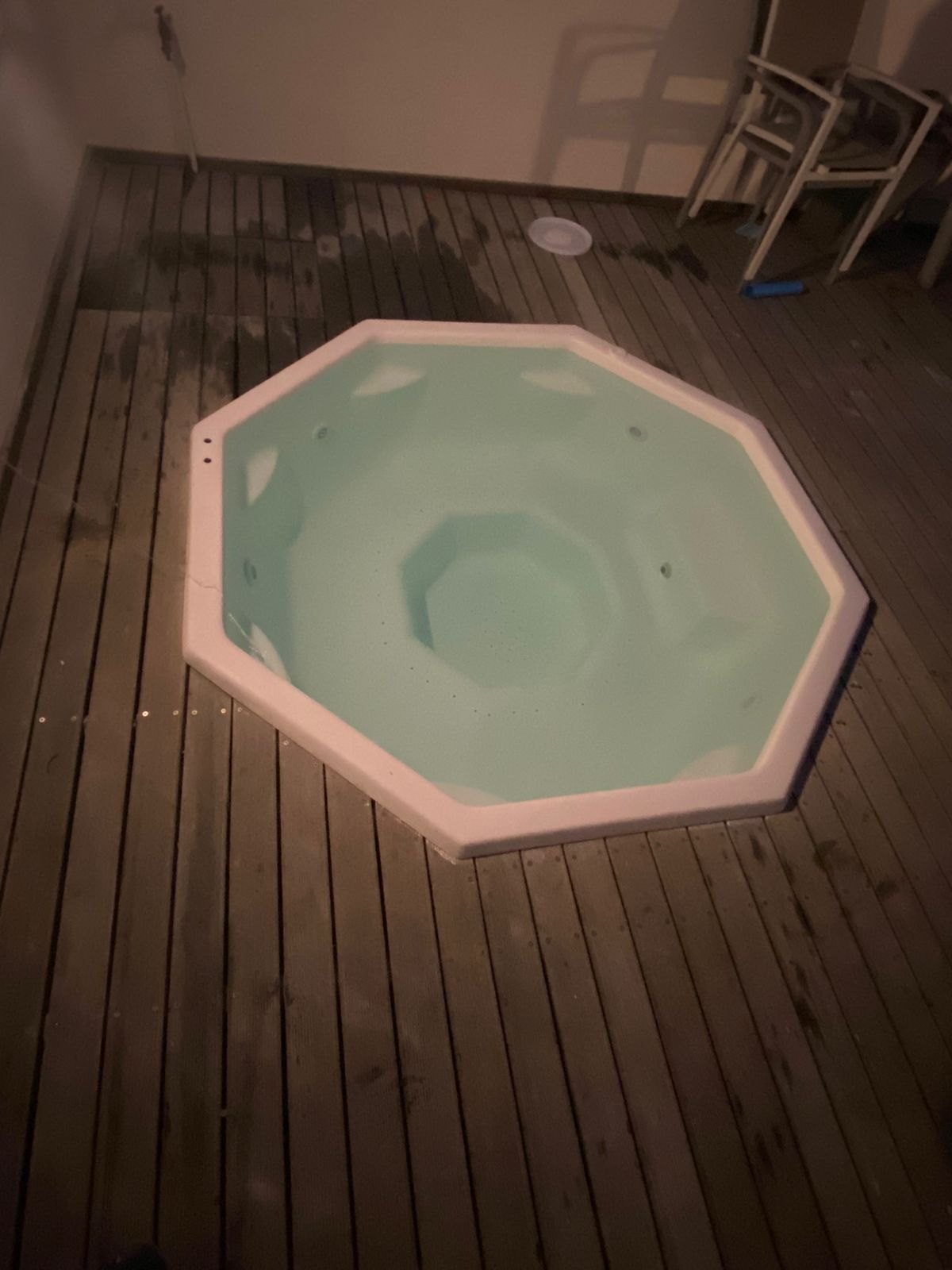
Timber vs composite pool decking is best compared by the exact board, finish and installation, not by a blanket claim that one material is always cooler or safer. Check barefoot comfort in sun, evidence for wet slip resistance, cleaning requirements and the way water drains. Then compare the maintenance you can realistically provide over time. Our team builds both on our pool decking service in Cape Town.
A pool surround is a working surface as well as a design choice. People cross it with wet feet, furniture gets moved, and water collects around steps and edges. A good specification accounts for those uses before colour, price or a sample board becomes the deciding factor.
Timber vs composite pool decking: compare complete systems
Timber and composite each describe a broad group of products. Timber species differ, and a coating suitable for one wood is not automatically suitable for another. Composite ranges can have different surface textures, colours and installation requirements. Ask for precise product names in every quotation.
For pool decking advice, explain how you use the area and what currently causes difficulty. Include the busiest walking route, sun exposure, existing drainage and any access needed below the deck. These details help define a practical scope.
- Identify the exact timber species or composite range being proposed.
- Compare the real surface finish and colour, preferably with samples.
- Request wet-use performance information and cleaning instructions.
- Review support, ventilation, drainage and pool-edge details.
- Compare full installed scope and future maintenance, not board price alone.
A photograph cannot establish a board’s composition or performance. Treat attractive examples as design references, then verify the specification. The same applies to a supplier’s broad claim of “pool suitability”: ask which product, which installation conditions and which care requirements it refers to.
Pool decking barefoot comfort: assess heat honestly
Pool decking barefoot comfort depends on more than whether the board contains wood or composite material. Colour and exposure matter. Eva-Last advises lighter colours for pool surrounds because dark decking absorbs and retains heat. That does not mean a light board will always be comfortable in direct sun.
Trex also warns that even its heat-mitigating decking gets hot on hot days in direct sunlight, particularly in darker colours. A relative improvement compared with another board is not a promise of a cool walking surface. Ask what the manufacturer’s comparison actually measures.
View samples outdoors where the proposed deck will be used. Compare them under similar conditions, but do not deliberately place bare feet or skin on a hot sample to test tolerance. Arrange shade and suitable footwear when surfaces are uncomfortable, particularly for children and people with reduced sensitivity.
Ask a better heat question: “How will this exact colour and board perform in this location, and where will we provide shade?” is more useful than “Is composite hotter than wood?” A generic answer cannot account for your actual layout.
Wet pool deck slip resistance needs product evidence
Wet pool deck slip resistance should be discussed using the exact surface and relevant test information. A textured appearance, deep groove or “non-slip” marketing phrase does not establish performance for every wet barefoot situation. Request the manufacturer’s test method and the conditions it represents.
Eva-Last distinguishes slip performance between its own ranges on its pool-decking page. That is a useful reminder to compare products within a material family rather than assuming all composite boards have identical grip. Do not transfer one range’s claim to a cheaper alternative in the quote.
Ask how the intended finish affects the timber option. A coating should be appropriate for the species and exterior use, and its suitability near wet foot traffic needs confirmation. Do not apply an improvised abrasive coating or a domestic polish to improve grip.
Maintenance also matters. Dirt and biological growth can accumulate on outdoor surfaces, and spilled products or wet leaves create additional problems. A tested surface is not an excuse to ignore cleaning, supervise children less carefully or allow running around the pool.
Review the walking route for unexpected changes in level and awkward narrow points. Material selection cannot compensate for a poorly detailed step or a trip hazard at the pool edge.
Get the next step checked
Send Kwik Pools your observations and the relevant equipment details. Ask what can be assessed at a visit and what requires separate investigation before agreeing to repairs.
Timber pool deck maintenance: identify wood and finish
Timber pool deck maintenance starts with knowing what is installed. Ask for the species, treatment information where applicable, and the coating system. Store the product instructions with the project records so a future maintenance contractor does not have to guess from weathered colour.
Woodoc’s Deck Sealer is an example of why product matching matters: it is formulated for porous woods such as pine and porous meranti. That does not make it a universal recommendation for every timber deck. The supplier should confirm that the chosen system suits the actual wood and intended use.
Ask what routine cleaning, surface preparation and recoating involve. The answer should distinguish ordinary care from repair of loose boards, damaged fixings or underlying structural problems. A new coat cannot correct a failing support or an unstable edge.
- Keep leaves and trapped dirt from accumulating where boards meet.
- Report raised fixings, loose sections or sharp damaged edges.
- Use the specified cleaning and maintenance products.
- Keep access restricted if the deck feels unstable or visibly damaged.
Do not accept a guaranteed maintenance interval that ignores exposure and use. Ask which signs indicate that attention is due and what preparation is required before the next treatment. Obtain drying and return-to-use directions from the exact product instructions.
Composite decking cleaning is still part of ownership
Composite decking cleaning may be less involved than maintaining some timber finishes, but low maintenance does not mean no maintenance. Trex states that all exterior building materials need cleaning and gives different instructions for its newer and early-generation products.
For named high-performance Trex ranges, the care guide includes warm soapy water and a soft-bristle brush for dirt within the surface pattern. The same guide cautions against pressure washing some earlier products. This is why an installer should hand over the care sheet for the supplied board, not a generic internet checklist.
Ask how to deal with sunscreen, food spills and leaf deposits without damaging the finish. Check whether a cleaner, pressure washer, mat or protective cover is compatible before use. Trex notes that some rubber-backed mats can affect composite colour, so even a seemingly harmless accessory deserves a compatibility check.
Keep deck-cleaning residues out of the swimming water and follow the chosen product’s directions for rinsing and disposal. Do not use pool chemicals as a substitute deck-cleaning recipe. Their suitability for water treatment does not establish suitability for a board surface.
Ask how individual boards can be replaced if damaged and whether the fixing method allows later access. A low-maintenance surface can still be inconvenient if repairs require dismantling a large area.
Pool deck drainage and the joint at the edge
Pool deck drainage is an installation issue that deserves its own line in the scope. Ask the contractor to explain where surface water and water below the boards will go, how debris can be removed and how the structure remains accessible for inspection.
Require the support layout, board spacing and movement allowances to follow the chosen system’s instructions. Do not copy a spacing dimension from an unrelated product or assume a timber frame suitable for old boards automatically suits a new composite range.
The interface with the pool needs coordination too. Discuss pool coping and edge details where the deck meets the pool surround. Ask who is responsible for levels, movement joints and access to fittings so the decking and pool work do not leave an unresolved gap between trades.
If the existing deck hides a leak, damaged support or ponding, have that investigated before covering it with new boards. A neat surface is not evidence of a sound structure underneath. Keep unsafe sections out of use and arrange qualified assessment rather than lifting structural components yourself.
Request a simple drawing showing boundaries, steps, access panels and drainage direction. It makes quotation comparisons easier and gives the installer a shared reference for the finished layout.
Compare quotes, samples and practical access
| Decision | Timber question | Composite question |
|---|---|---|
| Product identity | Which species and finish? | Which range, profile and colour? |
| Wet use | What evidence covers the finished surface? | What evidence covers this board texture? |
| Ongoing care | How is the finish cleaned and renewed? | Which cleaning methods are permitted? |
| Repair access | How are boards and supports inspected? | Can individual boards be removed? |
When enquiring about pool services in Bantry Bay with measurements, access details and photographs of the existing surround. Describe actual sun exposure and wet areas rather than assuming the suburb determines which material to choose.
For pool services in Fresnaye, include any stairs, narrow delivery route or restrictions affecting removal of old materials. These details can change the practical installation scope even where the preferred board stays the same.
Compare removal, disposal, substructure work, edge detailing and handover care as well as the visible boards. Ask for exclusions and product warranties in writing. Choose the option that meets the documented requirements and your maintenance capacity, not the one supported by the broadest promise.
Common questions
Is composite decking always cooler than timber?
No. Exact product, colour and sun exposure matter. Manufacturers warn that decking can become hot in direct sun, including heat-mitigating composite ranges. Compare the proposed boards and plan shade rather than relying on a material-wide promise.
Does slip resistant mean nobody can slip?
No. Ask what test and conditions support the claim for the exact surface. Cleaning, water, debris and the layout still affect safe use. Slip-resistance information does not replace sensible behaviour and supervision around the pool.
Can I pressure wash any composite deck?
No. Follow the instructions for the actual product and generation. Trex permits specified cleaning approaches for certain ranges but discourages pressure washing on earlier products. A generic pressure setting is not appropriate for every composite board.
Can new boards fix a deck that collects water?
Not by themselves. The drainage route, supporting structure, levels and movement details need assessment. Resolve the cause of ponding or hidden damage before selecting the replacement surface.
Arrange a practical pool assessment
Tell us what has changed, what you have already tried and how the pool area can be accessed. We can discuss the appropriate service and a property-specific scope.


Comments are closed