

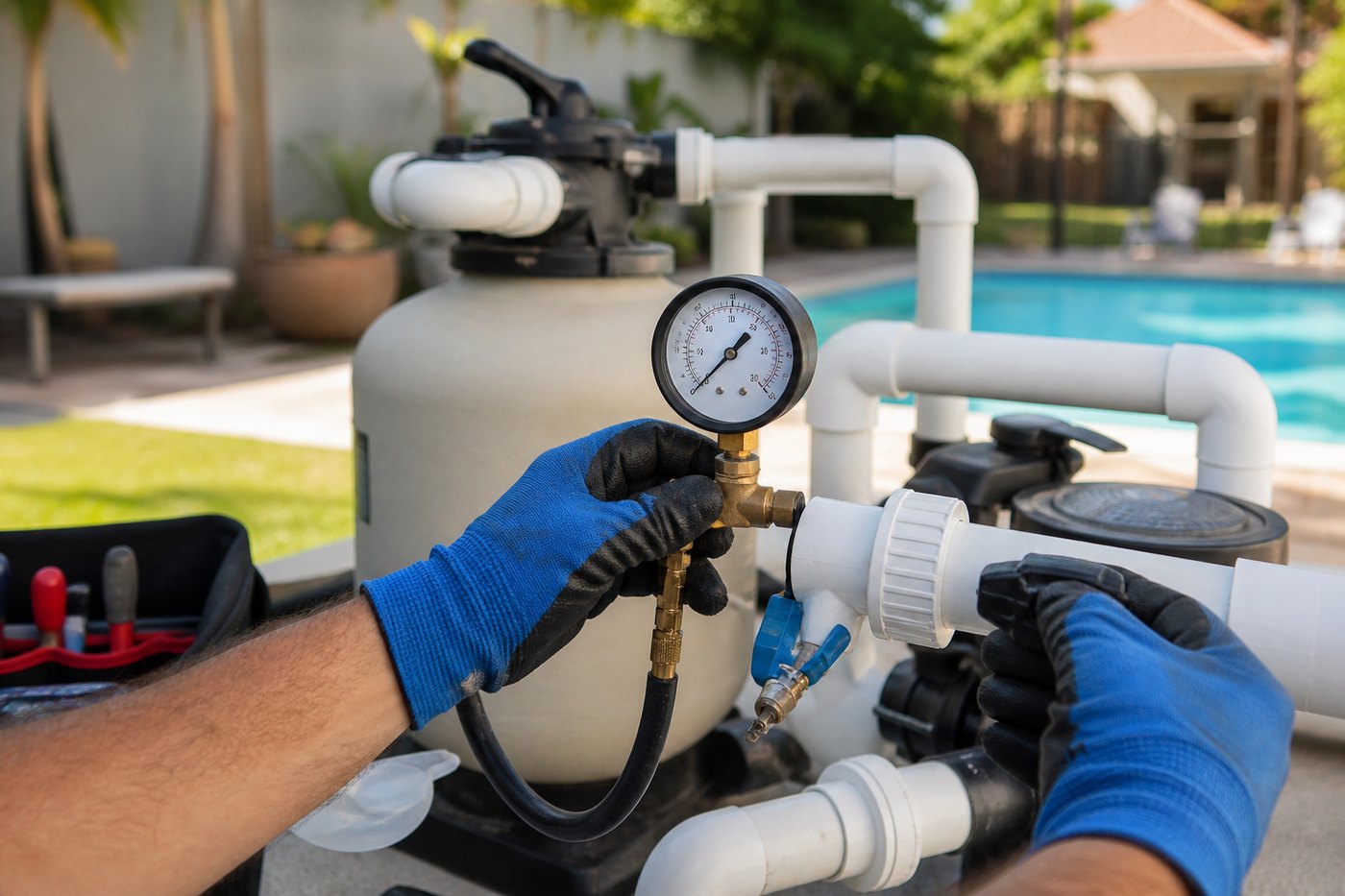
Pool leak detection cost in Cape Town starts from around R1,400 at the time of writing (October 2026) for a visit that includes a dye test, a bucket test and a visual inspection. Most visits fall in a range of R1,400 to R2,800, and pressure or electronic testing on the underground pipes starts from around R1,450 excl VAT, climbing towards R5,350 on bigger or more complicated pools.
Those are market figures from Cape Town contractors, not a fixed Kwik Pools price. What you pay depends on how many tests the pool needs before the leak gives itself away. Here is what each method costs, what a proper report should include, and why ignoring a slow leak is usually the most expensive option.
Pool leak detection cost by method
Leak detection is not one test. A technician works from the cheap, quick checks towards the more involved ones, and stops when the leak is found. That is why quotes are often given as a starting price.
| Method | Typical price (October 2026) | Best for |
|---|---|---|
| Dye test, bucket test and visual inspection | From around R1,400 per visit | Leaks in the shell, skimmer, returns and light |
| Typical leak detection visit | R1,400 to R2,800 | Most residential pools |
| Pressure test, acoustic or electronic detection | From around R1,450 excl VAT | Underground suction and return pipes |
| Electronic and pressure detection, full range | R1,450 to R5,350 | Multiple lines, long pipe runs, hard-to-find leaks |
| Extra time on site | R650 to R950 per extra hour | Pools that need longer than the standard visit |
Our own pool leak detection service follows the same order: rule out evaporation, check the obvious points, then test the plumbing. Ask our team for a current quote, because the price depends on your pool and what we find on the day.
Pool losing water or just evaporating?
Before paying anyone, make sure you actually have a leak. Every pool loses some water to evaporation, and in a Cape Town summer it can be a lot. Hot days, low humidity and a south-easter blowing across the surface for days on end all speed it up.
The simple way to tell the difference is a bucket test. You stand a bucket of pool water on the step and compare how much the bucket and the pool drop over a day or two. Our step-by-step pool bucket test guide explains exactly how to set it up so the result means something.
Other signs that your pool is losing water through a leak rather than the air:
- The level drops faster when the pump is running, or faster when it is off.
- The water stops dropping at a certain height, often the bottom of the skimmer mouth or the light.
- Soggy lawn, sunken paving or a damp patch near the pool or the pump.
- The pump loses prime or air bubbles come out of the return jets.
- Your water bill has crept up without a clear reason.
Note where the water stops. If you can, let the pool drop for a few days without topping up and write down the level where it settles. That single fact can save time on site, because it points to the fitting at that height.
How swimming pool leak detection works
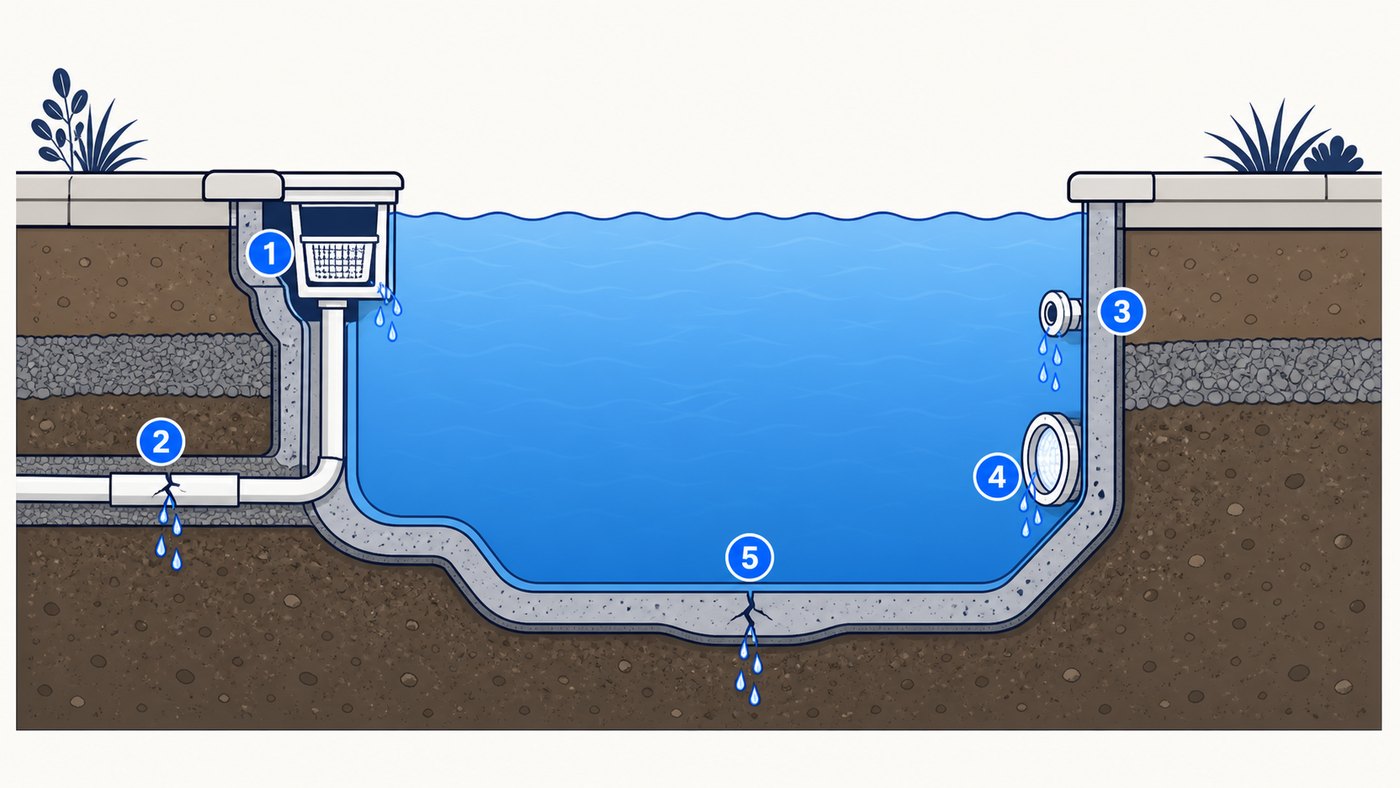
Swimming pool leak detection is a process of elimination. The aim is to split the pool into the shell, the fittings and the pipework, and work out which part is losing water.
The dye test
With the pump off and the water still, the technician squeezes a little coloured dye next to a suspect spot. If there is a leak, the water carries the dye into the gap. It is cheap and quick, and it works well on skimmer throats, return fittings, light niches and visible cracks.
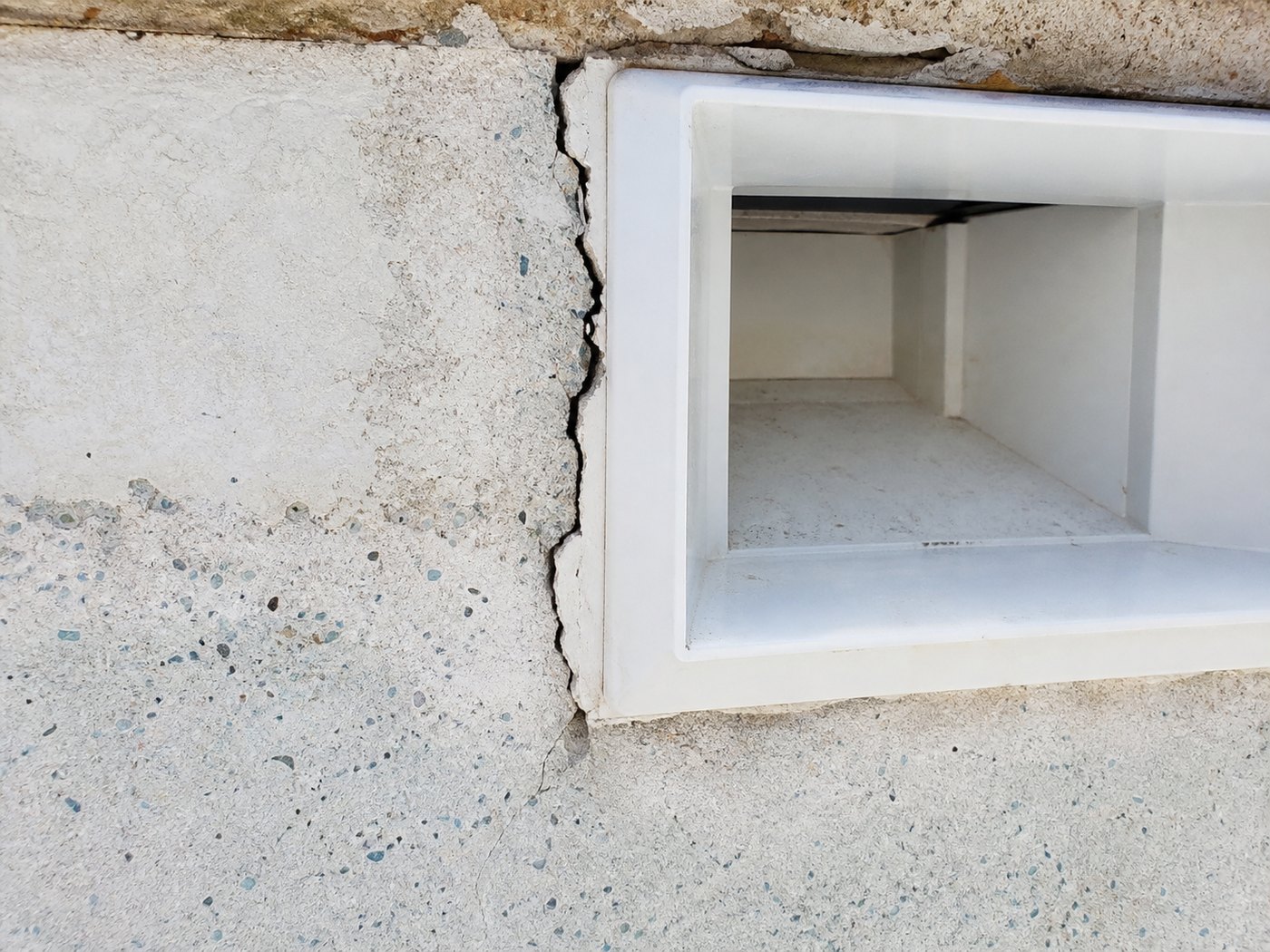
The skimmer is one of the most common culprits, especially where the plastic body meets the concrete. Our post on a pool skimmer leaking shows the signs to look for.
The pressure test
A pressure test checks the buried pipes. Each line is plugged at the pool end, a gauge is fitted at the equipment end, and the line is pressurised. If the gauge drops, that line is leaking.
We go into more detail on the method in our article on the pool plumbing pressure test. It is the test that tells you whether you are dealing with a fitting or a pipe under the paving.
Electronic and acoustic listening
Once a pressure test shows which pipe is leaking, a listening device can help narrow down where along that pipe the water is escaping. That way only a small section of paving or lawn has to come up, instead of a long trench.
Think your pool is leaking?
Tell us how fast the level is dropping and where it seems to stop. Our team will tell you which tests make sense and quote before we start.
What a proper leak detection report includes
Paying for leak detection should get you more than a verbal “it’s the skimmer”. Ask for a short written report that you can use to compare repair quotes or send to your insurer. A useful one includes:
- The bucket test result and the daily water loss.
- Which tests were done: dye, pressure, listening.
- Each line tested and whether it held pressure.
- The leak points found, with photos and marked positions.
- Anything suspicious that is not yet confirmed.
- The recommended repair and whether the pool needs to be drained.
If a second leak is suspected after the first one is fixed, the report gives the next technician a head start. That is common on older pools, where one perished fitting is rarely the only one.
What pushes the pool leak detection cost up
Two pools can have the same symptom and very different bills. The things that add time and cost are:
- Number of lines. Extra returns, a separate cleaner line, a spa or water feature all need testing.
- More than one leak. Fixing one point and finding the level still drops means more testing.
- Access. Equipment in a tight pump room, or plumbing buried under decking, slows things down.
- Murky water. A dye test needs clear water, so a green pool must be cleared first.
- Older pools. Older marbelite pools, common across Cape Town, often have hairline cracks and several worn fittings.
Visible cracks in the shell are a separate job. If the dye test points to one, our pool crack repair team can assess whether it is a surface crack or something structural.
The water bill cost of ignoring a leak
A slow leak feels harmless, so it is easy to keep topping up with the hose. But the City of Cape Town charges residential water on a stepped tariff, and the extra water a leaking pool needs pushes your usage into the dearer steps.
| Monthly use | Price per kilolitre (2026/27, incl VAT) |
|---|---|
| 0 to 6 kl | R25.42 |
| 6 to 10.5 kl | R34.92 |
| 10.5 to 35 kl | R52.20 |
| Above 35 kl | R100.71 |
To put it in perspective, a pool with 32 square metres of surface that drops 2.5 cm a day loses about 0.8 kl a day, or roughly 24 kilolitres a month. That water lands on top of your household use, so much of it is charged at R52.20 or even R100.71 per kilolitre.
The water bill is only part of it. Leaks wash soil out from under paving, can undermine coping, and keep refilling the pool with untreated water, so you use more chemicals too. Cape Town also still remembers the drought years and the restrictions that came with them, which is reason enough not to let water drain into the ground.
Pool leak detection Cape Town: finding vs fixing
For pool leak detection Cape Town homeowners should expect two steps and usually two prices. Detection finds the leak. Repair fixes it. Keeping them separate is fair to you, because nobody can honestly price a repair before they know what is broken.
Small fixes are sometimes done on the same visit. At the time of writing (October 2026), simple jobs like replacing an O-ring, a jet gasket or a basic re-seal start from around R450 to R1,800. A structural re-seal of a skimmer throat or return fitting runs from around R1,800 to R4,500.
Underground pipe leaks cost more, because paving or lawn has to be opened, the pipe repaired and the area reinstated. Our pool plumbing and pipe repairs page explains that side of the work. The bigger underground jobs can reach around R18,000 at the upper end.
If your pool is dropping and you can’t see why, start with a bucket test, then book proper swimming pool leak detection before anyone starts digging. It is almost always cheaper to find the leak first.
Questions about leak detection
How much does pool leak detection cost in Cape Town?
At the time of writing (October 2026), a basic visit with a dye test, bucket test and visual inspection starts from around R1,400, and most visits land between R1,400 to R2,800. Pressure or electronic detection starts from around R1,450 excl VAT and can reach R5,350 on complicated pools. Ask our team for a current quote.
Is pool leak detection worth paying for?
Usually, yes. A pool that drops a few centimetres a day can lose many kilolitres a month, all charged on the City of Cape Town’s stepped water tariff. Guessing at the leak often means paying for repairs in the wrong place.
How do I know if my pool is losing water or just evaporating?
Do a bucket test. Fill a bucket to the same level as the pool, stand it on the step, and compare the two drops after 24 hours with the pump on its normal schedule. If the pool drops noticeably more than the bucket, you have a leak.
Does leak detection include fixing the leak?
Not normally. Detection finds and marks the leak, and the repair is quoted separately once everyone knows what it involves. Small fixes such as a perished O-ring can sometimes be done on the same visit.
Can a pool leak be found without draining the pool?
Yes, in almost every case. Dye testing, pressure testing and electronic listening all work with the pool full. In fact a full pool is needed for most of these tests to show anything.
Get your leak found properly
Our team does dye testing, pressure testing and leak repairs across Cape Town. Send us your bucket test result and we’ll take it from there. Ask our team for a current quote.


