

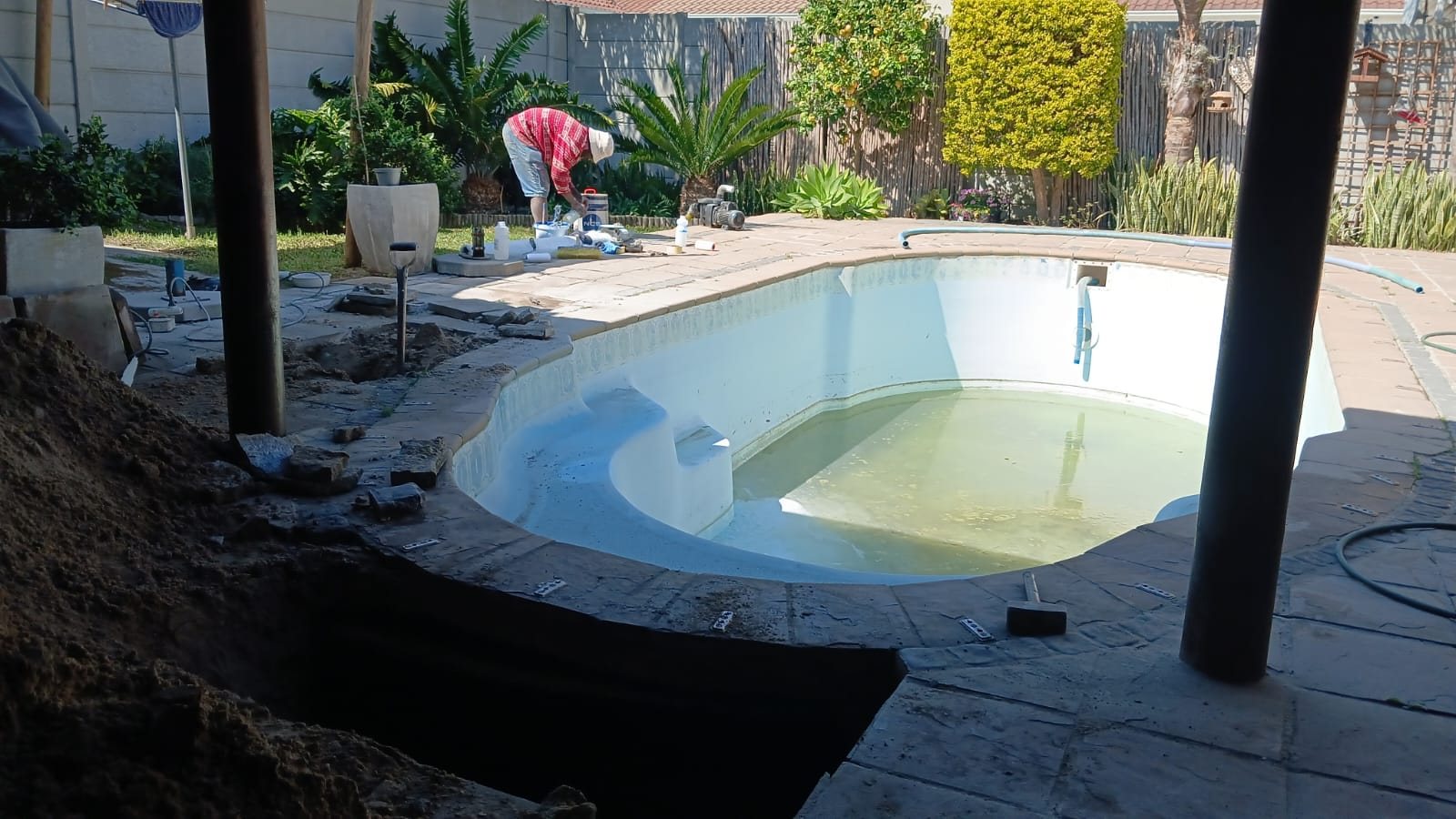
Winter pool care Durbanville homeowners can use starts with continued testing, debris removal and reliable circulation, not switching the pool off until spring. Build a rain-season routine around what happens at your own property: changing water levels, blocked drainage, a wet equipment area or debris on the cover. Keep the observations in a simple log so adjustments follow evidence rather than a seasonal guess.
Winter pool care Durbanville: establish a working baseline
Before changing the routine, record the pool’s current condition. Note whether the floor is visible, where leaves gather, how the water level compares with the skimmer’s recommended operating level and whether the equipment sounds normal. Photograph the pool and equipment area from the same safe positions you will use for later comparisons.
Write down the current pump programme, sanitising method and recent test results. If someone else maintains the pool, ask for those details rather than trying to reconstruct settings from memory. Record any existing fault now, so a longstanding drip or noisy pump is not later attributed to the first rainy week.
Use professional pool maintenance to establish the baseline when readings are unreliable or equipment behaviour is unfamiliar. A useful maintenance brief describes your actual pool, test kit and access arrangements. It should not assume all Durbanville properties need an identical winter schedule.
HTH’s winter guidance supports continued water testing, basket care and circulation. However, it is national guidance and includes a dry-winter rainfall assumption. That sentence should not be applied automatically to a Cape Town rain-season routine. Likewise, a general suggestion to reduce filtering hours does not settle the needs of a particular pump, filter or chlorinator.
Cape Town winter pool checks: follow the water after rain
Once conditions are safe, look at where rainwater has travelled. Check paths beside the pool, low points around the equipment and visible drainage outlets. Observe from dry ground. If water surrounds electrical equipment, do not enter the wet area to investigate or reach into a box to operate a switch.
Look for garden soil washed towards the pool, overflowing gutters above the plant and mulch blocking a drainage route. Distinguish water arriving from the garden from water rising within the pool. These problems need different responses, and a photograph taken after rain can help the contractor see a pattern that disappears on a dry visit.
Do not casually lower the pool to create extra rain capacity. Water level matters to skimming and circulation, and disposal arrangements need consideration. Ask for a controlled plan if water repeatedly approaches an unsuitable level. Structural draining or sending pool water towards a street drain is not part of this homeowner checklist.
Check gates and barriers at the same time. A fallen branch or moved garden chair can create an access problem unrelated to water chemistry. Keep the pool secured throughout the season, even when no one intends to swim. A maintenance visit does not replace the household’s daily responsibility for access control.
- Wait until wind, lightning and slippery access no longer make inspection unsafe.
- Look at the pool, cover and surrounding drainage from stable ground.
- Photograph changes before moving debris where that is safe.
- Record the water level and any unusual equipment behaviour.
- Arrange help for flooding, damaged barriers or unexplained changes before resuming ordinary use.
Rain season water testing: measure before treating
Rain and material entering the pool can change the conditions you are maintaining. Test rather than guessing from water colour. Clear water alone is not proof that sanitiser and pH are appropriate, while cloudy water does not reveal which product, if any, should be added.
Follow your kit’s sampling, reading and storage directions. Write down the result, date and any treatment already used. If the kit is old, damaged or difficult to interpret, ask for a reliable water assessment. Avoid comparing a fresh result with a vaguely remembered reading from several weeks earlier.
Set a regular testing routine and include additional checks after a significant change such as dirty runoff or an equipment interruption. HTH’s winter advice explicitly keeps testing in the programme. The appropriate frequency for your pool should reflect the product instructions, use and observed conditions rather than an arbitrary calendar gap.
Chemical choices and amounts depend on the measured problem, product and pool volume. Read the current label, use the stated protective precautions and never mix products. Do not combine several corrective treatments in the hope that one will work. If readings are outside the kit’s range, ask for help rather than scaling up a dose blindly.
A useful log separates observations from actions. For example, record that rain occurred, the water looked cloudy and a test was taken. Then separately record any advised treatment and the later result. That structure makes it easier to identify what changed without claiming that rain was definitely the cause of every problem.
Discuss the practical constraints first
Send your observations and photos to Kwik Pools. Ask which checks need a site visit before you commit to equipment or work.
Pool cover winter care depends on the cover type
Find the instructions for the actual cover, including how to remove surface water, clear debris and handle it in wind. A floating thermal blanket, anchored cover and safety cover are not interchangeable. Do not assume that anything stretched across the pool will support a person or provide an approved safety barrier.
Observe the condition of accessible anchors, straps, edges or the roller from a safe position. If something is loose or damaged, keep children and pets away and ask the supplier how to proceed. Do not walk onto a cover to clear a puddle or reach an object. The surrounding pool must remain secured while repairs are arranged.
Remove debris only by the method allowed for the cover. Plan where it will go so it does not slide into the pool as the cover opens. If wind makes the material difficult to control, leave handling for a safe time or get assistance. Improvised weights and fixings can introduce damage rather than solve it.
Inspect the water beneath the cover as part of the routine when the cover can be handled safely. Reduced visibility from the patio is not a reason to stop checking. Note trapped debris, an unexpected water level or a new smell, then investigate through testing and appropriate service rather than adding chemicals through an inaccessible gap.
Pool equipment drainage must not sacrifice ventilation
A motor benefits from protection against excess moisture, but enclosing it tightly can create another problem. Pentair’s SuperMax manual specifically calls for ventilated enclosures and protection from splashed or sprayed water. Use that principle to prompt a review of your own equipment instructions, not to copy another model’s enclosure dimensions.
Check whether leaves, bags or stored objects obstruct visible ventilation openings. Look for standing water around the equipment pad and for a downpipe discharging nearby. Do not remove guards or covers to clean internally. A safe visual inspection can identify the need for a contractor without exposing you to moving or electrical parts.
Do not cover an operating pump with a plastic bag or place chemical containers against its motor. Store chemicals according to their own instructions and separately from equipment where required. A dry-looking box can still be a poor storage space for incompatible products, fumes and electrical components.
If a pump has flooded, do not restart it because the outside now looks dry. Pentair warns against operating a flooded pump. Have a qualified person assess affected equipment and the source of the water. Repeated trips or a damaged enclosure are also faults to report, not reasons to keep resetting protection.
Review the winter pump schedule with a change log
Winter adjustments should preserve the functions the pool still needs. Circulation, debris collection, filtration and any connected treatment or heating equipment may have linked operating requirements. A reduction that saves running time but leaves baskets overloaded or treatment inadequate is not a successful seasonal setting.
Change settings only within the system’s user instructions and agreed maintenance plan. Record the previous programme and the new one. Avoid changing several variables together, because it becomes difficult to tell whether later deterioration relates to runtime, a blocked basket, treatment or a separate fault.
Observe the result over the maintenance visits that follow. Is debris being collected and are test results staying within the required range? If either check fails, or a chlorinator or heater shows a warning, revisit the plan with the service provider rather than progressively cutting the schedule because cooler weather is expected to make everything easier.
- Keep the agreed pump programme with the equipment records.
- Note interruptions caused by outages or faults.
- Record water tests and debris load before adjustments.
- Keep a list of products used and any professional advice.
- Carry unresolved issues forward instead of deleting them at the next visit.
Hand over a useful record before spring
For pool services in Durbanville, send the recent log and photos of any rain-related access or drainage concern. Explain whether the gate, cover or equipment area needs someone present. This lets the visit focus on the observed problem rather than a generic winter clean.
When arranging pool services in Durbanville Hills, identify the person who can authorise a separate repair if maintenance uncovers a fault. Do not assume a routine visit includes electrical work or changes to drainage. Ask for those items to be scoped clearly if needed.
Before returning to more frequent swimming, review outstanding repairs, cover condition and reliable water readings. Use the Kwik Pools contact page to share unresolved items and ask what the next assessment should cover. A pool that stayed visually blue still needs a considered readiness check.
Winter maintenance questions
Can I turn the pump off for the whole winter?
Do not assume the pool can be left without circulation or treatment. Keep a system-specific winter plan. If the equipment must be shut down, ask the installer for a safe arrangement rather than abandoning the routine.
Should I add chemicals automatically after rain?
Test first and consider what entered the pool. Follow the relevant product label and professional advice. Rain alone does not establish a universal treatment or dose for every pool.
Does a winter cover mean I can stop checking the water?
No. The pool still needs water-level, chemistry and condition checks. Follow the actual cover’s instructions so opening, cleaning and securing it do not create a separate safety risk.
What should I do if the equipment area floods?
Keep away from wet electrical equipment and prevent access. Do not restart a flooded pump merely because the surrounding water has receded. Arrange qualified assessment of both the equipment and the drainage problem.
Make the next visit more useful
Bring your notes, equipment details and priorities. We can discuss the appropriate assessment and what should be included in the written scope.


Comments are closed