

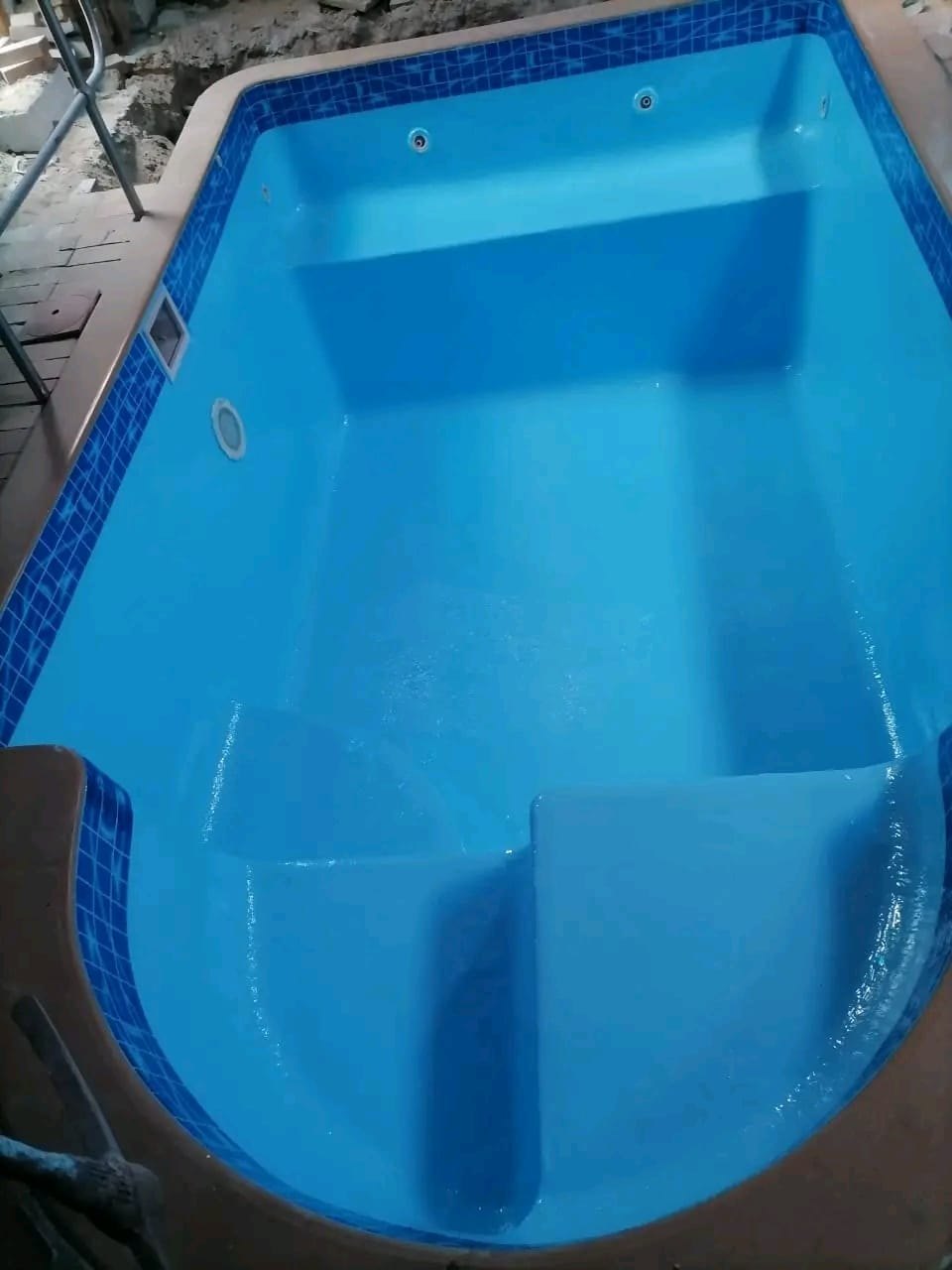
Pool mosaic tiles falling off need more than fresh grout over the gap. The repair should establish whether the tile bond, adhesive bed, background or movement detailing has failed. Keep swimmers away from loose pieces and sharp edges, photograph the pattern safely and have the surrounding tiles assessed before deciding how much of the band needs replacing.
A missing mosaic may be the first visible sign of a wider problem, but it does not automatically mean every tile must be removed. The useful question is where the failure occurred and how far it extends. Matching the colour comes after establishing a sound background and a suitable installation system.
Pool mosaic tiles falling off: start with safety and evidence
Small mosaics can leave sharp edges on the wall or loose fragments in the water. Do not allow swimmers to brush past the damaged area or children to collect pieces from the floor. If safe access or clear visibility cannot be maintained, stop using the pool until the hazard has been assessed.
Photograph the gap, the adjacent tile band and an overall view locating the damage. Note whether individual pieces have detached or a connected section has come away. Include a corner, step or fitting as a reference. Do not pull at neighbouring tiles to find out whether they will detach too.
If a tile has already been safely recovered, retain it for the assessor. Its back may help show where the separation occurred, but it must be interpreted alongside the wall. Do not clean away all the attached material before the inspection, and do not remove another tile simply to provide a sample.
- Record when pieces first came loose and whether the area has grown.
- Note cracked joints, displaced edges or recurring repairs.
- Keep any original tile packaging and adhesive or grout records.
- Report water loss separately instead of assuming the tile gap is the leak.
Pool tile adhesive failure: identify the interface
A mosaic installation includes more than the visible tile. There is the background, possibly a preparation layer, adhesive, tile and joints. Failure can occur between different parts of that build-up. A repair needs to address the failed interface rather than simply make the front look complete again.
TAL’s residential pool mosaic installation guideline requires a clean, sound background and good adhesive contact. It also calls for skilled, experienced installers and a project-specific specification. That is a useful standard for the questions to ask, not a ready-made repair recipe for every pool.
Contamination, unsuitable existing material or insufficient contact can compromise an installation. If the tile separates cleanly while the bed remains on the wall, that is different evidence from a tile carrying away a crumbling section of the background. Ask the assessor to explain what the actual surfaces show.
The product category alone is not enough. A general bathroom adhesive is not automatically suitable for permanent pool immersion, and one mosaic system is not automatically suitable for every tile material. Ask for confirmation that the selected tile, backing, adhesive and grout are intended to work together in the proposed location.
Mosaic backing can affect the bond
Mosaics are often supplied in sheets, with small individual pieces connected for easier installation. Depending on the product, the support can be on the face or the back. The sheet format is convenient, but it does not remove the need for effective contact between adhesive and each tile.
TAL explains that mesh, tabs and their bonding adhesive must be water resistant and compatible with the adhesive bed. It also limits how much of the tile back those materials should occupy. The important homeowner question is whether the actual backing is suitable for immersion and permits the required contact.
Do not assume an attractive mosaic sheet is a pool product because its colour matches the existing border. Request written suitability from the tile supplier, particularly for a replacement material that differs from the original. The TAL guideline used here covers ceramic and porcelain mosaics; glass or other materials need their own specification.
| Visible finding | Question for assessment | Likely scope decision |
|---|---|---|
| One detached piece | Are the neighbouring tiles and background sound? | Whether a local repair is appropriate. |
| A sheet-sized area separates | Is backing or adhesive contact involved? | Whether similar adjoining sheets need checking. |
| Background comes away with tiles | Is the render or plaster suitable to retain? | Whether background repair is needed before tiling. |
| Cracks continue through the band | Is movement or a background joint involved? | Whether joint or structural assessment is required. |
Loose pool tiles and hollow pool mosaics
A contractor may assess the bond of neighbouring tiles rather than limiting the inspection to the visible gap. Hollow-sounding areas can be relevant, but they need interpretation. Do not use a hammer to conduct a homeowner survey, and do not assume every change in sound demands removal.
TAL warns that trafficking newly installed tiles before the adhesive has set sufficiently can impair the bond and result in hollow-sounding or loose tiles. This is one possible installation-history question. It is not proof that someone walked on your particular repair too early.
A repeated repair in the same position deserves a wider review. Ask whether previous work addressed the background and relevant joints or only replaced the missing pieces. Reusing a sound tile may be possible, but a reusable tile does not mean the old adhesive bed is fit to receive it again.
Assess the tile band before replacing the gaps
Send photographs of the detached area and surrounding mosaics, plus any product records. Ask whether the background, neighbouring tiles or movement joints need work as part of the repair.
Waterline tile damage: grout and movement are different
Grout fills the joints between tiles. Loss of grout should be assessed, but replacing grout is not the same as restoring a failed adhesive bond behind a tile. If tiles already move or detach, a grout-only proposal needs a clear explanation of how that underlying condition will be addressed.
TAL notes that water that is too acidic can erode cementitious joint material over time. Follow the actual finish and chemical instructions rather than using a concentrated cleaner on the waterline. Aggressive cleaning is not a substitute for identifying why joints are deteriorating.
Movement joints serve a different function from ordinary grouted joints. TAL requires relevant construction and structural joints in the background to continue through the tile system and highlights poorly constructed or absent movement joints as a cause of failure. Do not fill a flexible joint with rigid grout simply because it resembles an untidy gap.
If cracks cross the tile band or edges are displaced, ask whether movement requires further investigation. A tile repair should not hide a structural concern. Describe changes in coping, nearby paving or the pool wall separately so the assessor can decide which specialist input is needed.
The pool tile substrate must be suitable
The background has to support the new installation. TAL’s guidance requires defective, deteriorated or hollow material to be removed and made good before tiling. It also states that the pool shell should be proved watertight before tiling, with tiles serving as an aesthetic finish rather than the primary solution to a leaking shell.
That distinction matters when a homeowner asks whether replacing missing mosaics will stop water loss. The answer depends on the actual source of the leak. Do not assume a restored tile band provides structural waterproofing or makes an unidentified crack irrelevant.
Ask what lies behind the repair. A quotation should cover the condition of the background, compatible materials and relevant joints. A bag of adhesive and matching tile colour do not establish that the full installation is suitable.
Use the pool mosaic and tile repair service to discuss the detached area. Provide photographs of the surrounding band as well as the missing pieces. Ask whether the initial assessment can take place without changing the water level.
Where there are several symptoms or uncertain previous work, discuss a pool inspection and specify the tile bond and background as key questions. Do not drain on your own to expose the waterline. Water handling and safe access belong in the professional plan.
Agree repair extent, matching and commissioning
A limited repair may be suitable when the surrounding installation is sound. A larger section or full border replacement may be appropriate where defects extend beyond the gap or a satisfactory match is unavailable. Separate those reasons: technical necessity and visual consistency are not the same decision.
- Establish the affected area and the condition of neighbouring tiles.
- Confirm the background repairs and joint requirements.
- Choose compatible replacement materials with documented pool suitability.
- Agree the visual result, including any unavoidable colour or size differences.
- Record protection, curing, filling and care responsibilities before work starts.
Do not use a coating timetable for tile work. TAL’s guideline includes its own curing and controlled-filling requirements and notes that cold conditions can extend setting and curing. The contractor should provide the schedule for the actual installation, including any background repairs, rather than promise immediate swimming because the grout looks dry.
For a Plumstead property, use the Plumstead pool services enquiry route. Include the location of the damage and explain whether steps or a handhold are affected. Mention access arrangements so the assessor can plan a safe visit without asking you to remove tiles first.
For a Diep River property, the Diep River pool services page provides the local enquiry route. Send any tile packaging or prior repair information and confirm who can authorise the work. These details support planning, not a claim about local fault patterns or guaranteed tile availability.
Keep the material specification and finished-work photographs at handover. Ask which new symptoms need reporting, such as recurring cracks, loose edges or further detachment beside the repair. A successful repair should have an understood scope and care plan, not simply a gap that has been covered.
Frequently asked questions
Will regrouting stop pool mosaic tiles falling off?
Not if the tile bond or background has failed. Grout replacement and adhesive repair address different parts of the installation. Have loose tiles and the substrate assessed before accepting a grout-only solution.
Can the original fallen tiles be reused?
Possibly, if they remain sound and are suitable for the planned installation. The contractor must also assess the old bed and background. Keeping an already recovered piece can help with identification, but do not pull off more tiles for samples.
Do missing waterline tiles prove the pool is leaking there?
No. Missing tiles do not identify the source of water loss. The shell and other possible leak locations may need assessment. TAL’s guideline treats mosaics as an aesthetic finish over a pool shell that should already be watertight.
How soon can the pool be filled after mosaic repairs?
Follow the instructions for the actual adhesive, grout and any background repairs, with the installer confirming site conditions. A dry-looking joint does not establish readiness. Tiling and coating systems can have different curing and filling requirements.
Plan the next step with Kwik Pools
Describe the pool condition and the outcome you need. Ask for an assessment and a written scope that separates essential repairs from optional improvements.


Comments are closed