

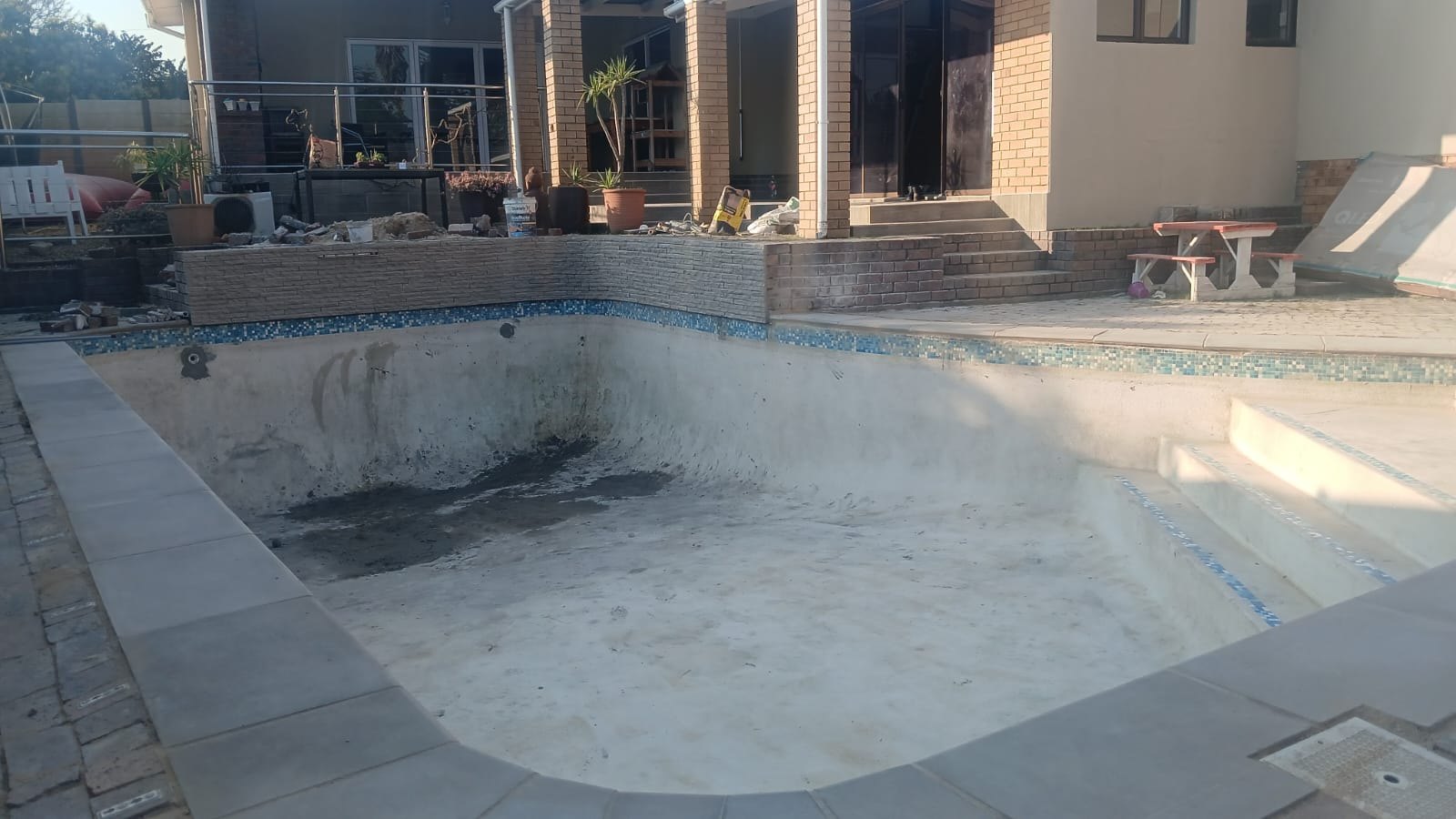
Marbelite vs fibreglass pool lining is a decision about the existing pool as much as the new finish. Start with the condition of the shell, old surface and fittings, then compare named systems with clear preparation and aftercare requirements. Neither option should be sold as a substitute for diagnosing structural movement or unexplained water loss.
This comparison is for renovating an existing pool. It is not a comparison between building a new concrete pool and installing a factory-made fibreglass shell. Keeping that boundary clear prevents misleading price and construction comparisons before your current pool has even been inspected.
Marbelite vs fibreglass pool lining: compare actual systems
Marbelite is commonly used for a marble-based pool plaster finish. Cemcrete’s PoolCrete is one named example: the manufacturer describes a smooth marble plaster for pool walls and floors, not for use above the water level. Ask which plaster product a contractor proposes rather than treating the general name as a complete specification.
A fibreglass lining is built over the prepared existing pool using a resin-and-glass reinforcement system with a suitable finishing layer. It is different from merely painting the old surface and different from dropping in a prefabricated pool. The quote should identify the layers and products that make up the proposed lining.
Scott Bader’s Crystic Topcoat 506PA technical sheet describes a finishing coat for GRP-lined swimming pools, protecting the fibres from water contact and providing the appearance. This is a useful reminder that the topcoat and underlying reinforced lining perform connected but distinct roles.
Start a pool renovation assessment with the problems you want solved: roughness, staining, visible damage, recurring patches or an outdated appearance. A contractor can then explain which finish options are technically suitable rather than allowing a colour preference to decide the repair method.
Let the existing pool substrate guide the choice
Ask the assessor to identify the old surface and what lies underneath as far as it can reasonably be established. A previously coated pool, an old plaster surface and an existing laminate do not automatically accept the same preparation or replacement system. Records of earlier work are useful, even if some details remain unknown.
Record visible cracks, visibly damaged patches, blisters, rough areas and changes around fittings separately. Do not scrape or chip the finish to identify it yourself. Photographs and previous invoices can start the discussion, while controlled investigation may be needed before a final scope is confirmed.
If the pool loses water without explanation, discuss leak detection before choosing a new lining. The loss could involve a fitting or plumbing rather than the area that looks most worn. Covering the interior is not proof that the source of the loss has been identified.
The inspection may identify a straightforward finish renewal, or it may reveal repair work that should come first. Those are different projects. A useful quote separates known preparation from provisional repairs and explains how discoveries during stripping will be priced and approved.
Build a marbelite resurfacing comparison around preparation
For a plaster option, ask how the existing surface will be prepared to provide a suitable background. The contractor should name the system and supply the current application and start-up instructions. Do not assume a thin new layer can be applied over every old coating or weak patch.
Cemcrete directs PoolCrete owners to its dedicated start-up guide and an experienced contractor. The guide includes testing the source water before plastering and distinguishes initial care from later maintenance. Those responsibilities belong in the quotation and programme, not in an informal instruction at the end of the job.
Ask what happens at the tile band, steps and fittings. A finish can look continuous in a photograph while requiring careful details at each interface. Confirm what will be removed, what remains and who is responsible for making adjoining work good.
If a contractor recommends a coating rather than a full plaster or laminate renewal, request a separate explanation through the coating and resurfacing assessment. These options should be compared by their actual specification, not grouped together under the word resurfacing with different preparation hidden in the small print.
Compare pool finish texture using meaningful samples
Ask to see and, where safe, feel representative finished samples. A small glossy colour card tells you little about steps, curved corners or the texture of a whole installation. Compare the appearance under relevant light and ask how water depth and reflections may change the final impression.
Do not assume all plaster must be rough or every fibreglass lining must be slippery. Product selection, application, wear and maintenance affect the finished surface. Discuss comfortable entry and step visibility as practical needs rather than reducing the decision to a broad material stereotype.
| Decision | Ask about both options |
|---|---|
| Suitability | Why is this system appropriate for the inspected shell and old surface? |
| Preparation | What material is removed, repaired or retained? |
| Appearance | Which sample represents the proposed texture and colour? |
| Interfaces | How are steps, tiles and fittings incorporated? |
| Aftercare | What changes during start-up and routine maintenance? |
| Future work | How would local damage or later resurfacing be addressed? |
Choose the finish after the inspection
Share the pool history and your priorities so we can discuss suitable renovation options.
Understand fibreglass lining maintenance before committing
A reinforced lining with a finished topcoat still needs appropriate water testing and cleaning. It is not maintenance-free and should not be described as immune to staining, damage or water-balance problems. Ask for instructions for the exact installed products, including which brushes and cleaners are permitted.
Scott Bader’s topcoat guidance makes application conditions and curing part of the specified system. It also explains the protective role of the finish over the fibres. Do not transfer a laboratory curing schedule or another product’s refill date to a pool renovation. Ask the installer to confirm readiness under the actual site conditions.
Compare the routine you can realistically maintain. Who will test the water, who will brush or clean the pool and where will the records be kept? If a service company will take over, give it the product details and handover instructions rather than simply saying the pool is now fibreglass.
Use the same questions for plaster. A fair comparison does not list every maintenance responsibility under one option while presenting the other as effortless. Both need a named care plan, and any specific chemical treatment should follow the applicable product and water-test advice.
Ask about pool lining repairability and future appearance
Discuss how a local damaged area would be assessed and repaired under each proposal. A patch should address the cause and be compatible with the surrounding system. Ask whether a local repair is technically possible, whether a wider area may need renewing and how visible the repair could remain.
Do not expect a colour match to be guaranteed simply because the same colour name is available. Existing finishes can change in appearance with use and exposure. Request realistic expectations about repaired areas, particularly if visual uniformity is one of your main reasons for renovating.
A claim that one material lasts a fixed number of years longer than another needs reliable, relevant evidence. Without it, compare warranty wording, exclusions, preparation quality and care obligations rather than treating a sales lifespan as a forecast for your pool.
Likewise, avoid comparing a new fibreglass-shell package price with an existing-pool lining quote. Access, stripping, repairs, fittings and water handling can dominate a renovation scope. Obtain site-specific prices for equivalent work, with optional changes and uncertain items clearly separated.
Plan the work, water and access together
- Have the shell, old finish and water-loss concerns assessed.
- Request suitable named systems with their preparation requirements.
- Compare samples, interfaces, maintenance and future repair options.
- Agree the water-handling plan and responsibilities before work begins.
- Approve a schedule that separates application, readiness to fill and permission to swim.
Do not drain the pool yourself before the visit. The contractor must assess whether emptying is necessary and how the site conditions affect it. Water storage, disposal and refilling also need a practical plan, with current applicable water-use requirements checked for the property.
For a renovation in the Northern Suburbs, explain the route for material deliveries and removed surface waste. Narrow access or an occupied patio can affect planning even when the pool’s dimensions are straightforward.
For a property in the Southern Suburbs, provide any restrictions on working hours, storage or access through the home. These details help coordinate the assessment; they do not imply that a particular finish is inherently better for every pool in that area.
At handover, retain the installed product names, preparation record, approved variations and maintenance instructions. Ask what remains outstanding and how a concern should be reported. The best decision is the suitable system you understand and can care for, not the one with the most confident unsupported claim.
Questions about choosing a renovation finish
Is fibreglass lining the same as a new fibreglass pool?
No. A lining is installed over an existing prepared pool, while a prefabricated shell is a different construction option. Compare renovation proposals against the same existing-pool scope rather than new-pool package prices.
Will either finish solve a moving shell?
Do not assume so. Structural movement and recurring cracks require assessment before a finish is selected. Ask how the proposed system relates to the diagnosed condition and what repairs or further investigation are required first.
Which finish needs no water testing?
Neither. Obtain maintenance instructions for the actual system and keep testing and cleaning appropriate to it. A smooth-looking surface or a new topcoat does not remove water-care responsibilities.
Can I choose purely on the lower quote?
Compare the included work first. Preparation, repairs, fittings, water handling and aftercare can differ substantially. Ask for equivalent written scopes and clear exclusions before deciding which proposal offers better value.
Compare suitable systems on the same scope
Bring your priorities and previous repair records so the finish decision follows the condition of the pool.


Comments are closed