

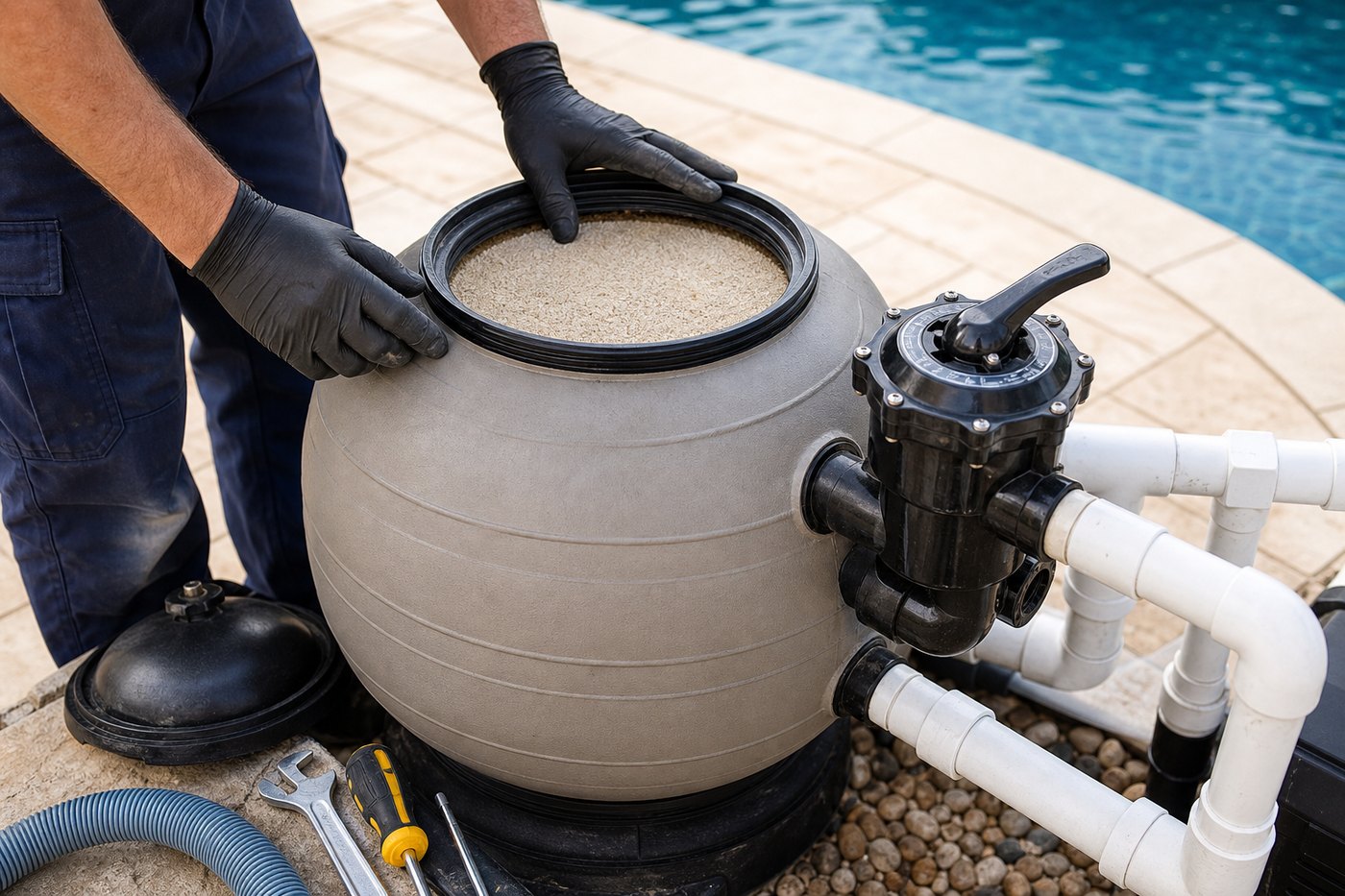
Glass filter media is worth the switch if your sand is due for a change anyway and you want clearer water with less backwashing. If your sand is only a year or two old and the filter is working well, keep it. The extra cost of glass makes most sense on the day the old sand has to come out regardless.
This guide compares glass and pool filter sand prices at the time of writing (October 2026), what each does inside the tank, how much water your backwash really sends down the drain, and what a changeover involves. Ask our team for a current quote on your own filter.
Glass filter media vs sand at a glance
Both go into the same tank and both are cleaned by backwashing. The differences show up in how fine they filter, how long they last and how much they cost to buy.
| Point | Silica filter sand | Glass filter media |
|---|---|---|
| Finest particles caught | About 20 microns | About 5 microns (maker figure) |
| Usual bag size in SA | 40kg | 20kg |
| Bag price | From around R169.95 | From around R195 |
| Weight needed | As printed on the filter | Roughly a fifth less than the sand weight |
| Typical life | Three to five years | Longer, often quoted at eight to ten years |
| Backwashing | More often | Less often, shorter cycles |
The micron figures come from filter manufacturers testing their own products, so treat them as a guide rather than a promise. Your pump and what falls into the water matter too.
How a sand filter actually cleans water
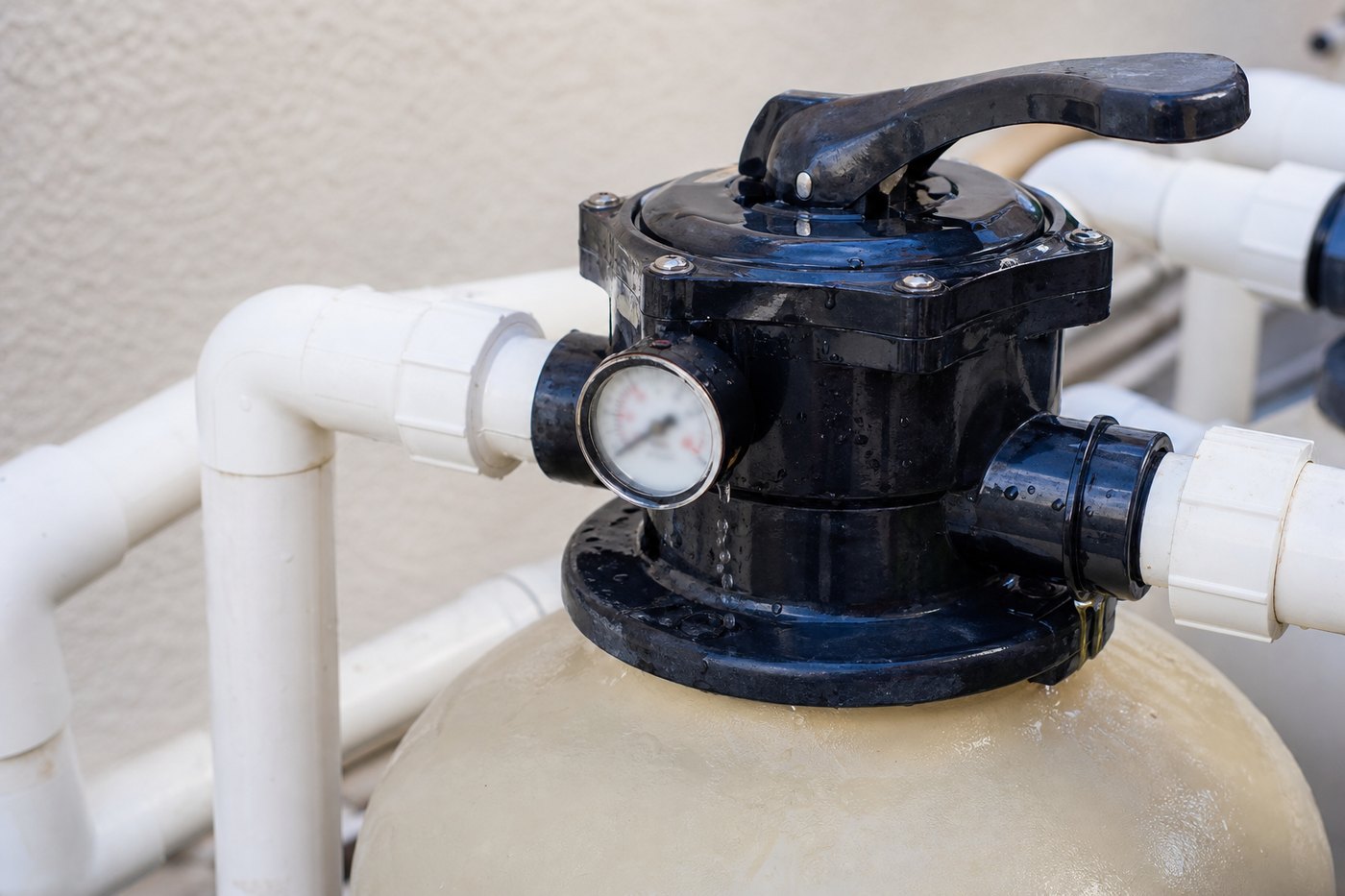
Water from the pump enters the top of the tank, pushes down through the bed of media and leaves through slotted laterals at the bottom. Dirt gets caught between the grains. As the bed fills up, resistance rises and the pressure gauge on the multiport valve climbs.
When the gauge sits well above its clean reading, it is time to backwash. Reversing the flow lifts the bed, flushes the trapped dirt to waste and leaves the media ready to filter again. If the pressure keeps climbing soon after a backwash, read our guide on pool filter pressure that is too high before you blame the media.
Why sand wears out
New sand grains are angular, which helps them grab dirt. Over the years they round off, and body oils, sunscreen and calcium bind them into clumps. Water then cuts channels through the bed and slips past without being filtered. The pool looks a little dull no matter how good the chemistry reads.
Why glass filter media behaves differently
Glass filter media is crushed, tumbled recycled glass. It is lighter than sand, so it lifts more easily during a backwash and rinses cleaner. Makers say its surface resists the clumping and biofilm that age sand, which is where the longer life and shorter backwash cycles come from.
Pool filter sand and glass media prices
At the time of writing (October 2026), SA online pool shops list 40kg bags of silica filter sand from around R169.95, with hardware stores at about R175. Glass filter media comes in 20kg bags from around R195 factory direct, with other listings at R338, R349.99 delivered and R395.
That makes glass several times dearer per kilogram. You buy less of it by weight, which narrows the gap a little, but it never closes it. The case for glass rests on longer life and less backwash water, not on a cheaper first bill.
- A 2-bag filter takes two 40kg bags of sand, or roughly three to four 20kg bags of glass, depending on the maker.
- Labour for a sand change runs from around R800, with most jobs between R800 to R1,500 including the sand.
- Parts found on the day, such as a cracked lateral or a worn valve spider gasket, are extra. A complete top-mount multiport valve lists at R1,359.95.
The labour figure is the same whichever media goes in, which is why our team suggests deciding on glass at sand-change time. For a closer look at bag prices, see our pool sand price guide.
Is your filter due for new media?
Send us the make of your filter and how long since the sand was changed. Our team will tell you whether a media change, a repair or both makes sense.
Backwashing and Cape Town water
Every backwash and rinse sends treated pool water to waste. You then top up with tap water, and you pay for it at the City of Cape Town stepped tariff. For 2026/27 residential water is R25.42 per kilolitre for the first 6kl a month, rising to R34.92, then R52.20 above 10.5kl and R100.71 above 35kl.
Pool top-ups often land in the dearer steps because they come on top of normal household use. Summer adds to it: the south-easter and hot afternoons pull water out of an uncovered pool, and leaves blown in by the wind push filter pressure up faster.
Anyone who lived through the 2017 to 2018 water restrictions knows how fast backwash water adds up. Glass makers claim their media can use up to half the backwash water of sand, and a field study by the Clean Washington Center measured backwash times about 23 percent shorter with glass. Your saving depends on how often you backwash now.
Backwash by the gauge, not the calendar. Note the pressure reading straight after a backwash. Backwash again only when it has risen clearly above that number. Many pools get backwashed weekly out of habit and waste far more water than the media ever would.
How often to change pool filter sand
Most filter makers suggest changing sand every three to five years in a home pool. Some say up to seven years in a lightly used, well-balanced pool. In Cape Town gardens with oaks, pines or a lot of wind-blown dust, the shorter end is more realistic.
Watch for these signs that the sand filter has had its day:
- Backwash cycles needed more and more often to keep pressure down.
- Water that stays dull or slightly cloudy with correct chlorine and pH.
- Pressure that barely moves at all, which can mean water is channelling straight through.
- Algae that keeps coming back after a shock dose.
If the gauge reads unusually low rather than high, that points to a flow problem before the filter. Our post on low pool filter pressure covers the usual causes, from a blocked pump basket to air leaks.
Glass lasts longer, but it is not a fit-and-forget product. One glass maker’s own guidance says clear glass can foul in a similar way to sand and suggests a five to seven year change for its coloured grades. Keep backwashing properly and your water balanced and either media will last longer.
When you need pool filter repairs first
New media will not fix a broken filter. If sand is blowing back into the pool, a lateral or standpipe has almost certainly cracked. Our guide to sand coming into the pool explains how to confirm it. Pouring glass into a tank with a broken lateral just sends glass into your pool instead.
Other faults that need pool filter repairs before a media change include a leaking tank, a weeping valve body or water running to waste on the filter setting. If water trickles out of the backwash line all the time, see our post on a multiport valve leaking to waste.
Pool filters, Cape Town salt air and sun
Salt air is hard on pool filters. Cape Town homes close to the sea see corroded clamps and bolts, and sun-baked lids on older tanks crack. When we open a filter near the coast we check the fittings as carefully as the media. Our article on coastal pool equipment corrosion shows what to look for.
A filter tank is a pressure vessel. Do not loosen the lid, clamp band or valve while the pump can run. Safe checks for homeowners are reading the gauge, looking for leaks and watching the sight glass during a backwash.
Switching to glass filter media, step by step
Here is how our team handles a changeover from sand to glass filter media. It is the same job as a sand change, with a few extra checks.
- Switch the pump off at its isolator and the breaker so it cannot start, then close any valves and release the pressure.
- Drain the tank, remove the multiport valve and cover the standpipe opening so nothing falls in.
- Scoop out the old sand and inspect the laterals, standpipe and tank wall for cracks.
- Replace damaged laterals, then half fill the tank with water to cushion the new media.
- Add the coarse grade of glass first if your media comes in two grades, then the fine grade, to the level the maker specifies.
- Refit the valve with a clean, lubricated O-ring, open the air bleed and restart the pump.
- Backwash until the sight glass runs clear, rinse, then return to filter and note the clean pressure reading.
Expect slightly cloudy water for a day or two while fines wash out.
Old sand goes to the bin, not the garden bed or stormwater drain. If a filter change is part of a bigger tidy-up, our pool pump repair cost guide explains what to check on the pump while the system is off.
So, is the switch worth it?
If your sand is due, the pool sits under trees or you backwash often, glass filter media is usually a sensible upgrade. If the filter is small, the sand is fairly new or the budget is tight, a fresh change of good silica sand still gives clean water. Either way, a weekly maintenance routine that includes reading the gauge will save more water than any media on its own.
Common questions about glass media and sand
Is glass filter media better than sand?
Glass filter media usually traps finer particles than silica sand and tends to need less backwashing, so many owners see clearer water and less water sent to waste. Sand still works well in a healthy filter and costs less per bag. The bigger win is often fixing the filter itself before paying for premium media.
How often should you change pool filter sand?
Filter makers usually suggest every three to five years for a home pool. Change it sooner if backwash cycles keep getting shorter, the sand has clumped or channelled, or water stays dull with good chemistry. A busy pool under trees wears sand out faster than a covered one.
Can I put glass media in my existing sand filter?
In most cases, yes. Glass is made as a drop-in replacement for sand in the same tank, using the same multiport valve and laterals. Check your filter maker’s guidance first and replace any cracked laterals while the tank is empty.
How much glass do I need compared to sand?
Glass is lighter for the same volume, so you need less by weight. Makers commonly quote around 20 percent less than the sand weight on your filter label. Follow the bag and filter instructions rather than guessing.
Why is sand coming back into my pool?
Sand in the pool usually points to a cracked lateral or standpipe inside the filter, or to the wrong grade of sand. It is a repair job, not a media upgrade. Have the filter opened and checked before you buy new media.
Book a filter check with Kwik Pools
We can open the filter, check the laterals and valve, and change the media to sand or glass. Ask our team for a current quote.


