

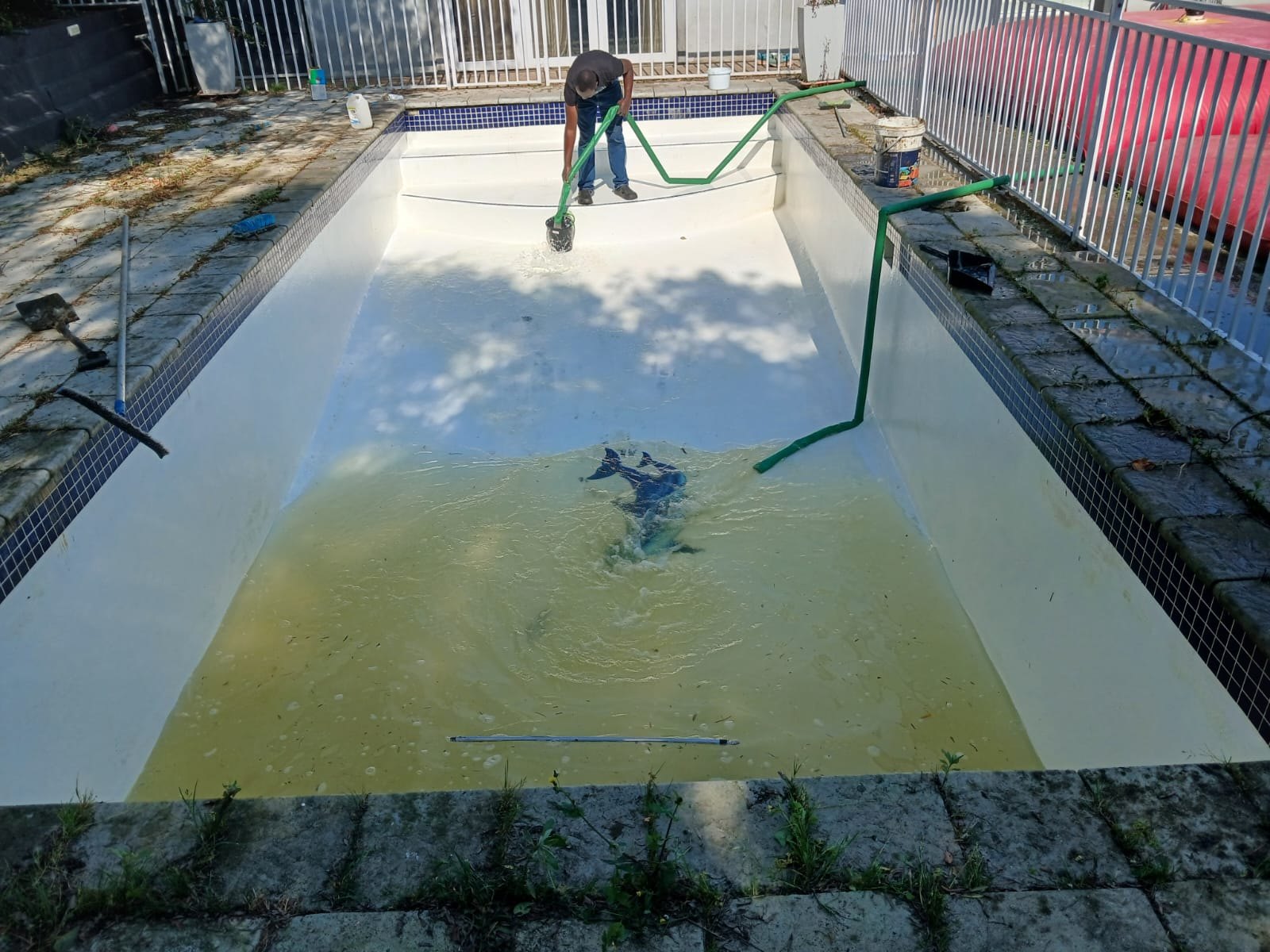
Sand coming into pool water? If it enters through the return outlets, an internal sand-filter problem is possible, but not every gritty deposit comes from the filter. First record where the material appears and whether it returns during filtration. A technician can then check media retention and the filter’s internal parts before more sand is bought or the tank is replaced.
This guide focuses on identifying the source of recurring material. It is not a filter-sand price list, a loading chart or instructions for opening a pressure vessel. The aim is to distinguish a likely return-side discharge from ordinary dirt entering the pool and prepare a useful repair request.
Sand coming into pool: establish the route first
Begin by confirming what type of filter is installed. A cartridge filter cannot release sand that it does not contain, although sand or grit may still enter that pool from elsewhere. Read the visible model label or consult the service records rather than assuming that every round tank contains the same medium.
Next consider where the deposit is found. Repeated material beneath a return outlet is a reason to investigate the filtration route. Material distributed near an uncovered edge after nearby work may have another explanation. Pool circulation can move settled particles, so location is evidence to record, not an automatic diagnosis.
A photograph taken before cleaning preserves the distribution. Include enough of the pool edge and nearby fittings to show orientation. Do not enter the water to get a closer view of a suction outlet, remove fittings or collect material from inside the filter. The technician can decide what sampling is appropriate.
Repair and clean-up are separate tasks. Removing the deposit may make the pool look better without stopping fresh material arriving. Repeatedly vacuuming the same patch is not proof that the filter is working. Confirm the source and repair need before deciding how the final clean-up should be handled.
Dust or sand in pool water: avoid a colour diagnosis
Fine debris, dirt and other deposits can resemble sand when viewed through water. Colour alone is not a reliable identification method. Photograph the material and describe whether it looks granular, forms a light film or disperses into a cloud during ordinary cleaning that has already occurred.
Do not add algaecide, clarifier or other treatments just to discover what the material is. Product use should follow actual water assessment and the manufacturer’s directions. A chemical treatment will not repair a damaged internal collector, and a mechanical repair will not by itself correct every water-quality problem.
Tell the technician about nearby building work, recent landscaping, dirty runoff or a cover that was removed. These are possible routes for external debris, not claims about local conditions. Even a pool with a sand filter can receive sand from outside, so the presence of that filter is not enough to establish cause.
When arranging pool filter repairs, supply the filter model, media type if known and photographs of the deposit. State whether the conclusion “it is filter sand” is confirmed or only suspected. That small distinction can prevent an unnecessary tank opening.
Record sand in pool returns without creating another fault
Do not run a visibly abnormal system repeatedly to prove the problem. Use observations from its ordinary operation before shutdown. If material was visibly emerging from an outlet, describe that separately from material simply found nearby. The first is stronger evidence of the water route, although it still does not identify the exact failed internal part.
- Record when the pool floor was last clean and when the deposit reappeared.
- Photograph the distribution and identify nearby return outlets from the deck.
- Write down the filter type and any known media specification from service records.
- Note whether the issue began after backwashing, media replacement or valve work.
- Tell the technician about pressure, flow or water-clarity changes that occurred at the same time.
A deposit that appears only after recent service may deserve a commissioning review, but timing does not prove poor workmanship. Keep the invoice and product details available. An older system can also develop a retention fault without a recent intervention, so “nothing was changed” is useful information too.
For pool services in Strand, describe whether access to the filter is through a narrow passage or enclosure. Internal inspection can require more working room than a routine pool-edge visit. Do not shift the tank, loosen plumbing or move a heavy lid to help beforehand.
Why broken filter laterals are on the inspection list
In a conventional sand filter, cleaned water is collected through components near the bottom of the media bed before returning to the pool. Laterals allow water through while retaining the specified filter medium. A break in that collection arrangement can let media enter the outgoing water path.
The Pentair Sand Dollar and Cristal-Flo II manual lists a broken underdrain lateral as a cause of sand returning to the pool. It also lists excessive backwash flow for those models. These are manufacturer-supported possibilities, not a claim that a particular lateral has failed just because a pile of grit is visible.
A proper inspection identifies the actual damaged component and considers the condition of the assembly around it. Ask whether the finding is a crack, failed connection or another retention issue. A quotation that simply says “new sand” may not explain how media is escaping or how that path will be corrected.
Ask for the source to be confirmed
Send Kwik Pools the deposit photographs, filter details and recent maintenance history. Request a filter assessment before replacing media simply because grit has returned.
Filter standpipe damage and internal connections
Many top-mount sand filters use a central standpipe between the lower collection assembly and the valve. Its exact layout varies by model. An internal pipe or connection problem can create an unintended route into the return stream, so the inspection should not stop at the first lateral if other components warrant checking.
Swim University’s sand-in-pool coverage separates standpipe and lateral faults. That is a useful outline for asking what was inspected, but it does not remove the need for the model’s parts diagram. Do not order a universal-looking standpipe or assume the same number of laterals fits every filter.
Opening the tank and moving media can damage components if done incorrectly. This is why the article does not give a dig-out or lifting sequence. Ask the service provider to identify compatible replacement parts and follow the manufacturer procedure for safe access, reassembly and commissioning.
Filter media bypass is not solved by topping up
If media has a route into the outgoing water, adding more material does not repair that route. The technician needs to distinguish a retention fault from incorrect media specification or a commissioning issue. Media selection and loading belong to the actual filter instructions, not the appearance of the material already on the floor.
Ask for records of what was installed during the last media change. The bag specification, filter model and service date are more useful than a description such as “ordinary pool sand”. Do not mix in a different medium because a supplier says it filters more finely without confirming compatibility with the equipment.
The separate pool filter sand price guide covers the purchase question. Here, the priority is whether media replacement is needed at all and what repair must accompany it. Price comparisons are meaningful only after the required work and correct material have been identified.
| Observation | What to ask | Do not conclude yet |
|---|---|---|
| Repeated grains below a return | Is material entering through filtration? | Which internal part is broken |
| Deposit after recent media work | Were specification and commissioning checked? | That every new-media deposit has one cause |
| Fine film rather than clear grains | Does the material need identification? | That it is definitely sand or algae |
| Debris after surrounding work | Could there be an external entry route? | That the filter must be opened |
Plan clean-up after the cause is addressed
Once the source is confirmed, agree how settled material will be removed without simply sending it through an unresolved fault. The appropriate clean-up method depends on the filter and plumbing. Do not change multiport positions with the pump running, and do not leave a waste discharge unattended.
Ask whether the repair includes pool clean-up or only equipment work. A filter may be repaired while old grains remain on the floor, so seeing some material immediately afterwards does not automatically mean the repair failed. Establish a clean reference area or completed clean-up before judging whether fresh material is returning.
If water has become cloudy or the floor cannot be seen clearly, keep the pool out of swimming use and request water-quality and maintenance assistance. Filtration and treatment work together. Removing visible grains does not establish that the water is suitable for swimming.
What to ask before approving the repair
For pool services in Gordons Bay, send equipment and access details with the enquiry, including whether a waste line’s discharge point is accessible. This helps plan assessment and clean-up without assuming any particular cause based on the address.
- Which observation confirmed that material came from the filter?
- Which internal parts were checked and which require replacement?
- Is media replacement necessary, and is its specification documented?
- Does the quote include safe recommissioning and removal of the existing deposit?
- What should be reported if new material appears after the clean reference is established?
Keep the old and new part details with the service record. A useful handover explains why the repair stops the escape route and what was observed during commissioning. It should distinguish a confirmed failure from a precautionary replacement, allowing you to compare scopes rather than buy components on guesswork.
Get a repair scope, not just another bag of sand
Contact Kwik Pools to assess recurring deposits. Share where the material appears and what work happened recently so the filter and clean-up can be planned together.
Common questions
Does sand on the floor prove that a lateral is broken?
No. External debris can also enter a pool. Repeated material through returns is a reason to inspect the filter, but the failed component still needs confirmation.
Can I solve escaping sand by adding more filter media?
Adding media does not repair an escape route. Have the retention components, media specification and recent commissioning checked before deciding what replacement is needed.
Why is there still sand after a filter repair?
Previously deposited material may remain until clean-up is complete. Establish a clean reference and report fresh material arriving afterwards, rather than assuming old grains prove the repair failed.
Should I open the filter to count the laterals?
No. Use the filter model and parts information instead. Safe tank access and internal inspection require the correct isolation, pressure relief and service procedure.


Comments are closed