

A pool bucket test compares water loss from your pool with evaporation from a bucket exposed to similar conditions. If the pool falls more than the bucket during a controlled observation period, investigate a possible leak. The test does not locate the leak, identify a failed pipe or tell you which repair to buy.
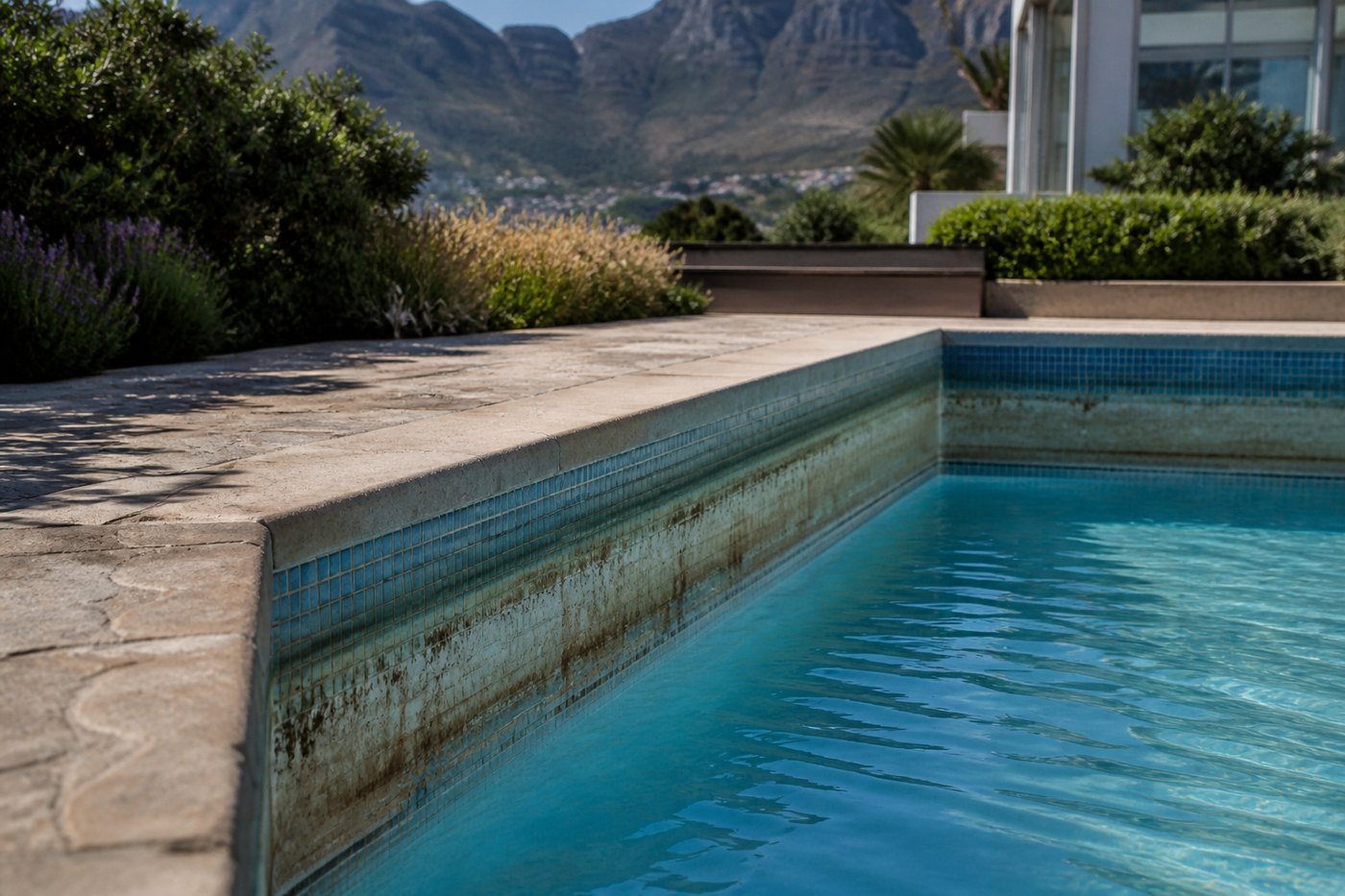
The featured image is an AI-generated illustration of low pool water, not a photograph of a bucket test or client work.
Its value is simple: it replaces a vague impression that you are topping up too often with a record someone else can examine. A careful comparison is more useful than quoting a universal daily evaporation allowance, because weather, exposure and pool operation differ.
What a pool bucket test can establish
The bucket acts as a small comparison vessel. Both its water surface and the pool surface are exposed to evaporation. You mark each starting level and later compare how far each has fallen from its own mark. You are comparing changes in depth, not the total amount of water held in the two containers.
Anderson Manufacturing includes this method in its leak investigation information sheet. Its sequence calls for normal pool level, a filled bucket placed in the pool, marked starting levels and a comparison after 24 hours. It also treats subsequent pump-on and pump-off observations as clues to be confirmed, not final diagnoses.
That distinction matters when you speak to a contractor. A result suggesting excess loss is a sensible reason to enquire about professional pool leak detection. It is not permission to dig up the paving beside the wettest patch of lawn or coat the whole interior.
Check whether a home comparison is appropriate
Do not begin if reaching the step or reading the mark would be unsafe. Never leave a bucket where a child can gain access to water, climb over a barrier or trip beside the pool. Maintain the normal pool safety arrangements throughout, and remove and empty the bucket when the observation is complete.
Rapid loss, an unstable edge, suspected electrical trouble or water already too low for safe pump operation takes priority over collecting a full day of measurements. Stop unsafe use and request advice. Do not deliberately leave the pump drawing air to preserve a test condition.
A pool that needs frequent emergency top-ups may not be suitable for an uninterrupted comparison. Explain that limitation to the leak specialist. The inability to complete a bucket test does not prevent an investigation, and there is no benefit in damaging equipment to produce a tidy result.
Set up a useful pool water level test
Choose a sound, clean bucket without leaks. Use water rather than adding pool chemicals. Position it securely on an accessible submerged step, with its rim safely above the surrounding water so pool water cannot wash into it. If no stable position exists, ask the professional for another method rather than improvising a floating support.
Put enough water in the bucket to keep it stable and bring its internal level approximately level with the surrounding pool water where practical. A partly submerged bucket helps the comparison share the pool environment. Do not use an empty container perched on a coping edge or one standing in a shaded room.
- Establish normal conditions. The pool should be at its appropriate operating level. Note whether the pump, cover and water features are normally used during the period you are investigating.
- Make separate marks. Mark the waterline inside the bucket and the pool waterline on the outside of the bucket. Use clear, removable marks that will not damage a pool finish.
- Record the start. Photograph both marks and write down the date, time, weather and operating schedule. State the measurement unit you will use.
- Prevent avoidable interference. Do not swim, backwash, vacuum to waste or top up during a valid comparison. Manage automatic filling only if you know its safe normal control.
- Read after the observation period. Anderson uses 24 hours. Measure each drop from its own original mark, using the same ruler and method.
- Record exceptions honestly. Rain, a moved bucket, a top-up or a necessary operational change may mean restarting rather than interpreting that run.
Do not disable protection devices, change unfamiliar valves or open equipment to prepare the test. If an automatic top-up cannot be safely paused, tell the assessor that it may conceal the water loss. A note saying that a comparison was interrupted is better than a confident but invalid leak claim.
Pool evaporation vs leak: control the obvious differences
Water added or removed for another reason can overwhelm the comparison. Rain may affect both surfaces, but overflow, roof runoff or water washing over the bucket rim can affect them differently. Splashing also removes water unevenly. Postpone the test during unsettled conditions if a clean comparison is unlikely.
Record the cover arrangement. A covered pool compared with an uncovered bucket does not share the same evaporation conditions. Do not cut, lift or otherwise misuse a safety cover just to fit a bucket. Ask how to test the particular installation while retaining safe access control.
Waterfalls, fountains and other features can change evaporation and splash loss. Their status belongs in your notes, especially if the excessive loss originally appeared when a feature operated. Keep a consistent, documented condition rather than switching features on and off repeatedly and trying to interpret one combined result.
Do not correct a spoiled test with a guess. If someone topped up the pool or the bucket tipped, record what happened and repeat under better conditions if it is safe. An estimated correction can hide the very difference you are trying to measure.
Get the symptoms checked
Send Kwik Pools the measured pool and bucket drops, start and finish times, and the cover and pump status during the test. Ask what assessment is appropriate before authorising repairs or buying replacement parts.
Read bucket test results without overclaiming
Write down both observed drops before drawing a conclusion. A ruler reading alone can look more precise than it is: ripples, broad marker lines and a different viewing angle all affect small measurements. If the apparent difference is hard to distinguish from reading error, describe it as inconclusive.
| Observed comparison | Reasonable interpretation | Useful next action |
|---|---|---|
| Pool and bucket fall by a similar amount | Evaporation may explain loss during this run | Keep records if the original symptom returns |
| Pool falls clearly more than the bucket | Loss beyond the comparison evaporation warrants investigation | Share measurements and operating conditions with a leak specialist |
| Bucket falls more than the pool | Check the setup, bucket integrity and possible water additions | Do not treat it as proof that the pool is leak-free |
| Rain, overflow or topping up changes either level | The comparison may not be valid | Label it interrupted and discuss repeating it |
A similar fall does not guarantee every line and fitting is sound in every operating mode. An intermittent fault may not have been active, and an automatic filler may have masked the loss. Keep the result tied to the conditions actually observed rather than turning it into a permanent certificate.
Likewise, a positive result does not establish the amount of water lost in litres unless pool surface area and measurements are reliable. For a homeowner handoff, the two depth changes and a clear timeline are enough. Let the professional decide whether further measurement will improve the investigation.
A pool losing water overnight is not a location test
It is tempting to conclude that a pool losing water overnight must have a shell leak because the pump was off. But connected plumbing and fittings can still matter when circulation stops, and the recorded operating schedule may not describe every attached system.
Anderson outlines separate pump-on and pump-off comparisons to guide the next tests. Its published case material also shows why the usual interpretation can be misleading: a cracked skimmer body produced greater loss during operation even though the pressure-side plumbing held its test. The lesson is to use patterns to choose investigations, not to name the failed component.
Ask a technician whether a second comparison in a different operating condition is useful for your pool. Do not run extra tests by plugging fittings, closing unknown lines or letting the water fall below safe operating level. Keep any normal schedule changes documented and within equipment instructions.
Pool leak warning signs and the assessment handoff
Send the observations together: the two level changes, start and finish times, weather, cover status, pump schedule and whether any water was added or discharged. Include visible dampness, unusual air at returns or changes around paving as separate observations, not proof of where the water escaped.
For pool services in Durbanville, mention access to both the pool and equipment area, and whether an automatic filling system is present. The person meeting the technician should know the normal schedule and any recent repair history, even if someone else took the measurements.
For an enquiry through pool services in Bellville, attach the marked-level photographs and explain any interruptions before requesting a visit. Note whether equipment sits behind locked access or requires the homeowner to be present. There is no need to enter a wet service area to gather more evidence.
If the water-loss symptom is accompanied by unrelated cleaning or equipment concerns, the service overview can help you describe the full enquiry. Ask for the leak findings to be kept separate from optional upgrades, with any further testing and repair access agreed before work begins.
Arrange the next step with Kwik Pools
Describe what changed and what you have already checked. We can discuss a suitable assessment and the information needed for your enquiry.
Common bucket-test questions
How long should I leave the bucket test?
Anderson Manufacturing describes a 24-hour comparison. Record the actual start and finish times and any interruption. Stop sooner if water loss threatens safe operation or another hazard develops rather than protecting the test at the expense of safety.
Can I swim while the bucket is in place?
Avoid swimming during the comparison because splashing and movement can spoil the readings. Keep the pool secured and the bucket inaccessible to children. Empty and remove the bucket when finished.
Does a positive result tell me to replace a pipe?
No. It suggests unexplained loss under the tested conditions. Further checks are needed to distinguish equipment discharge, plumbing, fittings and the pool structure before choosing a repair.
What if it rains halfway through?
Record the rain and any overflow or runoff. The comparison may be unreliable, particularly if water enters one vessel differently. Repeat in suitable conditions if safe, or give the interrupted record to the leak assessor.


Comments are closed