


A pool renovation checklist should help you decide what needs fixing, what can wait and what must be agreed before work starts. For a Cape Town project, that includes the water plan as well as the new finish. Start with an assessment, turn the findings into a written scope, then compare quotes for the same work.
You do not need to know every pool product before calling a contractor. You do need a clear picture of the problems you want solved. This guide helps you prepare for that conversation and keep track of decisions through to handover.
Your pool renovation checklist at a glance
Save this list for the site visit. Leave a box unticked if the answer is still unclear, rather than assuming it is included.
- Record the problems, previous repairs and your main priorities.
- Have the shell, finish, fittings, equipment and surrounds assessed.
- Resolve unexplained water loss before committing to a cosmetic finish.
- Agree which repairs are essential and which upgrades are optional.
- Confirm the proposed finish and its preparation requirements.
- Arrange draining, water handling, refilling and safe site access.
- Compare itemised quotes, exclusions and payment stages.
- Get written start-up instructions and a handover checklist.
1. Set your pool renovation scope before choosing colours
Write down why you are renovating. Perhaps the surface hurts bare feet, the water level keeps dropping or the edge slabs feel loose. Separate these practical concerns from changes you would simply enjoy, such as a different colour or a wider step.
Make three short lists: essential repairs, work worth considering while access is available, and optional improvements. Ask the contractor to review your choices rather than treating them as a diagnosis. A tired-looking pool may need a different solution from one with an unresolved structural problem.
Our pool renovation service covers the surface, equipment, plumbing and edges. Use that whole-pool view when preparing your brief, but do not assume every component needs replacing.
Bring a small information pack
- Wide photos of the pool and close-ups of concerns, taken safely from the edge.
- Any invoices naming earlier finishes, repairs or equipment.
- Notes on water loss, topping up and when a problem first appeared.
- Your preferred swimming date, budget limit and access restrictions.
Tell the contractor how you use the pool, too. Comfortable entry, easier cleaning and a usable surrounding area may matter more to your household than adding another feature.
2. Ask for a pool repair assessment before resurfacing
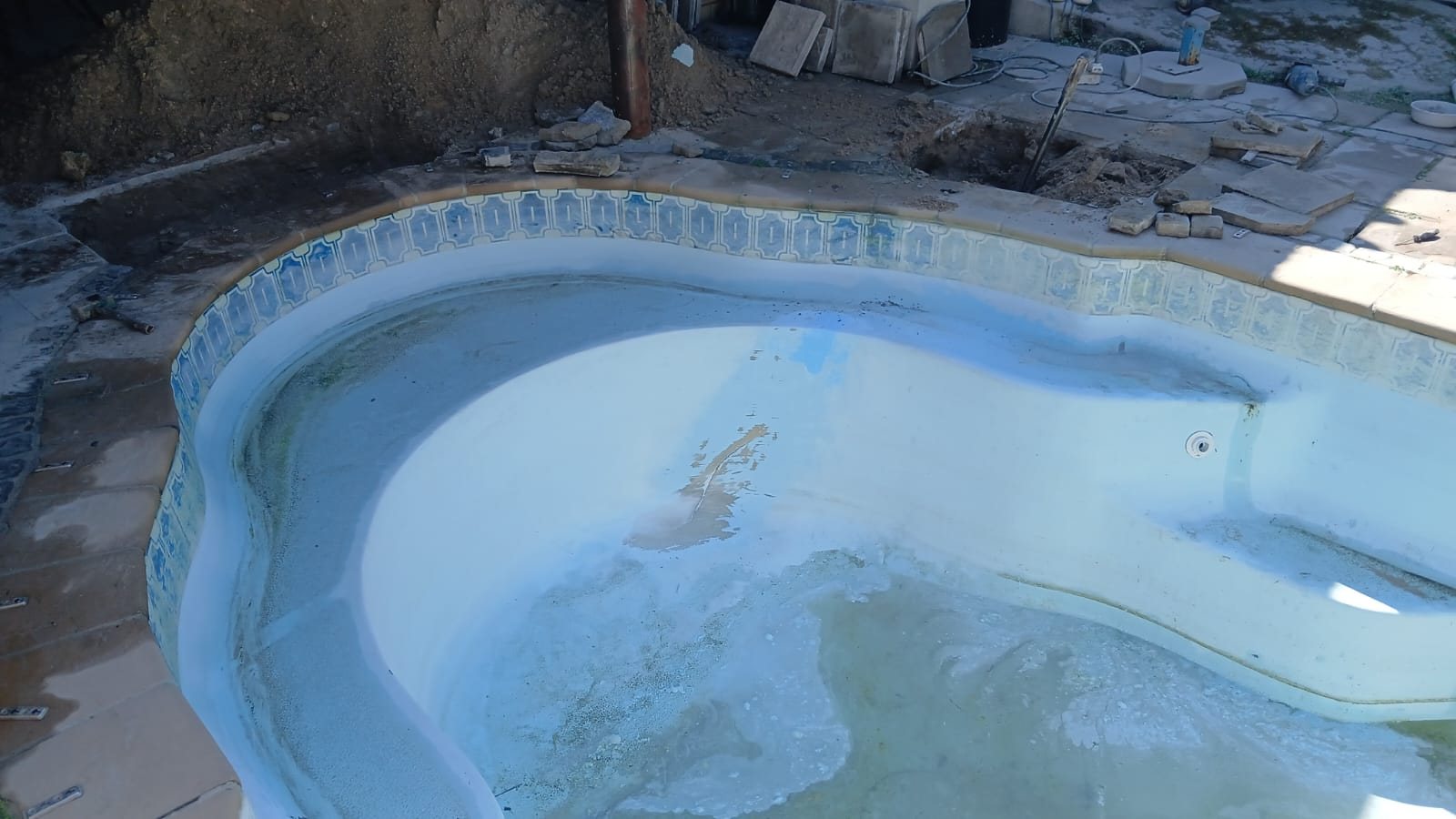
A new finish is not a diagnosis. Ask the assessor to distinguish surface wear from faults in the shell, fittings or pipework, and to explain what can be checked now versus after the old finish is removed.
If water loss is unexplained, discuss pool leak detection before approving resurfacing. Our leak detection service includes pressure testing of plumbing and dye testing around the shell and fittings. The purpose is to identify the repair needed, not to assume the visible surface is responsible.
For visible cracks, request a pool crack assessment and repair plan. Ask whether the concern is in the finish or the underlying structure, whether further investigation is needed, and how the findings affect the renovation. A photograph can start the discussion, but it should not be treated as proof that a crack is harmless.
Walk around the outside as well. Note rocking coping, gaps, uneven paving and places where rainwater collects. If those areas need attention, include paving and coping repairs in the discussion so the edge work and interior work can be coordinated.
3. Make pool resurfacing preparation part of the quote
Ask for the name of the proposed finish, not just a colour or the word “resurface”. The contractor should identify the existing surface and explain why the new system is suitable. Different products have different limits, preparation methods and filling instructions.
For example, Cemcrete’s Pool Coating guidance describes a product intended for suitable pool plaster, with exclusions including fibreglass and certain painted surfaces. That is a product-specific rule, not a reason to assume every pool coating behaves the same way.
Ask what will be removed, how weak areas will be dealt with, what repairs come first and how the contractor will judge that the surface is ready. Our coating and resurfacing service explains our approach to identifying the existing finish and preparing it.
Also request the relevant manufacturer’s current technical and start-up instructions. You do not need to supervise the mixing or application yourself. Having the documents helps you understand what has been specified and what care you will be responsible for afterwards.
Not sure where your project starts?
Tell us about the problems, your priorities and any previous repairs so we can discuss the next step.
4. Include water and access in your renovation planning
When arranging a site visit for a home in the Northern Suburbs, share your address and access restrictions with us early so they can be considered in the project plan.
Do not drain the pool yourself to make it ready for a visit. Ask the contractor whether emptying is necessary, what site conditions must be assessed first and who is responsible for the work. Agree on the water-handling plan before the start date, including any proposed storage, disposal and refill arrangements.
For a Cape Town property, check the City’s current water-use requirements before arranging a refill. Its water-saving information is the starting point for checking pool-filling and cover conditions. Ask the City for clarification if the applicable requirements are unclear; an old drought article is not enough to plan today’s work.
Refill arrangements must also suit the selected finish. Cemcrete’s PoolCrete start-up guide, for example, calls for testing source water before plastering and filling in one go to avoid a water ring. Do not apply that schedule to an unrelated coating or lining.
Agree on practical arrangements
- Check the route for workers, materials and rubble removal.
- Agree where materials can be stored without blocking household access.
- Arrange how children and pets will be kept away from the work area.
- Ask how nearby paving, planting and windows will be protected.
- Confirm who handles any approval enquiries if the pool layout changes.
Request milestones rather than a single optimistic completion date. Ask which stages depend on weather, materials, repairs uncovered during preparation and the finish’s curing requirements. Distinguish the end of physical work from refilling, commissioning and permission to swim.
5. Use a pool renovation quote comparison that checks the scope
Send each contractor the same brief and request a site assessment. A short lump-sum price may be hard to compare with a detailed proposal because you cannot see what has been allowed for. Use the following questions against every quote.
| Part of the work | What to clarify |
|---|---|
| Assessment and repairs | Are leak investigations and known repairs included? What remains uncertain, and who approves extra work? |
| Surface preparation | What existing material will be removed? Are removal, preparation and rubble disposal included? |
| New finish | Is the product or system named, with the areas covered, colour and application specification? |
| Tiles, fittings and edges | Which items stay, which are replaced, and how will adjoining finishes be made good? |
| Water and start-up | Who arranges and pays for water handling, refilling, testing and initial care? |
| Price and terms | Is VAT addressed? Are payment stages, exclusions, warranty terms and the change-approval process written down? |
Label each item “included”, “excluded” or “needs clarification” for each contractor. Then ask for revised written scopes where necessary. This is more useful than trying to decide whether a longer list automatically means better value.
Keep optional upgrades separate from the repair budget. Ask for an agreed allowance for unresolved work rather than pretending everything can be known beforehand. If additional damage is uncovered, request photos, an explanation and the price before authorising the change.
Finally, ask about comparable work and how questions will be handled during the project. Confirm one contact person and a simple update routine. Good communication should not depend on you catching a worker at the gate.
6. Keep the checklist open until handover
Before signing off, walk through the agreed scope with the contractor. Check that listed repairs and replacements are accounted for, waste has been removed and any outstanding items are recorded. Ask for a demonstration of equipment that was changed or recommissioned.
Request written care instructions for the actual finish installed. These should explain the refill and start-up responsibilities, water testing, brushing or cleaning requirements, and when an automatic cleaner may be used. Cemcrete’s PoolCrete guidance specifically separates early care from later routine maintenance, illustrating why a generic “carry on as normal” is not enough.
Keep the quote, approved changes, product details, warranty conditions and handover notes together. Confirm who to contact about a concern and what follow-up is included. A finished-looking pool is welcome, but knowing how to look after it completes the job.
Common questions before a pool renovation
Do I need to renovate everything at once?
No. Ask which work is essential now, which shares access with the planned repairs and which can wait. Kwik Pools describes pricing renovation work in parts so homeowners can consider staging it.
Can a leak be investigated without draining?
Often, yes. Kwik Pools describes plumbing pressure tests and dye testing with water still in the pool. Whether a later repair requires draining depends on what is found.
How long will my renovation take?
Ask for a project-specific schedule after assessment. Scope, weather, preparation and product requirements affect the plan. Confirm the expected swimming date separately from the date workers finish on site.
Is coating suitable for every pool?
No single coating suits every existing surface. Have the current finish identified and check the proposed product’s requirements. Cemcrete’s Pool Coating exclusions are one example of why the exact system matters.
Ready to turn your notes into a clear scope?
Bring your checklist, photos and priorities, and discuss the repairs with us before committing to the finish.


Comments are closed