
- (+27) 84 483 1774
- info@kwikpools.co.za
- Work Time: Mon - Sat 09AM - 6PM

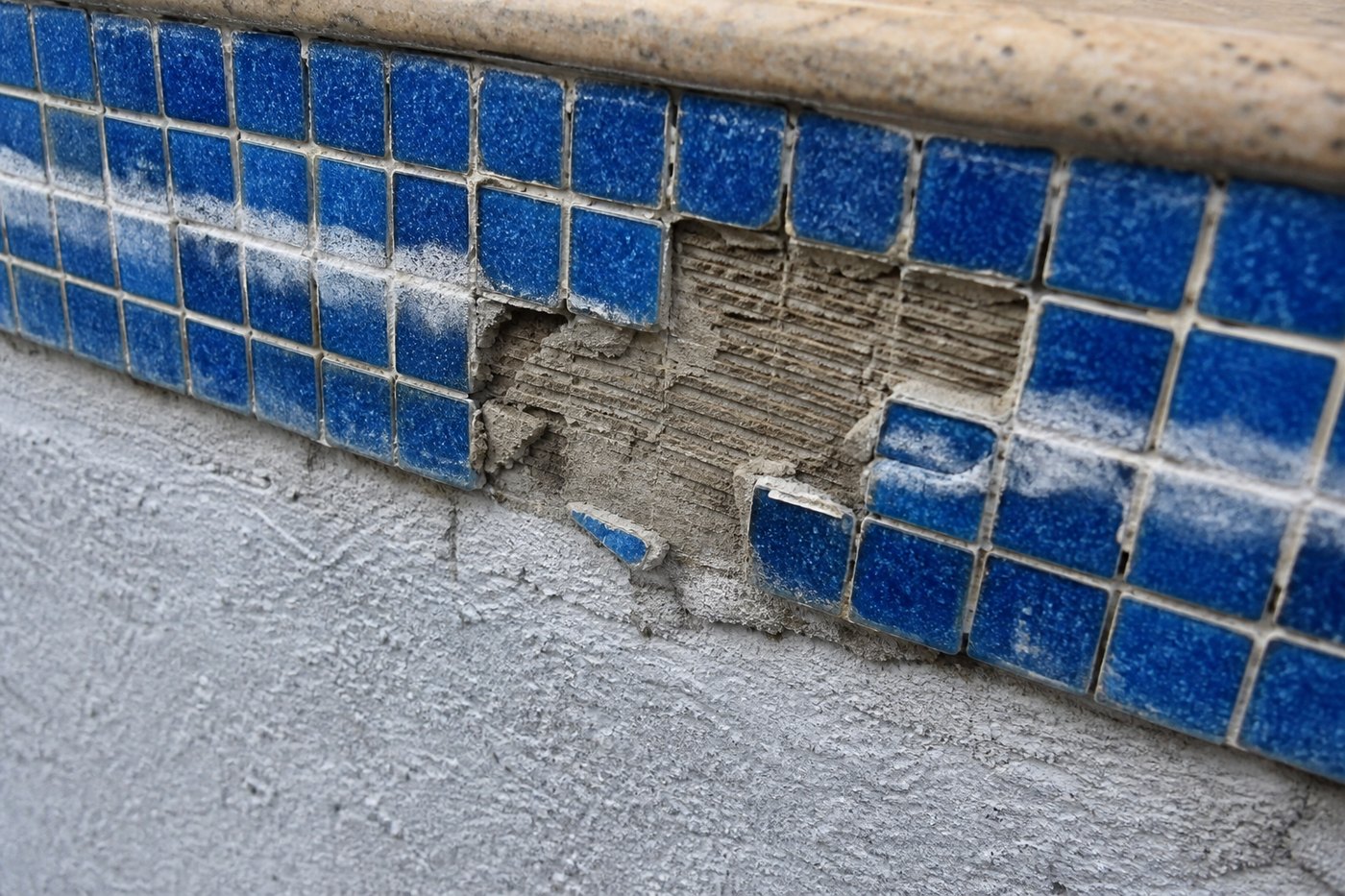
Tiles come loose at the waterline long before they come loose anywhere else, and once one goes the ones beside it usually follow. Kwik Pools does pool tile and mosaic repair across Cape Town — from a handful of missing waterline tiles to a full border strip relaid.
That band is wet, dry, hot and cold more than any other part of the pool. The bedding behind it eventually gives up.
A crack behind the tile line pushes tiles off long before you ever see the crack itself.
Once grout washes out, water gets behind the tile, and the bond goes soon after.
Hard water leaves a deposit at the waterline, and aggressive cleaning to remove it takes the grout with it.
A lot of Cape Town pools still carry their original 1970s and 1980s mosaic. It has had a long life.
Tiles bedded onto a dirty or moving substrate come off again, usually within a season.
This is the part people worry about, and it is a fair worry — exact matches for older mosaic are often discontinued. We deal with it one of three ways, and we tell you upfront which one applies to your pool.
Where tiles can be lifted intact from a hidden section, we reuse your originals in the visible band.
Modern mosaic that reads correctly against the existing colour and finish.
A band that matches itself always looks better than a patch that nearly matches.
Often a different size to the waterline band, and worth treating separately.
The edge tiles that take knocks and foot traffic, repaired or replaced as needed.
Sometimes the tiles are sound and only the grout has gone. Cheapest fix of the lot.
A picture of the waterline usually tells us most of what we need to know before coming out.
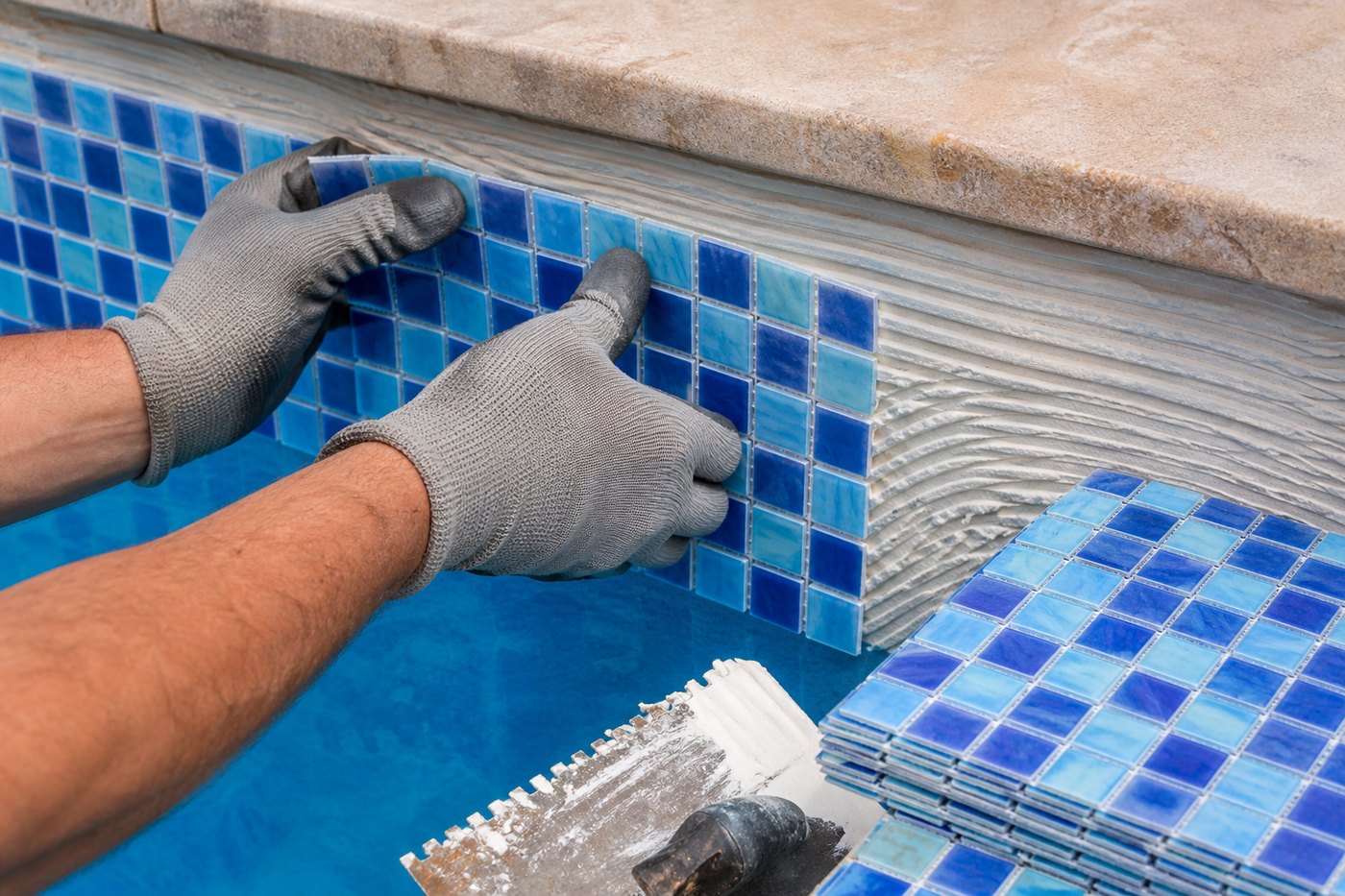
We drop the water below the tile band, strip back to a sound substrate, and check for cracks or damp behind the tiles before anything new goes on.
Then it is bedded onto fresh adhesive, spaced to match the existing band, grouted and sealed. Done properly it should outlast the rest of the surface.
Loose tiles are a symptom. If the substrate is moving or wet, that gets dealt with first.
Salvage, match or relay the band — you see the options before we start.
Usually just below the tile band. A full drain is only needed for bigger work.
Back to sound substrate, fresh adhesive, spaced to line up with the existing tiles.
Colour-matched grout, sealed properly so water cannot get behind it again.
If the plaster is chalking at the same time the tiles are lifting, doing them separately means paying for access twice and living with a mismatch in between.
In that case we quote the tiles alongside resurfacing so the whole pool comes back looking like one job rather than a series of patches.
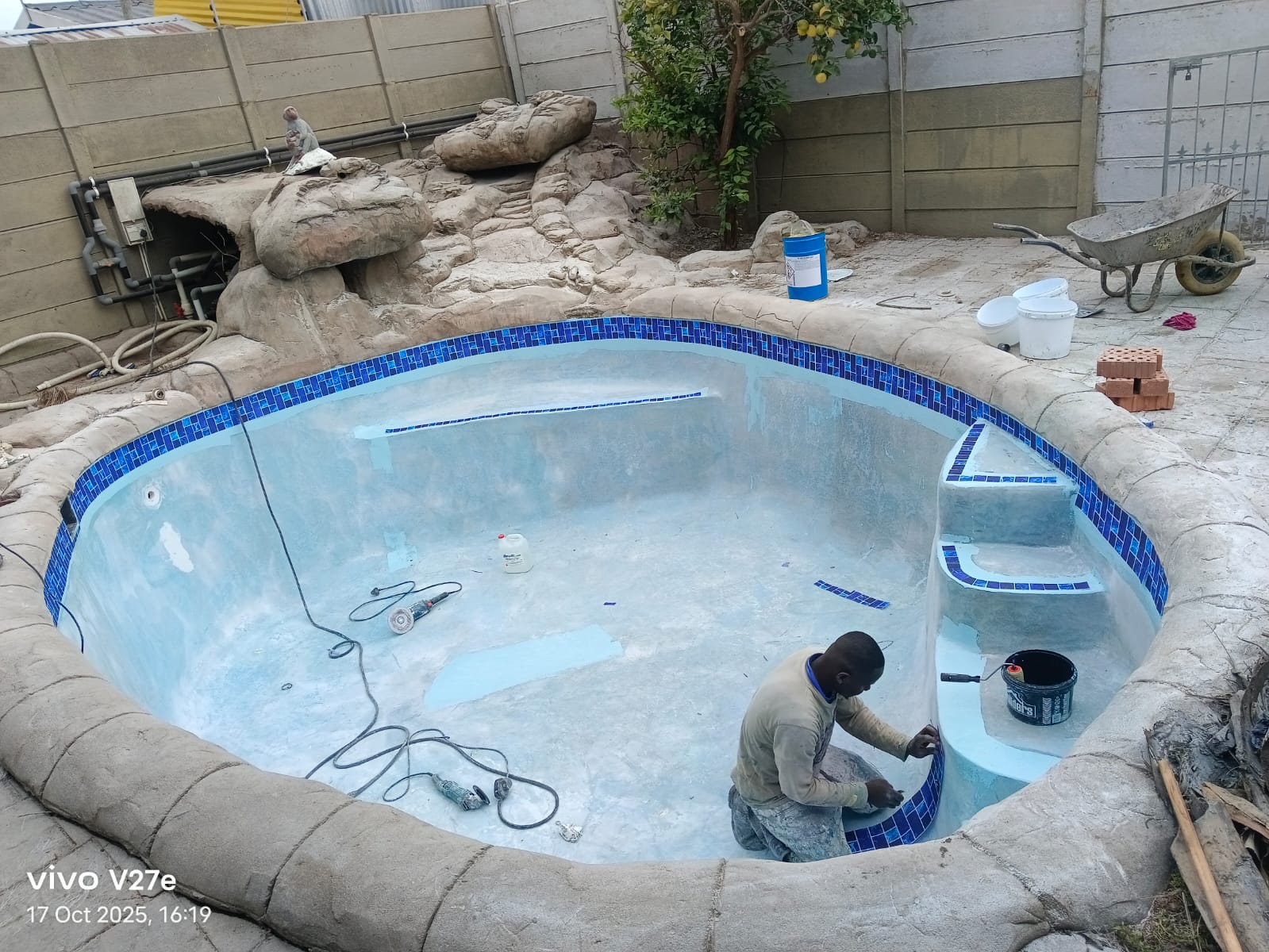
We work the whole metro from our Plattekloof base — the Northern Suburbs, Southern Suburbs, Atlantic Seaboard, City Bowl, South Peninsula, Helderberg, West Coast and the Cape Winelands. If the pool is also losing water, start with pool leak detection.
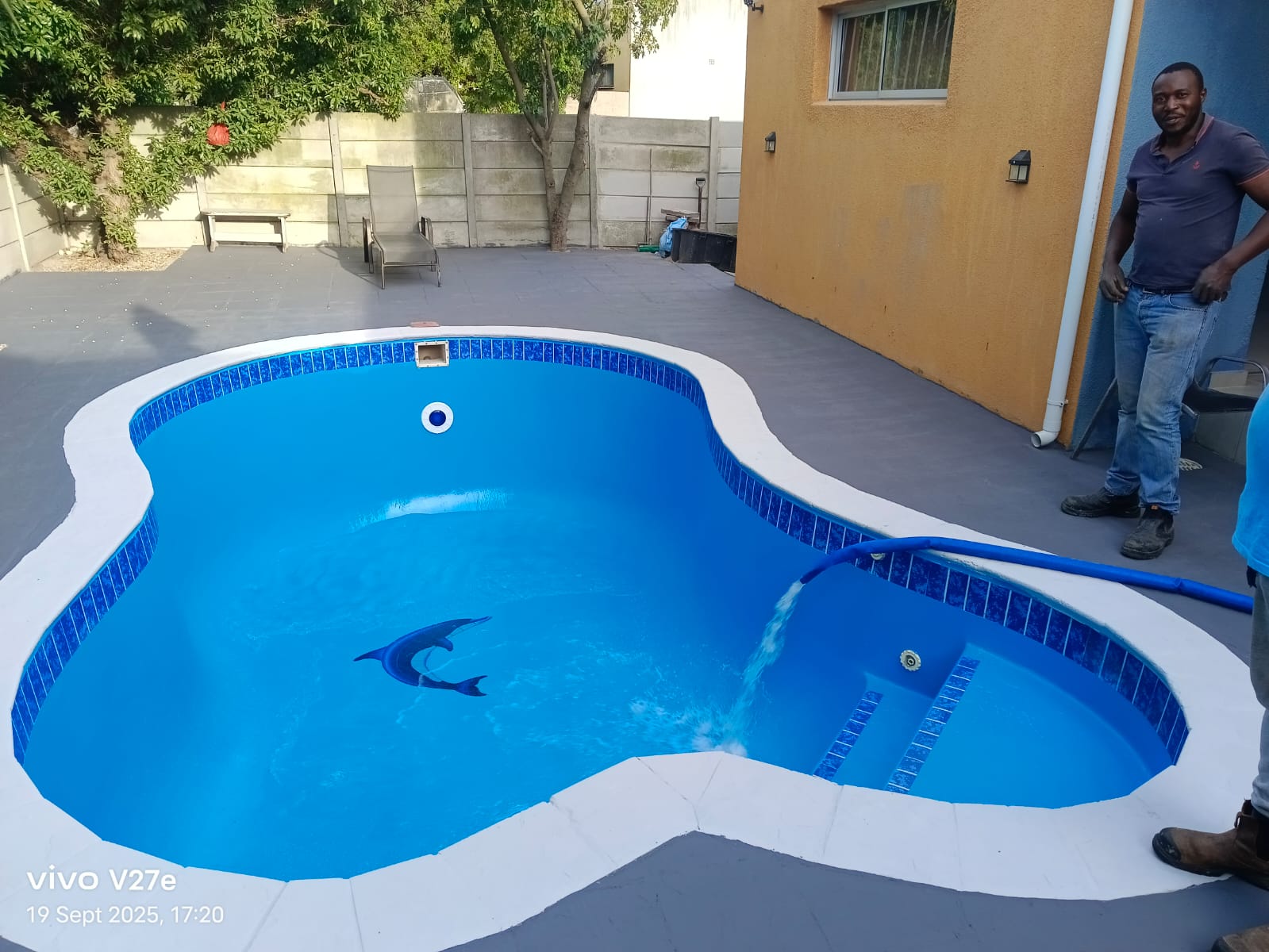
Free on-site assessment and no call-out fee. We check what is behind the tiles first, then quote.
Sometimes exactly, often closely. Older mosaic is frequently discontinued, so we look at salvaging originals from a hidden area, sourcing the nearest current match, or relaying the whole waterline band. You see the options before we start.
For waterline work we normally just drop the level below the tile band. A full drain is only needed when the damage runs deeper or the job is part of a resurfacing.
Something behind them is moving or leaking. Relaying the tile alone will not hold, so we check the substrate and deal with the underlying cause first.
A small repair is typically a day plus curing time. A full waterline band depends on the size of the pool and is quoted per job.
Usually yes. Calcium scale can be treated, though where it has been aggressively scrubbed before, the grout underneath is often damaged and needs redoing too.
We look at the pool, tell you what it actually needs, then quote. No call-out fee.