
- (+27) 84 483 1774
- info@kwikpools.co.za
- Work Time: Mon - Sat 09AM - 6PM

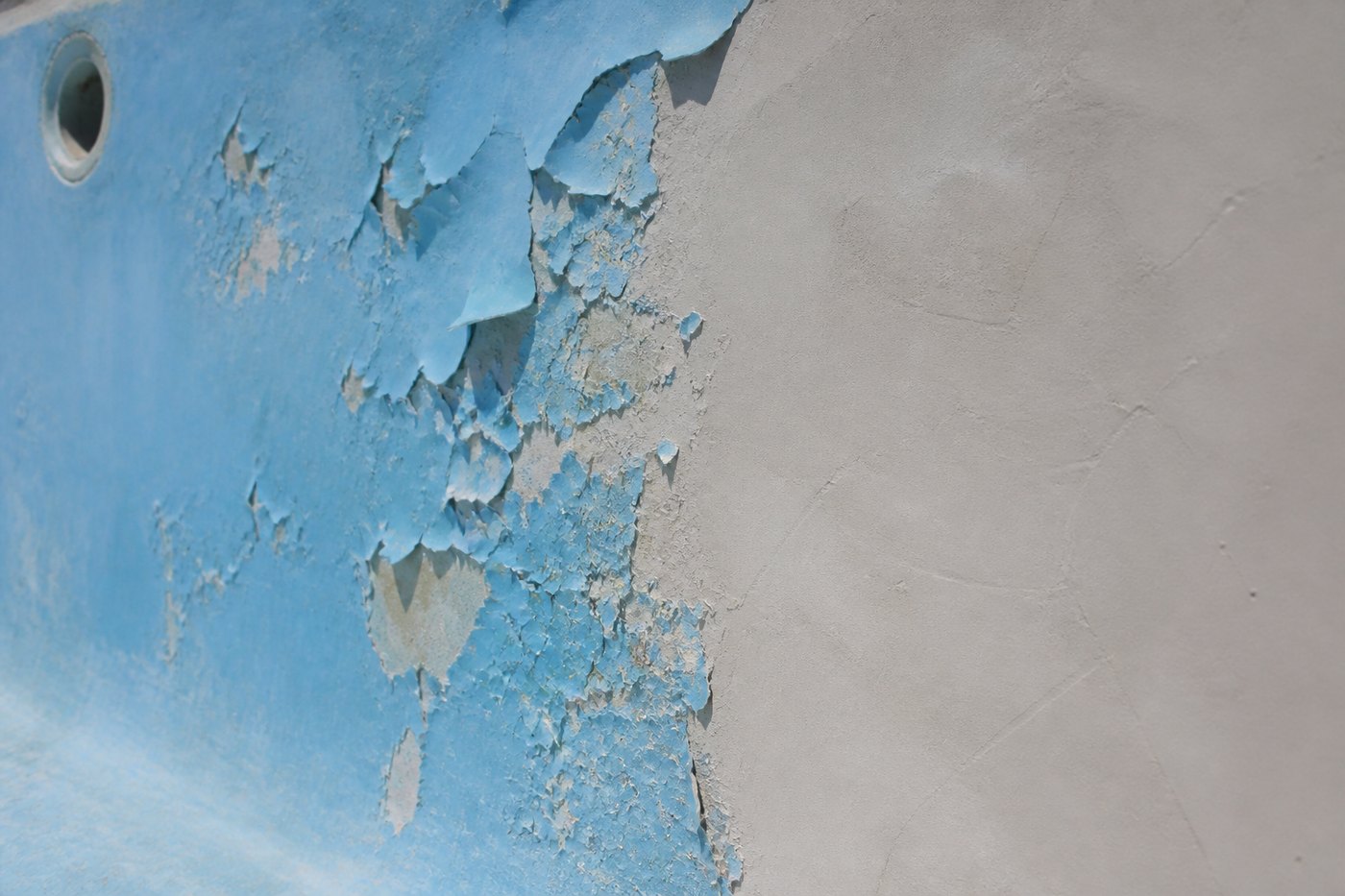
When a pool surface starts chalking, staining or peeling, coating is often the most cost-effective way back to a clean finish — provided the right system goes on properly. Kwik Pools does pool coating across Cape Town, including epoxy, and we identify what is already on your pool first.
A white powder on your hand after touching the wall means the coating is breaking down.
Usually an older coating losing its bond, often coming away in sheets around the shallow end.
A surface that has eroded to the point of being abrasive on feet and costumes.
A porous surface takes staining into itself rather than holding it on top.
UV has taken the finish, and the pool reads grey and tired rather than blue.
Different coatings applied over each other at different times, now failing unevenly.
The right answer depends on what your pool is finished in now and what was last put on it. Getting this wrong is expensive, because the pool has to be stripped and done again.
Hard-wearing, long-lasting and chemically resistant. Unforgiving about preparation and what it goes over.
Cheaper and easier to apply, shorter lifespan. Usually best recoated like for like.
The right route for fibreglass shells, or for lining rather than painting.
Where the plaster itself has failed, a new surface beats another coat on top of it.
Where incompatible systems have been layered up, the only honest option is to take it back.
Sometimes only a section has failed, and a full recoat would be overkill.
Send us a photo of the peeling or chalking area on WhatsApp and we will tell you what we think it is.
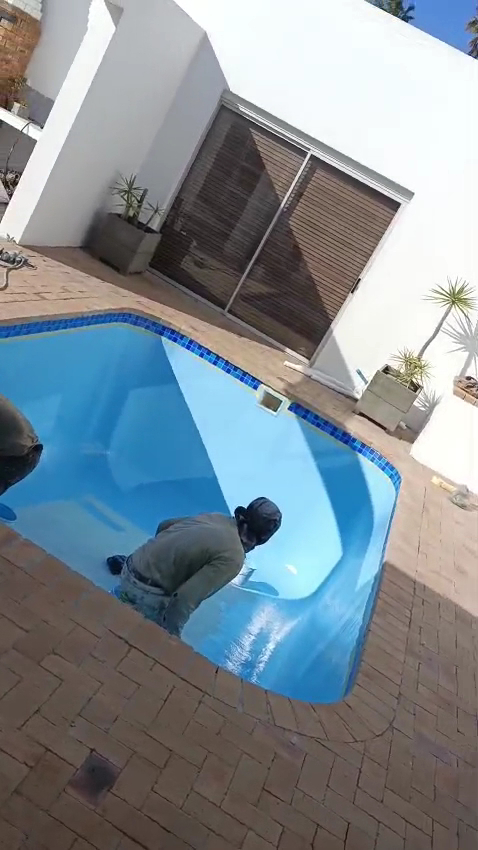
Coatings fail because of what happens before the tin is opened, not after. We drain and inspect, strip or abrade back to a sound substrate, cut out and patch cracks and hollow areas, then prepare the surface exactly as the system requires.
Cape Town’s summer wind is a real factor in application and cure, so we plan the work around it rather than fighting it and hoping for the best.
What is already on the pool decides what can go over it. This is not a guess.
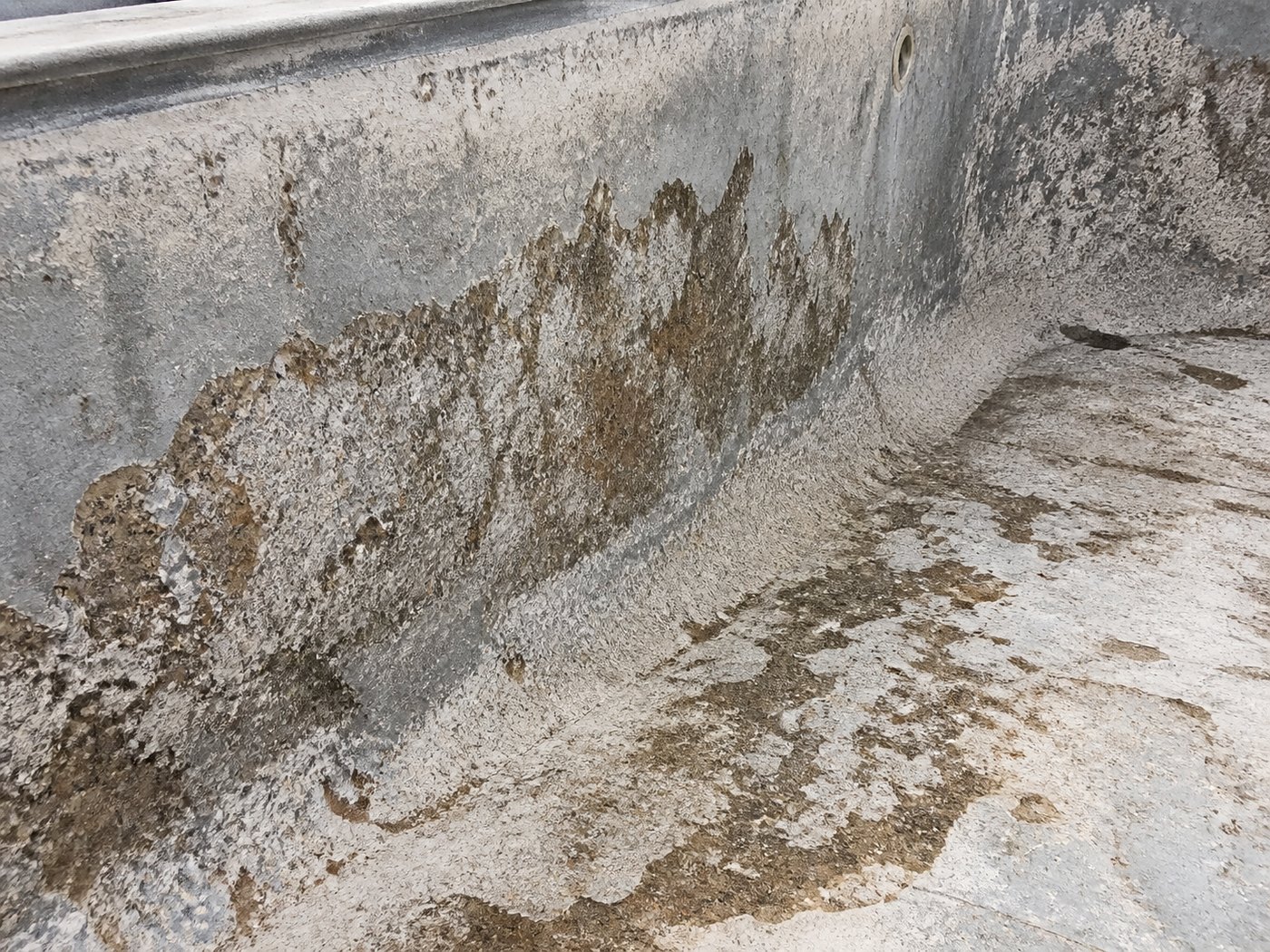
Cracks, hollow areas and failed patches found before anything is coated.
To a sound, clean, correctly profiled substrate.
Cracks cut out and filled, hollow sections removed and made good.
Applied to the manufacturer’s spec with proper drying time between coats, then filled and balanced.
If the coating has failed but the plaster behind it is sound, recoating is the sensible spend. If the plaster itself is eroded or hollow, another coat will simply fail with it.
We quote recoating against resurfacing so you can compare the real numbers and the realistic lifespan of each, rather than being sold the cheaper one twice.
We work the whole metro from our Plattekloof base — the Northern Suburbs, Southern Suburbs, Atlantic Seaboard, City Bowl, South Peninsula, Helderberg, West Coast and the Cape Winelands. Fibreglass shell? See fibreglass pool relining.
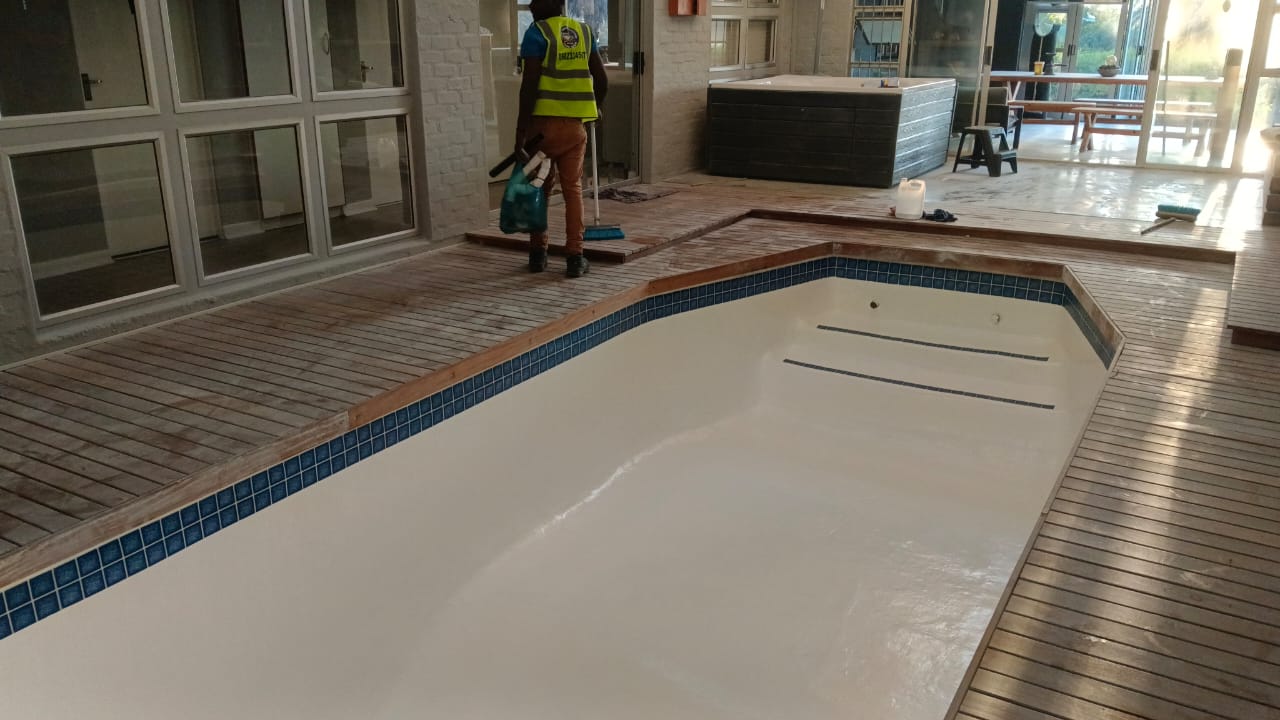
Free on-site assessment and no call-out fee. We identify what is on it, then quote coat against resurface.
It depends on the system and the preparation. A properly prepared epoxy system lasts considerably longer than a chlorinated rubber paint, which is why we are strict about preparation rather than fast.
Only if the systems are compatible and the existing coating is still sound. Epoxy over old chlorinated rubber is a common and expensive mistake, so we identify what is on the pool first.
If the coating has failed but the plaster behind it is sound, recoat. If the plaster is eroded, hollow or crazed, resurfacing is the better spend. We quote both.
Coating needs the pool drained, prepared, coated and cured before refilling. The exact timeline depends on the system and the weather, and we give you a realistic date.
Yes. Recoating is a straightforward moment to change colour, and the shade changes how the water reads. We will show you the options on site.
We look at the pool, tell you what it actually needs, then quote. No call-out fee.