
- (+27) 84 483 1774
- info@kwikpools.co.za
- Work Time: Mon - Sat 09AM - 6PM

If your pool is dropping more than a couple of centimetres a week, it is almost certainly not the weather. Kwik Pools does pool leak detection across Cape Town — we pressure-test the plumbing and test the shell to find exactly where the water is going, before anything gets dug up or drained.
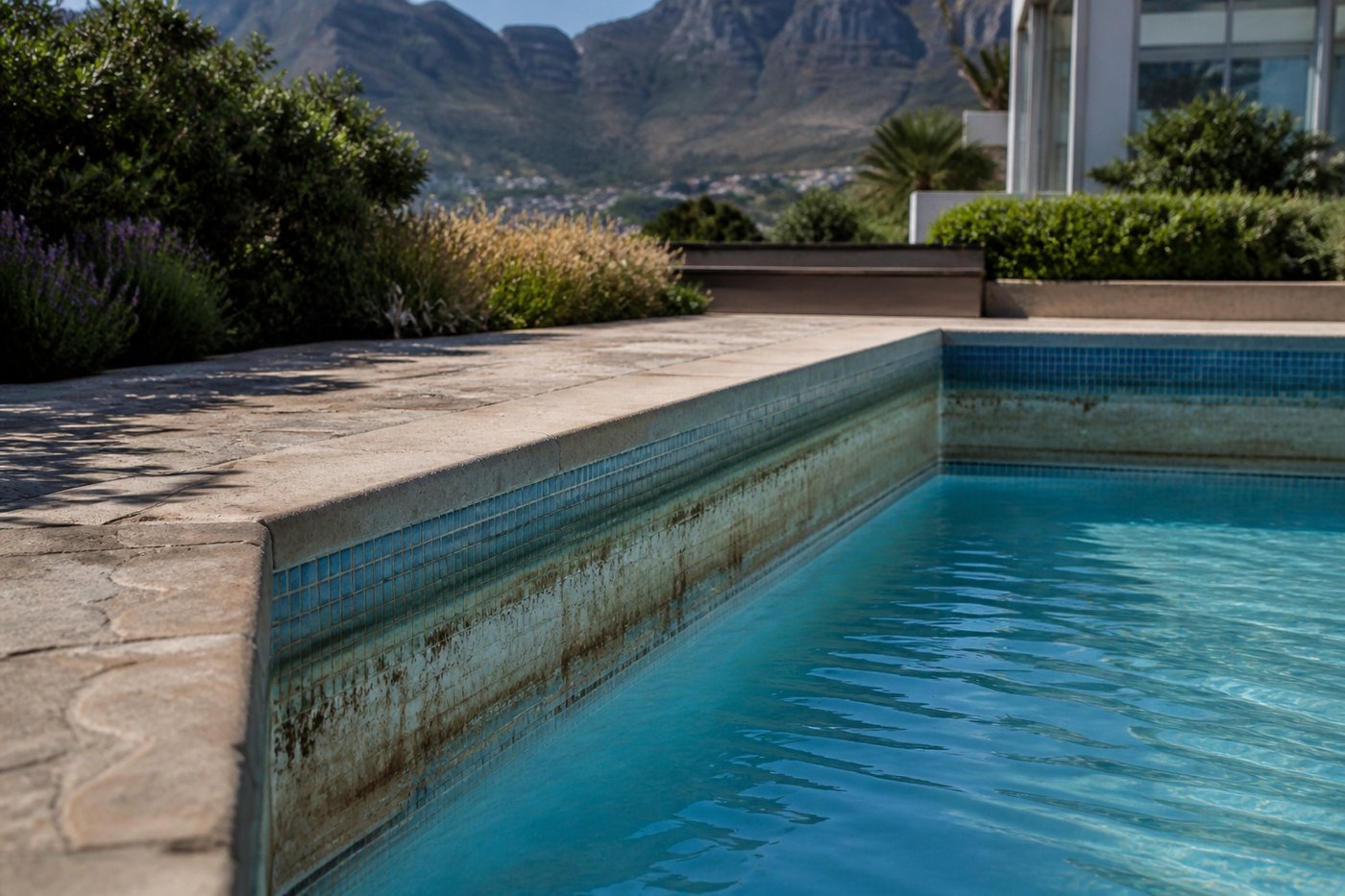
In a Cape Town summer, evaporation accounts for roughly a centimetre or two a week. Consistently more than that points at a leak.
A pinhole in a pressure line can push thousands of litres a month. The water bill is often the first real clue.
Soft ground, lush grass or damp paving on the run between the pool and the pump usually means a buried pipe has failed.
Air being drawn into the suction side means a crack or failed joint somewhere before the pump.
Water only falls to the level of the leak. Stopping at the weir mouth is a classic cracked-weir signature.
Movement in the shell shows up at the waterline first, and what lifts a tile will usually let water out too.
After years on Cape Town pools, the same five places account for most of the water loss we find. Knowing which one it is changes the repair completely, which is why we test rather than guess.
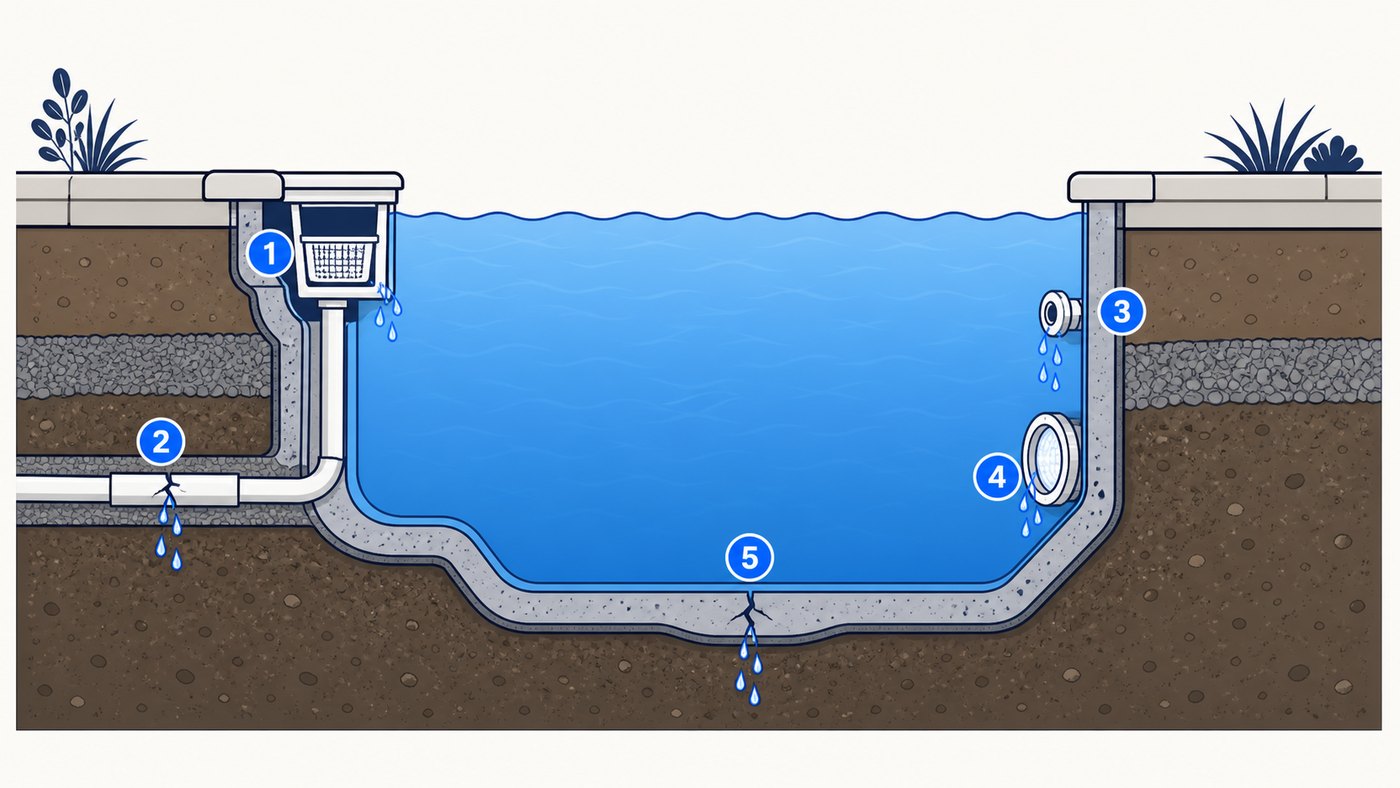
Plastic bonded into a concrete shell, flexing for thirty years. The joint eventually opens. Very common, easily missed.
Buried pipework that has gone brittle with age, or a joint pulled apart by ground movement.
The conduit behind a pool light is a direct path out of the shell and is rarely suspected.
Cracks in the floor or walls that move with the seasons and let water out steadily.
Over-tightened or perished fittings where the plumbing enters the shell.
On older pools it is often two small leaks, not one big one. We test everything before quoting.
Send us a photo of your pool and the water level on WhatsApp. We will tell you what we think it is before anyone comes out.
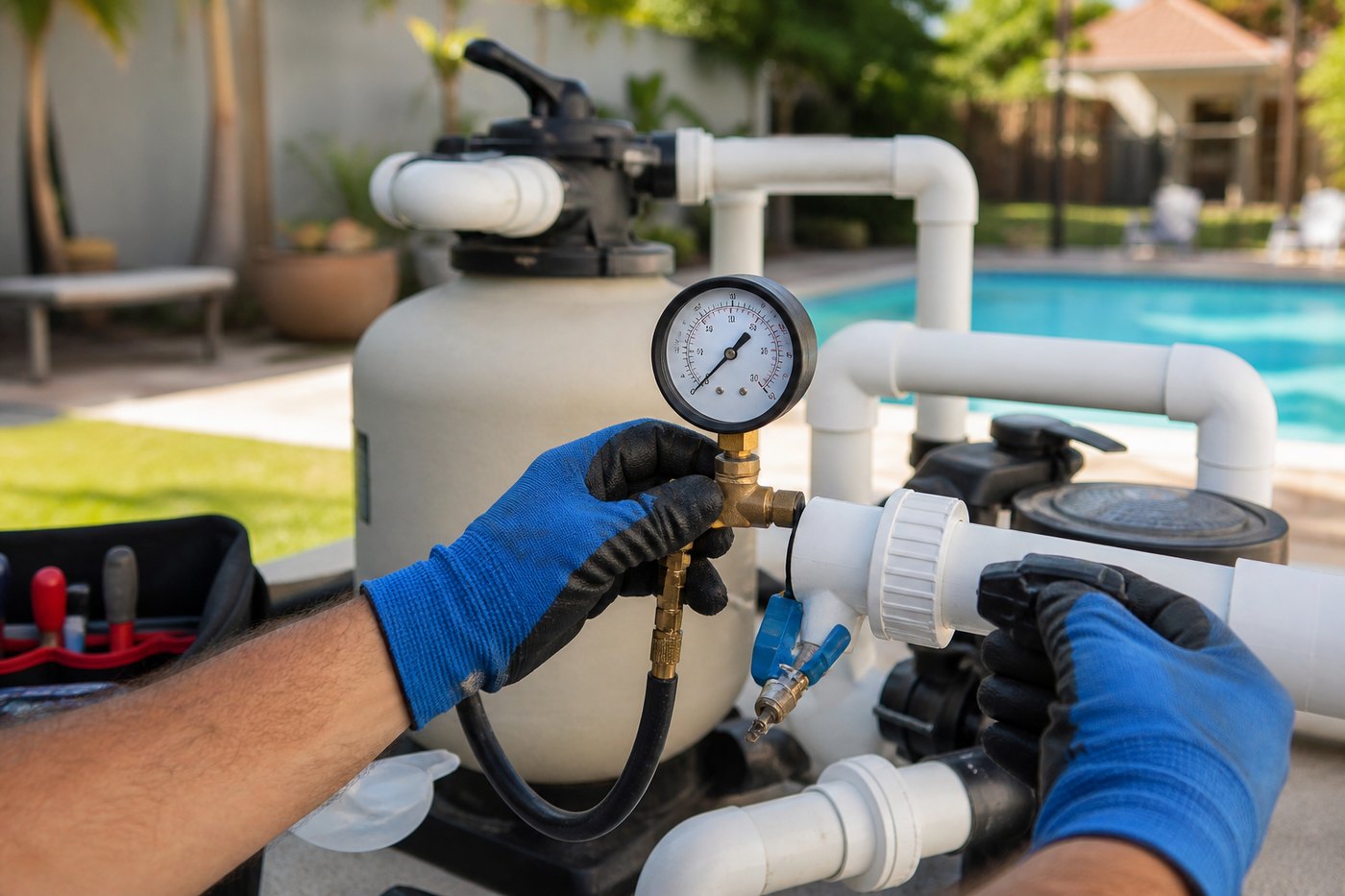
We isolate and pressure-test each line separately, then dye-test the shell and fittings with the water still in the pool. That tells us which line has failed and roughly where, so the repair is one targeted excavation instead of lifting a whole patio on a hunch.
You get a clear answer on what is leaking, what it will take to fix, and what it is going to cost before any work starts.
How fast it drops, whether the pump changes it, where the level settles. This alone rules a lot out.
Each suction and return line is isolated and tested so a failed line is identified, not assumed.
Dye testing around the weir, lights, returns and any cracking, with the pool still full.
We show you what we found and quote the repair properly. No work starts before you agree.
Small plumbing repairs are often done the same day. Bigger shell work gets scheduled and quoted in writing.
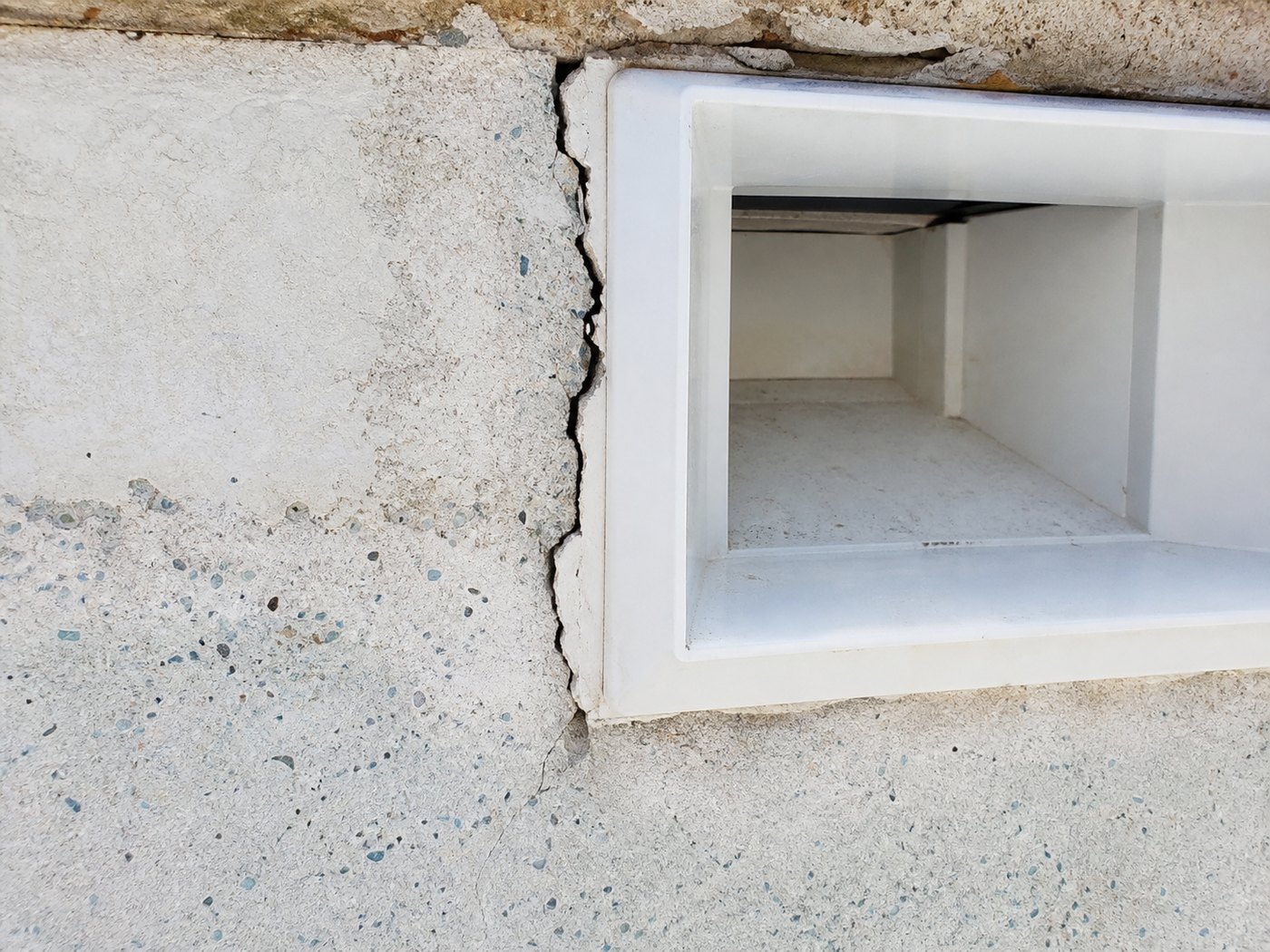
It is the single most common leak we find, and the easiest to identify once you know the sign: the pool drops to the bottom of the weir mouth and then holds steady. Water only ever falls to the level of the leak.
Some weirs can be sealed properly and will hold for years. Others have gone brittle enough that a repair is a short-term fix — and we will tell you honestly which one you have rather than selling you a replacement you do not need.
We work the whole metro from our Plattekloof base — the Northern Suburbs, Southern Suburbs, Atlantic Seaboard, City Bowl, South Peninsula, Helderberg, West Coast and the Cape Winelands. Buying a home? Pair this with a pool inspection so you know the pool properly before you sign.
Free on-site assessment and no call-out fee. We test properly, show you what we found, then quote.
Mark the level and watch it for a week with the pump off. Losing more than a centimetre or two, or losing it noticeably faster with the pump running, points at a leak rather than the weather.
Almost never to find it. We pressure-test the plumbing and dye-test the shell with the water still in. Draining only comes into it for certain structural repairs.
More than people expect. A pinhole in a pressure line can run thousands of litres a month, which is why the municipal bill is often the first thing that gives it away.
Yes. Small plumbing repairs are often sorted the same day, and shell leaks get quoted properly once we can show you exactly what we found.
The on-site assessment is free and there is no call-out fee. You get our findings and a written quote before any work is agreed.
We look at the pool, tell you what it actually needs, then quote. No call-out fee.